
Superhuman Acquires Rows: The AI Productivity Stack Gets Smarter About Data
Superhuman (formerly Grammarly) just acquired Rows, an AI-powered spreadsheet startup. The deal signals a shift from AI writing tools to AI data manipulation—the next frontier in knowledge work automation.

Superhuman, the company formerly known as Grammarly, just acquired Rows, a startup that applies AI to spreadsheet workflows and data management. The Rows team will join Superhuman to strengthen its Coda product and expand capabilities across the productivity suite.
Financial terms weren't disclosed, but Rows had raised just over $40 million since its 2017 founding. For Superhuman, this isn't just an acqui-hire—it's a strategic play for the next layer of knowledge work that AI is about to transform: data manipulation and analysis.
What Rows Actually Built
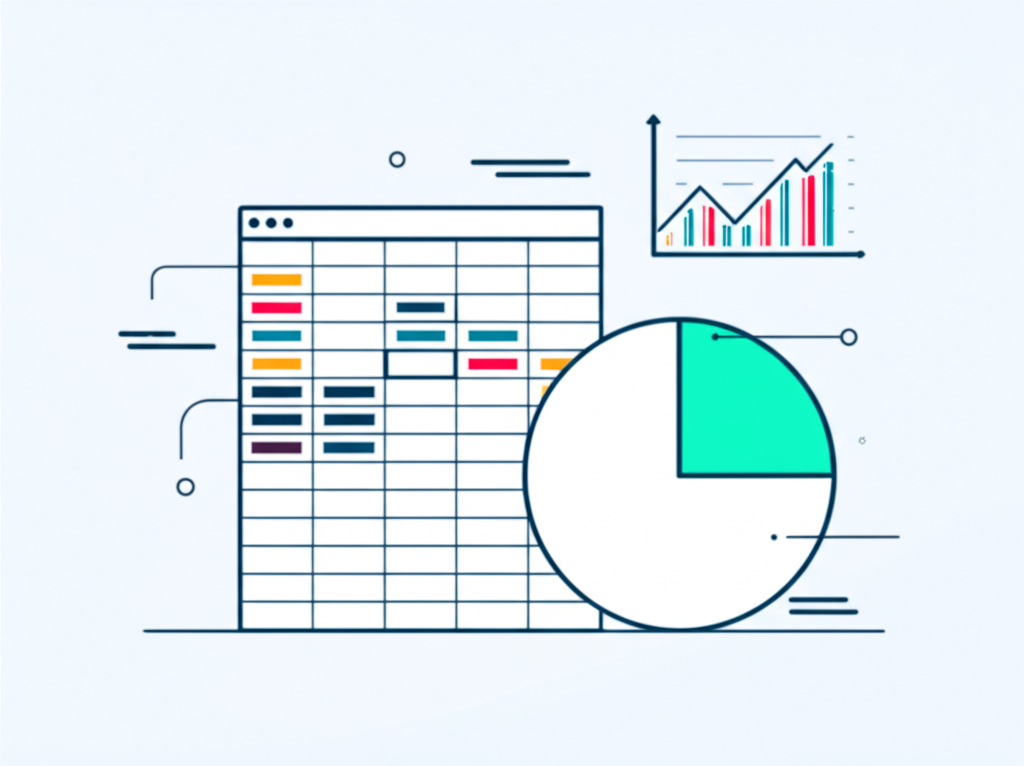
Rows started as a "spreadsheet for teams"—think Google Sheets meets Airtable, with built-in API connectors and collaboration features. But over the past two years, Rows evolved into something more specific: AI-powered data workflows.
Key capabilities Rows shipped:
- Natural language data queries: "Show me Q4 revenue by region" → instant chart
- AI formula generation: Describe what you want in plain English → get the spreadsheet formula
- Automated data pipelines: Connect APIs, scrape websites, pull from databases—all from within a spreadsheet interface
- Collaborative data notebooks: Teams could build live dashboards that updated automatically from external sources
Rows wasn't competing with Excel on formula complexity or Google Sheets on collaboration. It was competing with the need to hire a data analyst for every department that needed to answer questions with numbers.
Why Superhuman (Grammarly) Wants This
Superhuman rebranded from Grammarly after expanding beyond writing assistance into a broader productivity platform. The company now owns:
- Grammarly: AI writing assistant (grammar, tone, clarity)
- Coda: Documents that act like apps (tables, automations, integrations)
- Superhuman Email: AI-powered email client for power users
The Rows acquisition fills a critical gap: data intelligence.
Grammarly helps you write better. Coda helps you build workflows. But when you need to analyze data, build reports, or answer business questions with numbers, you still have to export to Excel, fumble with pivot tables, or wait for a data team to run a SQL query.
Rows brings AI-native data capabilities directly into the Superhuman/Coda ecosystem. Imagine:
- Writing a strategy doc in Coda, then asking, "What was our CAC trend over the last six quarters?" → inline chart appears
- Building a product roadmap in Coda, connected to live customer support data → "Show me the top 10 feature requests this month"
- Writing a board report in Grammarly, powered by real-time financial data pulled automatically from QuickBooks, Stripe, and your CRM
That's not a spreadsheet feature—that's AI as your data analyst.
The Productivity Stack Wars
The AI productivity space is consolidating around vertical integration:
- Microsoft: Word + Excel + PowerPoint + Copilot = integrated AI suite
- Google: Docs + Sheets + Slides + Gemini = integrated AI workspace
- Notion: Docs + databases + AI blocks = all-in-one workspace
- Superhuman: Grammarly + Coda + Email + Rows = AI productivity platform
The pattern: every major player is building a full-stack productivity suite where AI can move seamlessly between writing, data, and workflows.
Microsoft has the enterprise distribution advantage. Google has the free tier adoption advantage. Notion has the startup/SMB mindshare. Superhuman has the AI-first design advantage—its products were built with AI in mind, not retrofitted with Copilot buttons.
What This Means For Knowledge Workers
The Rows acquisition is a signal: AI is moving from augmenting writing to automating data work.
Writing was the first frontier because:
- Language models excel at text generation
- Writing is universal (everyone writes emails, docs, messages)
- The UX is simple (highlight text → get suggestions)
Data is the next frontier because:
- Structured reasoning (like SQL generation, formula writing, chart selection) is now reliable with models like GPT-4 and Claude
- Data work is a bigger bottleneck than writing (most teams are drowning in data but starved for insights)
- The value is higher (a good data analyst costs $80K-150K/year; an AI that does 70% of that work costs $20/month)
If Grammarly replaced the need for a full-time editor on your team, Rows (inside Superhuman) could replace the need for a full-time junior data analyst.
The Coda Connection
Superhuman's Coda product is the linchpin here. Coda isn't just a document editor—it's a document that can execute logic. You can:
- Build tables that act like databases
- Write formulas that trigger automations
- Embed buttons that run scripts or update external systems
- Create dashboards that pull live data from APIs
Rows' AI data capabilities slot perfectly into this model. Imagine a Coda doc that:
- Pulls your company's key metrics from Stripe, Google Analytics, and your CRM
- Lets you ask natural language questions: "Why did churn spike last month?"
- Generates hypotheses, runs the analysis, and presents charts—all inline
That's not a productivity tool—that's an AI-powered operating system for your business. See our analysis of how AI agents are replacing SaaS workflows for more context.
What $40M in Funding Says About Market Timing
Rows raised $40M before this acquisition. That's significant capital for a spreadsheet company. Investors were betting on:
- Spreadsheets as universal interfaces: Everyone knows how to use them, so adoption friction is low
- Data democratization: Non-technical teams increasingly need data access without relying on engineering
- AI as the UX layer: Natural language beats learning formulas and SQL syntax
But standalone spreadsheet products are hard to monetize. Google Sheets is free. Excel is bundled with Office. Airtable carved out a niche for "databases disguised as spreadsheets," but the market is crowded.
Superhuman likely saw Rows as defensible technology (AI data workflows) trapped in a hard-to-defend business model (standalone spreadsheet product). The solution: integrate it into a larger productivity platform where data intelligence becomes a feature, not a product.
What's Next
Expect to see Rows' technology show up in:
- Coda tables: AI-powered data transformations, automated chart generation, natural language queries
- Grammarly documents: Inline data insights pulled from your business systems
- Superhuman Email: Quick data lookups ("What's our MRR this month?") without leaving your inbox
The broader trend: productivity tools are moving from static documents to live, data-connected workspaces. The companies that win won't just help you write better—they'll help you think with your data without needing to become a data expert.
What This Means For Your Business
If you're building a productivity SaaS:
Data intelligence is table stakes now. If your product creates documents, reports, or dashboards, users expect AI-powered data analysis to be built in—not an export-to-Excel workflow.
If you're choosing productivity tools:
Evaluate how well your stack handles the writing → data → action loop. Can you go from "let's analyze churn" to "here's the insight" to "update the roadmap" without switching tools? If not, platforms like Superhuman/Coda (with Rows) are positioning themselves as the unified solution.
If you're hiring for data roles:
Consider where AI actually replaces headcount vs. where it amplifies experts. Junior analyst work (data cleaning, basic reporting, chart generation) is increasingly automated. Senior analyst work (hypothesis generation, causal inference, strategic recommendations) is amplified by AI but not replaced. Hire accordingly.
Looking Ahead
The AI productivity wars are heating up:
- Microsoft has distribution but is slow to innovate
- Google has reach but struggles with enterprise adoption
- Notion has momentum with startups but lacks data intelligence
- Superhuman has AI-first products but needs to prove enterprise scalability
The Rows acquisition gives Superhuman the data layer it was missing. The question now: can they integrate it fast enough to compete with Microsoft's Copilot ecosystem and Notion's all-in-one workspace?
One thing is clear: the future of knowledge work isn't about better writing tools or better spreadsheets. It's about AI that can move seamlessly between writing, data, and action—and the companies building that unified experience are the ones to watch.
Build AI-Powered Productivity Into Your Workflows
At AI Agents Plus, we help companies build custom AI productivity tools and data intelligence systems. Whether you need:
- Custom AI assistants for your team's specific workflows
- Data automation pipelines that answer business questions in real-time
- AI integrations with your existing productivity stack
We've built AI systems for startups and enterprises across Africa and beyond.
Ready to explore AI for your productivity workflows? Let's talk →
About AI Agents Plus Editorial
AI automation expert and thought leader in business transformation through artificial intelligence.