
Google's TurboQuant: The AI Memory Breakthrough That Rivals 'Pied Piper'
Google unveils TurboQuant, a breakthrough AI memory compression algorithm that's drawing viral comparisons to Silicon Valley's fictional Pied Piper technology. Here's why this could reshape AI infrastructure economics.

Google just dropped TurboQuant, a new AI memory compression algorithm that's generating serious buzz — including inevitable comparisons to the fictional "Pied Piper" compression tech from HBO's Silicon Valley. But this isn't vaporware or a PR stunt. It's a fundamental breakthrough in how AI systems handle memory, and it could reshape the economics of running AI at scale.
According to TechCrunch, TurboQuant achieves compression ratios that were considered theoretically difficult just months ago. The internet's immediate reaction — "Google just built Pied Piper" — signals that the AI community recognizes this as potentially transformative.
Why Memory Compression Matters (And Why Now)
Memory has quietly become one of the biggest bottlenecks in modern AI systems. As models grow larger and context windows expand to handle longer conversations and more complex tasks, memory requirements have exploded. GPT-4 class models can consume hundreds of gigabytes of GPU memory for a single inference run. Multiply that across millions of users, and you're looking at infrastructure costs that make even Big Tech CFOs nervous.
This isn't just about cost. Memory bandwidth limits how fast models can process information, directly impacting response times. Every business deploying AI agents for customer service or operations automation knows that latency matters. A 200ms delay in response time can tank user experience.
TurboQuant attacks both problems: it reduces memory footprint and potentially speeds up inference by reducing the data that needs to move between components.
What Makes TurboQuant Different
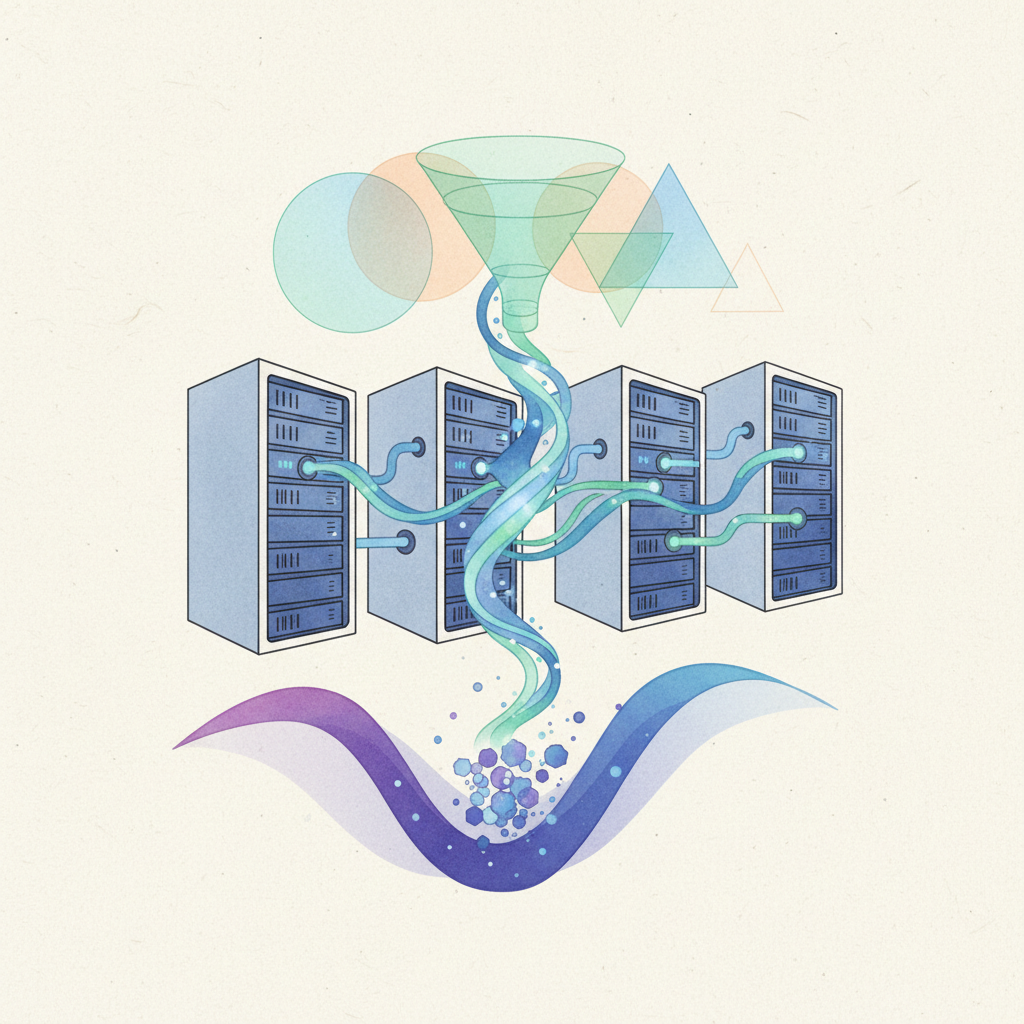
While Google hasn't released full technical details yet, early reports suggest TurboQuant uses a novel approach that combines quantization (reducing precision of model weights) with adaptive compression algorithms that learn optimal compression strategies per model.
Traditional quantization methods — like reducing 32-bit floating point numbers to 8-bit integers — have been around for years. What's new here appears to be the intelligence layer: TurboQuant reportedly analyzes which parts of a model are most sensitive to compression and adjusts accordingly. Think of it as compression with a PhD in machine learning.
The "Pied Piper" comparison isn't just fan service. In the show, Pied Piper's fictional middle-out compression achieved mathematically improbable ratios by finding patterns others missed. TurboQuant seems to be doing something similar — finding structure in AI model data that previous compression schemes overlooked.
The Enterprise AI Angle: This Is About Money
Let's talk numbers. Running a production AI system at enterprise scale is expensive:
- Infrastructure costs: A single A100 GPU costs $10,000-15,000. Production deployments need dozens or hundreds.
- Cloud inference: OpenAI and Anthropic charge per token because compute isn't cheap. Every API call involves moving massive amounts of data.
- Latency tax: Slower models = worse user experience = lower conversion rates.
If TurboQuant delivers even a 2x reduction in memory footprint with minimal accuracy loss, that's transformative:
- You can run the same model on half the hardware
- Or run a larger, more capable model on existing infrastructure
- Or serve twice as many users with the same cost structure
For companies building AI automation systems, this matters immediately. Memory compression is the difference between "we can afford to deploy this" and "this doesn't pencil out."
What This Means For Your Business
If you're running AI in production — or evaluating whether to deploy AI systems — here's what to watch:
-
If you're building AI products: Wait for TurboQuant to become available in Google Cloud or open-source implementations. Re-benchmark your infrastructure costs with compressed models. You might be able to serve more users on the same budget.
-
If you're buying AI solutions: Ask your vendors about their inference costs and whether they're using memory compression. As these techniques become standard, you should see pricing improvements — or question why you're not.
-
If you're evaluating AI strategy: Memory compression unlocks use cases that were previously too expensive. Edge deployment of larger models, real-time processing of longer contexts, multi-agent systems that were memory-prohibitive — all become more feasible.
The Broader Pattern: AI Infrastructure Is Maturing
TurboQuant isn't an isolated breakthrough. It's part of a larger trend: AI infrastructure is moving from "make it work" to "make it efficient."
We've seen similar shifts with:
- Model distillation: Training smaller models that match larger ones' performance
- Sparse attention: Making transformers more efficient by processing only relevant tokens
- Mixture of Experts (MoE): Activating only parts of a model for each query
What's significant is that these efficiency gains are compounding. A compressed, distilled, sparse MoE model can run on a fraction of the hardware compared to first-generation approaches.
This matters because it democratizes AI. Startups can compete with Big Tech when infrastructure costs drop 10x. Edge devices can run sophisticated AI when memory requirements shrink. Developing markets can deploy AI when it doesn't require data center-scale resources.
Looking Ahead
Google hasn't announced when TurboQuant will be available in production — and whether it'll be open-sourced or kept as a competitive advantage for Google Cloud Platform. That decision matters.
If Google open-sources the approach (like they did with transformers), we'll see rapid adoption and iteration across the industry. If they keep it proprietary, expect OpenAI, Anthropic, and others to race toward similar breakthroughs.
Either way, the message is clear: the next phase of AI competition is about efficiency, not just capability. The companies that can deliver the same intelligence for 10x less cost will win the enterprise market.
Bottom line: TurboQuant might sound like science fiction, but it represents a very real shift in how AI systems are built and deployed. The "Pied Piper" comparisons are fun, but the real story is simpler — AI is getting cheaper to run, and that changes everything.
Build AI That Scales Without Breaking the Bank
At AI Agents Plus, we help companies deploy production-ready AI systems with real ROI — not just impressive demos. Whether you need:
- Custom AI Agents — Autonomous systems that handle complex workflows while staying within budget
- AI Infrastructure Optimization — Make your AI systems faster and cheaper to run
- Voice AI Solutions — Natural conversational interfaces built for scale
We've built AI systems for startups and enterprises across Africa and beyond, focusing on what actually works in production.
Ready to explore what AI can do for your business? Let's talk →
About AI Agents Plus Editorial
AI automation expert and thought leader in business transformation through artificial intelligence.