
Anthropic Acquires Vercept to Make Claude Smarter About Software
After rejecting Pentagon contracts, Anthropic acquires US AI startup Vercept to improve Claude's ability to understand and act within everyday software. Here's what this signals about the future of AI agents.

Anthropic just acquired Vercept, a US AI software startup focused on making AI understand how humans use software. The goal: make Claude better at navigating, understanding, and acting within the apps people use every day.
The timing is interesting. Days after Anthropic got blacklisted by the Pentagon for refusing military contracts, they're doubling down on enterprise software AI.
The message is clear: Anthropic is betting the future of AI isn't in classified military networks — it's in making Claude indispensable for everyday software workflows.
What Vercept Actually Does
Vercept specializes in software understanding for AI. Not just "read documentation and answer questions," but:
- Understanding how software interfaces actually work
- Mapping user intent to software actions
- Learning common workflows and patterns in enterprise tools
- Acting autonomously within software environments
Think of it this way: GPT-5 can explain how to use Excel. A Vercept-enhanced Claude could actually use Excel — open files, write formulas, create charts, all based on natural language instructions.
That's the difference between an AI assistant and an AI agent.
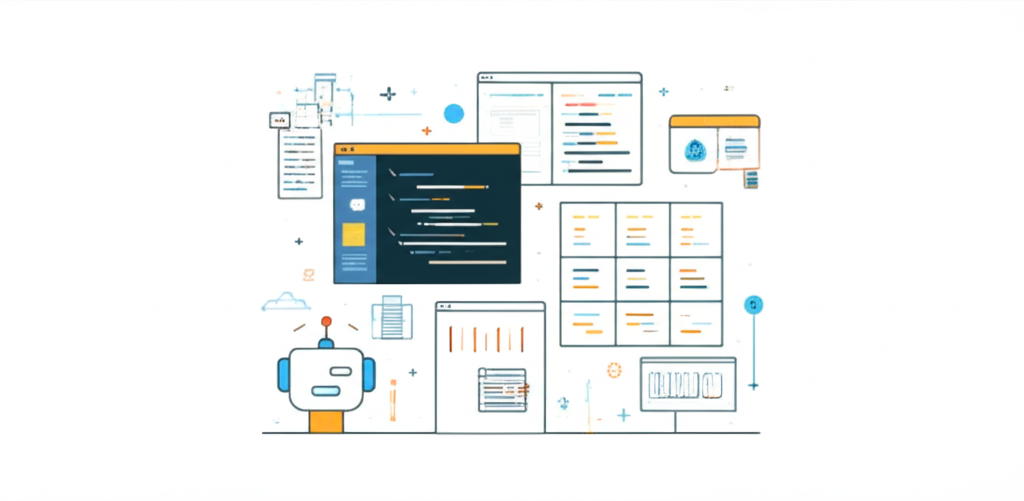
Why This Matters: The Software Agent Opportunity
The enterprise software market is worth $600+ billion annually. Most of that spending goes to tools that require humans to click, type, and navigate interfaces.
What if AI could do that instead?
That's the bet Anthropic is making with the Vercept acquisition. Not "AI that helps you use software better," but "AI that uses software for you."
Consider these use cases:
Data entry across systems — Claude reads an invoice, extracts key fields, updates your accounting system, CRM, and inventory database. No human clicks required.
Report generation — Claude pulls data from 5 different tools, generates charts in Excel, formats slides in PowerPoint, and sends a summary email. All from "create this week's sales report."
Workflow automation — Claude watches how you process customer support tickets, learns the pattern, then handles routine cases autonomously while escalating edge cases to humans.
Right now, these require RPA tools, custom integrations, or manual work. If Claude can do them with natural language instructions, that changes everything.
The Strategic Shift: Enterprise Over Military
Last week, Anthropic made headlines by refusing Pentagon contracts. The Trump administration declared them a supply chain risk. OpenAI rushed in to fill the void.
This week, Anthropic acquires a company that makes Claude better at enterprise software.
The strategic direction is obvious: Anthropic is positioning Claude as the enterprise AI agent platform, not a general-purpose AI tool.
While OpenAI courts defense contracts and consumer applications, Anthropic is laser-focused on making Claude the AI that runs business operations.
It's a smart differentiation strategy. The Agentic AI Foundation launch already signaled the industry is moving toward standards for AI agents. Anthropic is positioning Claude as the enterprise-friendly option.
What This Means For Your Business
If you're building or buying AI solutions, Vercept acquisition signals where the industry is heading:
-
If you're building AI agents: Software understanding is becoming table stakes. Your agent needs to actually interact with tools, not just talk about them. Invest in UI automation, API integration, and workflow learning.
-
If you're buying enterprise AI: Start testing AI agents that can do things, not just answer questions. The ROI of "AI that uses your CRM" is measurably higher than "AI that tells you how to use your CRM."
-
If you're running a software company: AI agents are coming for your user interfaces. Consider whether your product should expose agent-friendly APIs alongside traditional UIs. The companies that make it easy for AI to use their software will win.
The Competition: Everyone's Building Software Agents
Anthropic isn't alone:
- OpenAI's Operator (rumored in development) would let ChatGPT control your browser and desktop apps
- Google's Project Mariner aims to make Gemini navigate web apps autonomously
- Microsoft Copilot already integrates with Office 365, Teams, and Windows
- Adept raised $350M specifically to build AI that uses software
The pattern is clear: 2026 is the year AI stops being a chatbot and becomes a software operator.
Vercept gives Anthropic the technology to compete. More importantly, it gives them the talent — engineers who've spent years solving "how do you teach AI to understand software interfaces?"
What Makes This Hard
Using software is harder than it looks for AI:
Dynamic UIs — Interfaces change based on context. A button that says "Submit" in one screen might say "Save Draft" in another. AI needs to understand intent, not just match text.
Multi-step workflows — Real tasks require 10+ actions across multiple apps. AI needs to plan, execute, handle errors, and recover gracefully.
Edge cases — What happens when the "Save" button is grayed out? When a dropdown doesn't have the expected option? When the app crashes mid-workflow?
Generic LLMs struggle with these problems. Vercept's technology presumably solves them. That's why the acquisition matters.
What to Watch Next
Three signals to monitor:
-
Claude integrations — Will we see deeper integrations with Salesforce, Microsoft 365, Google Workspace? Can Claude actually use these tools autonomously?
-
API vs. UI approach — Will Claude control software via APIs (structured, reliable) or UI automation (flexible, fragile)? Vercept's approach will reveal Anthropic's strategy.
-
Enterprise adoption — How many companies actually deploy Claude as an autonomous software agent? Pilots are one thing. Production deployment where Claude makes real business decisions is another.
Anthrop ic rejected military AI to focus on enterprise. Vercept gives them the technology to execute that vision. The question is: can they ship it before OpenAI, Google, or Microsoft do?
The AI agent race just got faster.
Build AI That Works For Your Business
At AI Agents Plus, we help companies move from AI experiments to production systems that deliver real ROI. Whether you need:
- Custom AI Agents — Autonomous systems that actually use your software tools, not just talk about them
- Software Integration Strategy — Identify where AI agents can automate workflows across your tech stack
- Rapid AI Prototyping — Go from idea to working agent in days, testing real software automation
We've built AI systems for startups and enterprises across Africa and beyond. We understand the difference between AI assistants and AI agents that do the work.
Ready to explore what AI agents can do for your operations? Let's talk →
About AI Agents Plus Editorial
AI automation expert and thought leader in business transformation through artificial intelligence.