Google Project Mariner: The Browser AI Agent War Just Got Real
Google just launched Project Mariner—an AI agent that navigates Chrome autonomously. This isn't a chatbot. It's software that actually uses your browser like a human would.
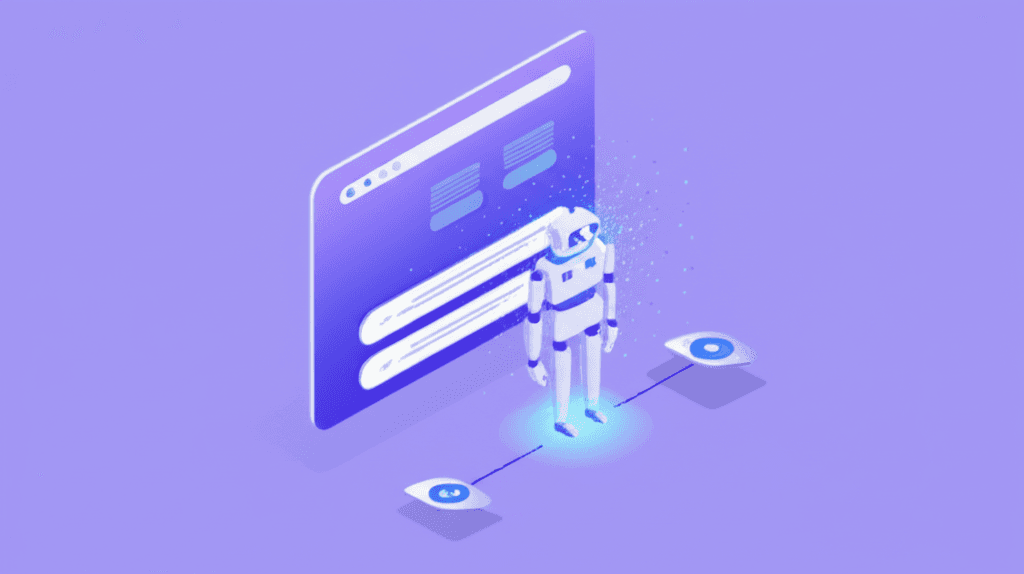
Google officially launched Project Mariner, an AI agent that can navigate Chrome, interact with web applications, and complete multi-step tasks without human intervention. While everyone was watching the LLM benchmark wars, Google just shipped something that changes the game: an AI that actually uses software, not just talks about it.
This isn't a research demo. It's available now for Chrome users, and it works.
What Project Mariner Actually Does
Mariner is an AI agent that lives in your Chrome browser. You give it a task, and it:
- Navigates websites like a human—clicking links, filling forms, scrolling pages
- Reads and interprets page content to understand what to do next
- Completes multi-step workflows—book a restaurant, research products, extract data
- Handles unexpected scenarios—adjusts when pages load slowly or layouts change
Example tasks Mariner can handle:
- "Find the cheapest flight to London next week and put the results in a spreadsheet"
- "Compare pricing on these five SaaS tools and summarize their features"
- "Schedule a meeting by checking my calendar and sending invites"
It's what people thought ChatGPT would be, but actually works.

How This Compares to Anthropic's Computer Use
Anthropic launched Claude Computer Use in October 2025—an AI that can control your entire computer (mouse, keyboard, applications). Project Mariner is more focused but arguably more practical:
Mariner (Google):
- Browser-only—safer, more controlled environment
- Built into Chrome—no special setup required
- Optimized for web tasks—better at navigating modern web apps
- Lower risk—can't accidentally delete files or run commands
Computer Use (Anthropic):
- Full OS control—more powerful but riskier
- Requires API integration—not consumer-ready yet
- Can run any desktop application
- Higher ceiling, higher complexity
Google chose the pragmatic play: own the browser, win 80% of use cases, ship now.
Why This Matters More Than Another LLM Release
Every week brings a new "state-of-the-art" LLM that's 2% better on some benchmark. Mariner is different. It's not about generating text—it's about actually doing things.
Consider what this enables:
- Research automation: Have Mariner scan 50 competitor websites and extract pricing into a spreadsheet
- Data entry: Automate filling forms across multiple systems
- Monitoring: Check websites for changes and alert you
- Testing: Run automated QA flows on your web app
This is the shift from AI as a conversational tool to AI as a coworker that operates your software.
The Business Implications
If AI agents can navigate web interfaces reliably, several things become obsolete:
- Manual web scraping—Why write scrapers when an agent can just "read" the page?
- Browser automation frameworks—Selenium and Playwright were already being disrupted; Mariner accelerates that
- SaaS integrations—If an AI can use the web UI, who needs APIs?
- Human data entry—Most web-based admin work can be delegated to agents
That last point is crucial. Millions of jobs involve navigating web interfaces and entering data. Mariner makes that automatable.
What This Means For Your Business
If you run a business that relies on web-based workflows, here's what changes:
-
If you sell SaaS: Your users will start asking why they need to learn your UI when an AI can just use it for them. Make your product AI-agent-friendly or watch your UX become irrelevant.
-
If you employ people who do repetitive web tasks: Start identifying workflows that could be handled by browser AI agents. Training, onboarding, and retention just got easier—and headcount requirements lower.
-
If you're building automation tools: Browser AI agents will commoditize screen scraping and form filling. Your value needs to move up the stack—workflow design, exception handling, business logic.
Security and Privacy Concerns
Google hasn't detailed how Mariner handles sensitive data, but the questions are obvious:
- What does Mariner remember across sessions?
- Can it access saved passwords and payment info?
- What happens if it makes a mistake on a financial transaction?
- Who's liable when an AI agent does something wrong on your behalf?
Expect regulatory scrutiny and enterprise IT departments to demand answers before Mariner gets deployed at scale.
The Competitive Landscape
Google now joins a growing list of companies building browser/computer-use AI agents:
- Anthropic — Claude Computer Use (full OS control)
- OpenAI — Operator (browser agent, limited beta)
- Adept — Action Transformer (focused on enterprise workflows)
- Induced AI — Browser automation for lead generation
- MultiOn — Personal AI agent for browsing
Google's advantage: distribution. Chrome has 3.4 billion users. If Mariner ships as a built-in Chrome feature, it becomes the default browser AI agent overnight.
Looking Ahead
Google will almost certainly integrate Mariner with:
- Workspace (Gmail, Docs, Sheets, Calendar)
- Chrome extensions (let developers build on top of Mariner)
- Enterprise admin controls (let IT departments manage agent permissions)
Watch for announcements at Google I/O 2026. If Google makes Mariner available to Workspace enterprise customers with proper security controls, that's when this goes mainstream.
The browser AI agent war is heating up. And Google just played the distribution card that OpenAI and Anthropic don't have.
Build AI Agents That Actually Work
At AI Agents Plus, we help companies build autonomous AI agents that handle real workflows—not just proof-of-concepts. Whether you need:
- Browser Automation Agents — Systems that navigate web apps and complete complex tasks
- Custom AI Agents — Agents that integrate with your tools and follow your business logic
- Workflow Intelligence — AI that learns your processes and automates the repetitive parts
We've deployed production AI agents for companies across finance, operations, and sales.
Ready to put AI agents to work? Let's talk →
Related reading
About AI Agents Plus Editorial
AI automation expert and thought leader in business transformation through artificial intelligence.