
Unconventional AI Raises $475M Seed at $4.5B Valuation for Neuromorphic Computing — Why Everyone's Betting on Brain-Like Chips
Unconventional AI secured $475 million in seed funding at a $4.5 billion valuation, with a16z and Lightspeed co-leading. The company is building neuromorphic computing systems that mimic biological neural networks for dramatically more efficient AI.
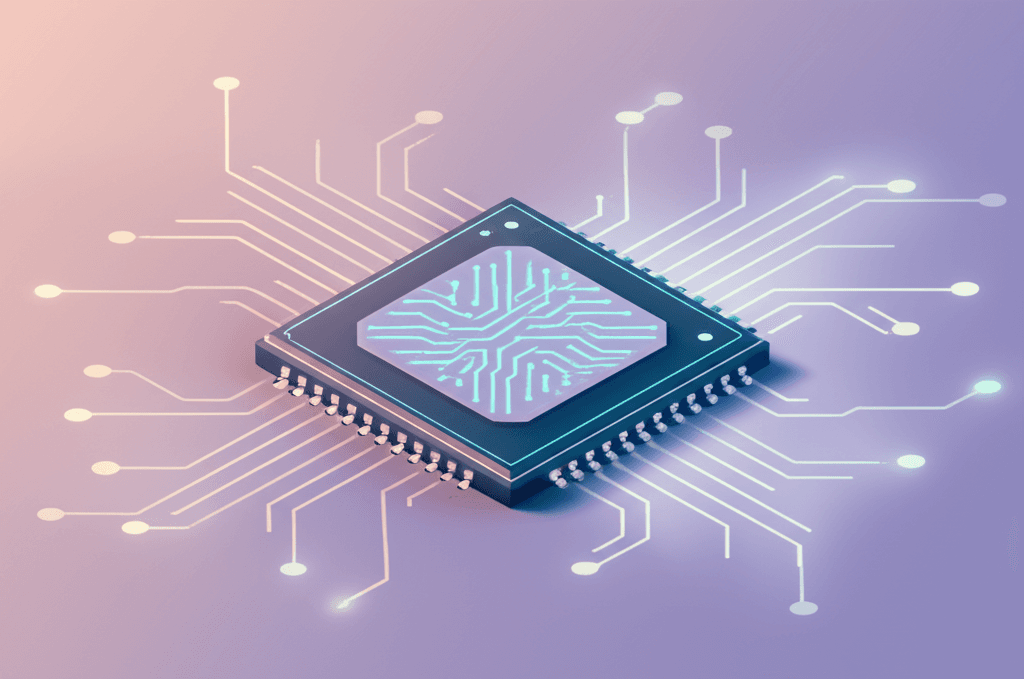
In what might be the largest seed round in AI history, Unconventional AI just raised $475 million at a $4.5 billion pre-money valuation. Andreessen Horowitz (a16z) and Lightspeed Venture Partners co-led the round, with participation from Jeff Bezos, Lux Capital, DCVC, Databricks, and Sequoia Capital.
The company is building neuromorphic computing systems — hardware and software designed to mimic how biological brains process information. If they succeed, they could make today's GPU-based AI training look as outdated as dial-up internet.
What Is Neuromorphic Computing?
Most AI today runs on GPUs — graphics processors originally designed for video games, then repurposed for deep learning. They're powerful but incredibly energy-intensive. Training GPT-4 reportedly used tens of thousands of Nvidia H100 GPUs running for months.
Neuromorphic computing takes a different approach: instead of simulating neural networks in software on traditional chips, build hardware that physically behaves like neurons and synapses. Key differences:
- Event-driven processing: Neurons only activate when they receive input (like real brains), not continuously like GPUs
- Massively parallel: Billions of simple processing units working simultaneously, not sequential batch operations
- Low power: Orders of magnitude more energy-efficient than GPUs for certain tasks

Companies like Intel (Loihi chips) and IBM (TrueNorth) have explored this for years, but commercial applications have been limited. Unconventional AI is betting they can make it work at scale.
Why Investors Are Paying $4.5 Billion for a Seed-Stage Company
A $475M seed round at a $4.5B pre-money valuation is absurd by traditional VC standards. Seed rounds are usually $2-10M. Series B companies sometimes reach $1B valuations.
So why the premium?
1. The Compute Crisis Is Real
AI labs are spending billions on compute. OpenAI's $110B raise is largely to fund massive GPU clusters. Anthropic's $30B Series G is the same story.
If neuromorphic chips can deliver 10x or 100x better performance-per-watt, they'd save AI companies billions in energy costs alone.
2. Bezos, Databricks, and Sequoia Don't Bet on Vaporware
Look at the investor list:
- Jeff Bezos (Amazon founder, deeply technical)
- Databricks (data infra giant, needs efficient AI)
- Sequoia Capital (backed Google, Apple, Nvidia)
These aren't tourists. They're strategic investors with deep AI/hardware expertise who've seen the tech and believe it's viable.
3. The AI Stack Needs New Layers
The current AI stack:
- Training layer: Nvidia GPUs, Google TPUs
- Inference layer: Nvidia again, some startups (Groq, Cerebras)
- Software layer: PyTorch, TensorFlow
If Unconventional AI can insert a new neuromorphic layer between software and silicon, they control a chokepoint in the AI value chain. That's worth a $4.5B bet.
What This Means For The AI Hardware Race
Nvidia currently owns 95%+ of the AI training market. Their H100 chips sell for $25,000-$40,000 each, and there are months-long waitlists.
But alternatives are emerging:
- Google TPUs (Tensor Processing Units) for internal use
- AMD MI300X chips challenging Nvidia
- Groq and Cerebras for ultra-fast inference
- MatX (raised $500M Series B last week) for custom LLM chips
Neuromorphic computing is the most radical of these approaches. If it works, it doesn't just compete with Nvidia — it makes the entire GPU paradigm obsolete for AI workloads.
What This Means For Your Business
If you're building AI products today: Don't change your tech stack yet. Neuromorphic chips are 2-3 years from commercial availability. Stick with Nvidia/AMD GPUs for now.
If you're planning AI infrastructure for 2027+: Watch this space. If Unconventional AI or competitors ship production-ready neuromorphic chips, they could slash your inference costs by 90%.
If you're a startup founder: The bar for "big seed rounds" just moved. $475M is an outlier even in AI, but it signals that VCs will pay massive premiums for hard tech that solves critical bottlenecks. If you're building AI infrastructure, the capital is there.
If you're an enterprise buyer: Energy costs for running AI at scale are becoming a major line item. Neuromorphic chips could turn AI from "expensive to run" to "cheap enough to deploy everywhere." Start planning for that world.
The Risks Are Real
Neuromorphic computing has been "5 years away" for 20 years. Challenges:
- Software ecosystem: You can't just run PyTorch on neuromorphic chips. New frameworks, new training paradigms.
- Manufacturing: Building chips that mimic biology at scale is hard. Intel and IBM tried; neither achieved mass adoption.
- Market timing: If Nvidia keeps improving GPUs faster than neuromorphic chips mature, the window closes.
But with $475M and this investor lineup, Unconventional AI has the runway to figure it out.
Looking Ahead
If neuromorphic computing works, we'll look back at 2026 as the year AI hardware shifted from "more powerful GPUs" to "fundamentally different architectures."
If it doesn't, it'll be one of the most expensive pivots in AI history.
Either way, the fact that a16z, Bezos, and Sequoia are willing to bet $4.5 billion on it tells you where the smart money thinks AI is going: not just bigger models, but smarter silicon.
Build AI That Works For Your Business
At AI Agents Plus, we help companies move from AI experiments to production systems that deliver real ROI. Whether you need:
- Custom AI Agents — Autonomous systems that handle complex workflows, from customer service to operations
- Rapid AI Prototyping — Go from idea to working demo in days using vibe coding and modern AI frameworks
- Voice AI Solutions — Natural conversational interfaces for your products and services
We've built AI systems for startups and enterprises across Africa and beyond.
Ready to explore what AI can do for your business? Let's talk →
About AI Agents Plus Editorial
AI automation expert and thought leader in business transformation through artificial intelligence.


