Trump Administration Moves to Block State AI Regulations, Threatens Federal Funding
The Trump Administration issued an executive order targeting state-level AI regulations, authorizing the withholding of federal funds from non-compliant states. This marks a major escalation in the federal-state battle over AI governance.
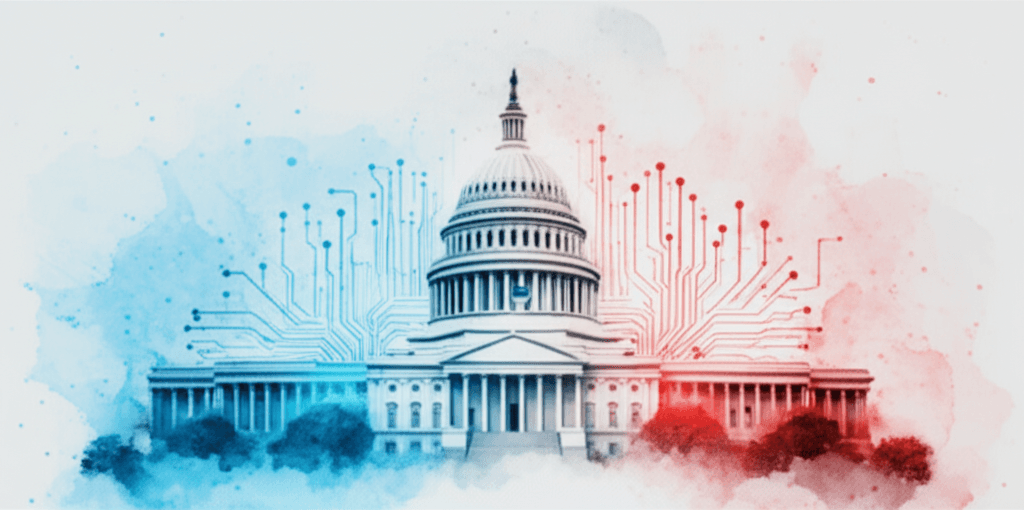
The Trump Administration is escalating its fight against state-level AI regulations, issuing an executive order that discourages conflicting policies and authorizes withholding federal funds from states that don't comply. The move sets up a constitutional showdown over who controls AI governance in America.
What Happened
According to The Regulatory Review, the executive order seeks to preempt state AI regulations that conflict with federal policy. The order empowers federal agencies to identify "problematic" state regulations and potentially cut funding to states that maintain them.
This comes as states like California, Colorado, and New York have passed or proposed comprehensive AI regulations covering everything from algorithmic bias to automated decision-making in employment and housing. The Administration argues these create a patchwork of conflicting requirements that burden AI companies.
s.com/ai-agents-plus.firebasestorage.app/blog-images/trump-state-ai-regulations-2026-inline.png)
Why This Matters
For the past three years, states have filled the federal AI policy vacuum. California's AI transparency requirements, Colorado's algorithmic accountability laws, and New York City's hiring algorithm audits have become de facto national standards — companies building for California often build for everyone.
Now the federal government wants that power back. The executive order doesn't just discourage state action — it threatens financial consequences. For states heavily dependent on federal funding (which is most of them), this is a serious pressure point.
The timing is notable. Just as the EU AI Act begins enforcement this week, the US is moving in the opposite direction: toward centralized, business-friendly regulation. The contrast couldn't be starker.
The Constitutional Question
This sets up a classic federalism fight. States have traditionally regulated business practices, consumer protection, and civil rights within their borders. The question: does AI technology justify federal preemption?
The Administration will likely argue that AI is interstate commerce requiring uniform national rules. States will counter that they're protecting their citizens from algorithmic harm in areas like housing, employment, and criminal justice — traditional state domains.
Expect lawsuits. California's attorney general has already indicated the state won't back down on its AI regulations without a court fight.
What This Means For Your Business
If you're building AI products:
- Don't assume state regulations will disappear — this will take years to resolve in courts
- Continue building for the strictest requirements (California, Colorado, EU) as your baseline
- Plan for regulatory uncertainty: you may need different compliance strategies by region
If you're buying AI solutions:
- Ask vendors about their compliance approach: are they building for state requirements or betting on federal preemption?
- Document your own due diligence on algorithmic fairness and transparency regardless of regulatory outcome
- Consider the reputational risk of deploying AI that meets minimal federal standards but violates state norms
If you're evaluating AI strategy:
- This increases regulatory uncertainty, which typically slows enterprise adoption
- Larger vendors with legal resources may benefit relative to startups that can't afford compliance battles
- International customers (especially in EU) will care about your AI governance regardless of US policy
Looking Ahead
This executive order is an opening move, not the final word. The legal battle will unfold over months and years. In the meantime, expect:
- More state defiance: California, New York, and Colorado are unlikely to repeal existing laws
- Industry lobbying: Tech companies will push for favorable federal rules to override state requirements
- Court challenges: Multiple lawsuits testing the limits of federal preemption in AI
- Legislative action: Congress may attempt to pass comprehensive federal AI legislation to resolve the conflict
The smart play for AI companies? Build for the highest standard, not the lowest. State requirements and EU regulations aren't going anywhere. A federal-only compliance strategy is a gamble.
Navigate AI Regulation with Confidence
At AI Agents Plus, we help companies build AI systems that meet global regulatory standards while delivering real business value. Our approach:
- Compliance-first architecture — Build transparency, auditability, and fairness into your AI from day one
- Multi-jurisdictional expertise — We understand US state laws, EU AI Act, and emerging global standards
- Practical AI implementation — Turn regulatory requirements into competitive advantages
Regulatory uncertainty doesn't have to slow you down.
Ready to build AI that scales globally? Let's talk →
About AI Agents Plus Editorial
AI automation expert and thought leader in business transformation through artificial intelligence.