
Reservation Management System: Fill Tables Every Night 2025
Implement a reservation management system to reduce no-shows by 75%. Automated confirmations, reminders, and smart booking that keeps tables full.
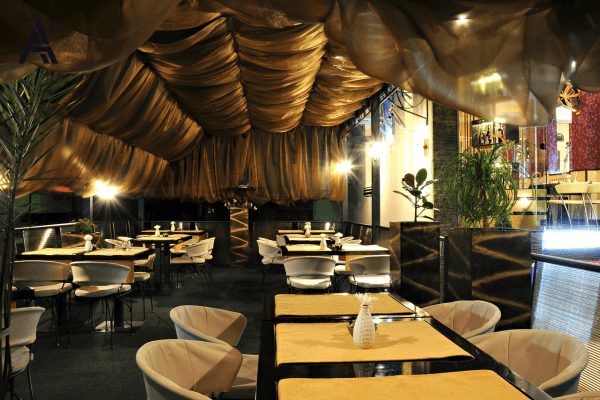
Reservation Management System: Fill Tables Every Night 2025 Your host checks the reservation book showing a fully booked Saturday night—62 covers scheduled, restaurant perfectly paced for exceptional service. Then reality hits. Your 6 PM four-top doesn't show. The 7:30 PM party of six cancels via text at 7:15. Two other reservations simply vanish without notice. By night's end, you've served 48 covers instead of 62—losing $1,200 in revenue while staff stood idle and food costs were wasted. Worse, you turned away walk-ins earlier because the book showed "full."
This nightmare plays out nightly in restaurants nationwide. Manual reservation management—phone calls, paper books, or basic digital calendars—creates operational chaos: double bookings, excessive no-shows, poor table utilization, staff confusion, and lost revenue from inefficiency. The result: 15-25% of reservations never materialize, costing the average restaurant $150,000-$300,000 annually in no-shows alone.
A sophisticated reservation management system transforms this chaos into predictable, optimized operations. Automated systems handle booking, send multi-touch confirmations, prevent no-shows, optimize table turns, manage waitlists intelligently, and ensure every table fills every night. In this comprehensive guide, we'll reveal exactly how restaurant booking software and table reservation automation create the infrastructure that maximizes covers, minimizes waste, and stabilizes revenue.
The True Cost of Poor Reservation Management Before exploring solutions, understand what inadequate systems actually cost your restaurant:
No-Show Revenue Destruction: The most visible cost. For a 100-seat restaurant booking 400 weekly covers at $65 average check, a 20% no-show rate means losing $5,200 weekly—$270,000 annually. That's pure revenue loss from guests who simply didn't show and didn't notify you in time to rebook.
Table Turn Inefficiency: Manual booking creates suboptimal spacing—excessive gaps between seatings, overlapping arrivals overwhelming kitchen, poor section balancing. Inefficient turns reduce daily covers by 10-15%, leaving $100-$200 daily on the table—$36,000-$73,000 annually.
Double Booking Disasters: Phone reservations, online bookings, and walk-in holds managed separately create conflicts. Double bookings force uncomfortable conversations, rushed table consolidations, and occasionally lost customers. Each incident damages reputation and creates service chaos.
Opportunity Cost of Turned-Away Guests: When your book shows "full" but actual occupancy is 75% due to no-shows, you've turned away real guests for phantom reservations. These turned-away guests often don't call back—permanent opportunity loss.
Staff Time Waste: Hosts spend 15-20 hours weekly calling to confirm reservations, managing the book manually, handling changes, and resolving conflicts. At $20/hour loaded cost, that's $15,000-$20,000 annually in pure administrative expense providing zero customer value.
Guest Frustration: Booking difficulties, lack of confirmations, and unclear communication create friction in the customer experience. Frustrated guests book elsewhere or don't return after negative experiences.
Inaccurate Planning: Without reliable data on actual attendance patterns, you can't accurately plan staffing, food prep, or inventory. This leads to either waste (over-preparation) or stockouts (under-preparation)—both costly.
For a mid-sized restaurant, poor reservation management costs $20,000-$40,000 monthly in lost revenue and operational inefficiency—$240,000-$480,000 annually. That's the true price of not having proper systems.
Essential Components of Modern Reservation Management Systems Comprehensive dining appointment systems include interconnected features working together:
Online Booking Portal: Guest-facing interface allowing: 24/7 reservation availability, real-time table availability display, party size and time selection, special request submission, new guest account creation, modification and cancellation capability, and mobile-responsive design.
Guests book conveniently on their schedule without phone calls.
Automatic Confirmation: Immediate booking acknowledgment via: email with reservation details, SMS text confirmation, calendar file for digital calendars (.ics), modification and cancellation links, and restaurant contact information.
Instant confirmation sets expectations and begins no-show prevention.
Multi-Touch Reminder System: Strategic reminder sequences: 72-hour advance reminder, 24-hour confirmation request, same-day arrival reminder, and walking directions and parking information.
Multiple touchpoints dramatically reduce forgotten reservations.
Waitlist Management: Intelligent queueing when fully booked: automatic addition to waitlist, real-time notification when tables become available, SMS alerts for opened slots, timed response windows (claim within 15 minutes), and automatic progression to next person if unclaimed.
Waitlists fill cancellations instantly rather than leaving gaps.
Table Optimization Engine: Smart algorithms that: analyze party sizes and table configurations, minimize empty seats through strategic combinations, pace reservations for optimal kitchen flow, balance server sections evenly, and adjust based on historical patterns.
Mathematical optimization fills more seats from same booking volume.
Guest Database Integration: Centralized profiles tracking: visit history and frequency, spending patterns and preferences, dietary restrictions and allergies, VIP designation for best guests, no-show history and reliability scores, and special occasions and celebrations.
Historical data enables personalization and risk management.
No-Show Protection: Systems preventing revenue loss: credit card holds for guarantees, deposit requirements for large parties, cancellation fees applied to repeat offenders, blacklist management for serial no-shows, and automatic waitlist notification when cancellations occur.
Financial accountability dramatically improves show rates.
Staff Communication Tools: Operational features ensuring smooth service: floor plan with real-time status, upcoming arrivals dashboard, special requests and preferences flagged, modification alerts to all staff, and table status tracking (seated, ordering, eating, paying).
Complete visibility prevents service gaps and confusion.
Analytics and Reporting: Business intelligence showing: reservation trends by day/time/season, no-show patterns and rates, table utilization efficiency, average party sizes, lead times for bookings, guest lifetime value, and revenue attribution by source.
Data-driven insights guide strategic decisions.
These components work together creating seamless experiences from initial booking through guest arrival and service delivery.
Implementing No-Show Reduction Strategies No-shows represent pure profit destruction. Systematic prevention is critical:
Strategy 1: Multi-Touch Confirmation Sequence
Deploy three strategically-timed touchpoints:
72-Hour Advance (for reservations made well in advance): "Your reservation at [Restaurant] is in 3 days! Looking forward to hosting you [Date] at [Time] for [Number] guests. Reply YES to confirm or MODIFY to change."
24-Hour Confirmation Request: "Tomorrow at [Restaurant]! Please reply YES to confirm your reservation for [Time] tomorrow. Can't make it? Reply CANCEL and we'll open the table for other guests."
Same-Day Reminder: "See you tonight at [Time]! Please arrive 5-10 minutes early. [Parking info]. Questions? Call [Number]."
This sequence reduces no-shows from 15-25% to 3-5%.
Strategy 2: Credit Card Guarantee System
Require credit cards for: all reservations (or reservations above certain party sizes), weekend and peak time bookings, special event dinners, and holiday reservations.
Clear policy: "Your credit card will be charged $25 per person if you don't show or cancel with less than 24 hours notice."
Accountability dramatically improves reliability.
Strategy 3: Deposit Requirements
For high-value situations: large parties (8+ guests), tasting menus and prix fixe events, private dining room reservations, and holidays (Valentine's Day, New Year's Eve, Mother's Day).
Collect $25-50 per person deposit applied to final bill. Sunk-cost psychology ensures show-ups.
Strategy 4: Reputation-Based Management
Track guest reliability: assign reliability scores based on history, flag repeat no-show offenders, implement graduated consequences (warnings, then deposits, then blacklist), and reward perfect attendance with VIP status or perks.
Data-driven approach targets intervention where needed while rewarding good behavior.
Strategy 5: Dynamic Overbooking
Sophisticated systems can: calculate expected no-show rates by time/day, automatically overbook by predicted no-show percentage, monitor confirmation responses adjusting predictions, and alert when risk of over-seating exceeds threshold.
This airline-style approach maximizes occupancy without creating chaos.
Strategy 6: Waitlist Conversion
When cancellations occur: immediately text waitlisted guests, give 10-15 minute response windows, automatically offer to next person if unclaimed, and track conversion rates optimizing future waitlist management.
Instant backfilling recovers revenue that would otherwise be lost.
Strategy 7: Cancellation Policy Communication
Make policies crystal clear: display prominently during booking, include in confirmation messages, remind in 24-hour confirmation, and enforce consistently without exception.
Clarity and consistency train guests to respect commitments.
Combining multiple strategies compounds effectiveness, pushing no-show rates below 5% even during peak periods.
Optimizing Table Utilization Through Restaurant Scheduling Tools Beyond preventing no-shows, smart systems maximize covers from available capacity:
Party Size Optimization: Systems analyze: your specific table configurations (2-tops, 4-tops, 6-tops, etc.), incoming reservation party sizes, and optimal combinations minimizing empty seats.
Example: System books party of 3 and party of 1 at adjacent 2-tops rather than seating both at 4-tops, freeing capacity for additional bookings.
Turn Time Management: Intelligent pacing based on: historical data showing average dining duration by meal period, service style (quick lunch vs. leisurely dinner), day of week patterns, and kitchen capacity constraints.
System spaces reservations appropriately—preventing both overwhelming rushes and inefficient gaps.
Section Balancing: Even distribution across: server sections preventing burnout, kitchen stations avoiding bottlenecks, and dining areas maintaining ambiance.
Balanced reservations improve service quality and operational efficiency.
Walk-In Accommodation: Dynamic capacity allocation: holding percentage of tables for walk-ins based on historical ratios, monitoring real-time availability, and adjusting holds based on actual walk-in patterns.
Balances reservation reliability with walk-in capture opportunity.
Prime Time Prioritization: Intelligent slot valuation: premium pricing or longer commitments for peak 7-8 PM slots, encouraging earlier/later bookings through incentives, and maximizing revenue per available seat hour.
Economic optimization of your most valuable inventory.
Two-Turn Optimization: For high-demand nights: booking same table twice (early 6 PM, late 8:30 PM), building sufficient turn time between seatings, and communicating clear dining windows to guests.
Double-turn nights can increase covers 40-60% during peak demand.
Private Dining Coordination: Seamless integration of: private room reservations, main dining room coordination, shared kitchen resource management, and staffing allocation.
Prevents conflicts between private events and regular service.
These optimization techniques increase covers served 12-20% from identical physical capacity through mathematical precision impossible with manual management.
Integration with Restaurant Operations Maximum value comes from reservation systems integrating with broader operations:
POS System Synchronization: Two-way data flow: reservations automatically create POS checks, actual spending data enriches guest profiles, payment information links to reservations, and preferences from orders inform future personalization.
Seamless financial and operational integration.
Kitchen Display Integration: Advance notice enabling prep: upcoming reservations with dietary restrictions, large party arrivals triggering kitchen alerts, special request visibility, and pacing information for flow management.
Kitchen operates proactively rather than reactively.
Staff Scheduling Alignment: Labor optimization based on: reservation volume projections, historical patterns by day/season, automatic shift alerts for unusual volumes, and server section assignments coordinated with bookings.
Right staffing levels at right times.
Inventory Management: Forecasting informing purchasing: expected covers driving ingredient orders, special requests flagging specific needs, historical patterns guiding par levels, and waste reduction through accuracy.
Guest Communication Systems: Unified messaging across: reservation confirmations and reminders, marketing campaigns and promotions, review requests and feedback, and loyalty program notifications.
Consistent, coordinated guest communication.
Financial and Accounting: Revenue tracking and reporting: actual vs. projected covers, no-show cost quantification, deposit and cancellation fee tracking, and revenue attribution by source.
Complete financial visibility and control.
Integration creates unified ecosystem where reservation data flows automatically between systems, eliminating manual transfer, reducing errors, and providing complete operational intelligence.
Measuring System Performance Track metrics proving reservation confirmation automation delivers results:
No-Show Rate: Should drop from 15-25% (manual) to 3-5% (automated). Calculate: (No-shows ÷ Total reservations) × 100.
Covers Per Available Seat: Measures utilization efficiency. Calculate: Total covers served ÷ (Number of seats × Days open). Improvement of 10-15% typical with optimization.
Average Party Size: Tracks efficient seating. Larger average party sizes indicate better table utilization and fewer empty seats.
Table Turn Rate: Especially important for high-demand periods. Calculate: Total covers ÷ Number of tables ÷ Service periods. Higher turns without compromising experience = better efficiency.
Booking Conversion Rate: (Confirmed reservations ÷ Booking attempts) × 100. Online systems typically achieve 40-60% conversion versus 20-30% for phone-only.
Cancellation Lead Time: Average hours notice before cancellation. Longer lead times allow better backfilling from waitlists.
Waitlist Conversion: (Waitlist guests who ultimately dined ÷ Total waitlist additions) × 100. Efficient systems convert 40-60% of waitlist.
Revenue Per Available Seat Hour (RevPASH): Most important metric. Calculate: Total revenue ÷ (Number of seats × Hours open). Comprehensive systems improve RevPASH 15-25%.
Guest Satisfaction Scores: Survey guests about booking ease, communication quality, and overall experience. High scores validate system effectiveness.
Most restaurants implementing comprehensive reservation management systems see no-shows drop 60-80%, table utilization improve 10-15%, and revenue per seat increase 12-20% within 3-6 months.
Real-World Results from Professional Systems The impact of implementing sophisticated restaurant booking software extends beyond convenience:
No-Show Transformation: A Chicago steakhouse reduced no-shows from 24% to 4% through three-touch reminders and credit card guarantees. This recovered $6,800 weekly in previously lost revenue—$354,000 annually while eliminating staff frustration and operational chaos.
Capacity Maximization: A Miami restaurant implemented table optimization algorithms that increased average nightly covers from 127 to 146 (15% improvement) using identical physical capacity. Additional 19 covers nightly at $72 average generated $500,000+ additional annual revenue.
Waitlist Conversion: A Denver restaurant with strong weekend demand implemented automated waitlist texting. Cancellation recovery improved from 15% (manual calling) to 67% (instant texts), filling nearly 30 additional tables monthly that would have otherwise sat empty.
Operational Efficiency: A Seattle restaurant eliminated 18 hours weekly of host phone time through online booking and automated confirmations. This $936 weekly savings ($48,700 annually) was reinvested in guest experience improvements generating better reviews and repeat visits.
Revenue Predictability: A Los Angeles restaurant achieved such reliable attendance through confirmation systems that they confidently increased staffing and food prep based on reservation count. This aggressive preparation improved service speed and quality, generating higher guest satisfaction scores and more frequent returns.
Transform Your Reservation Operations Reservation management systems aren't luxury technology—they're fundamental infrastructure separating profitable restaurants from struggling ones. While competitors manually manage bookings, chase no-shows, and leave revenue on the table, sophisticated systems ensure maximum occupancy, minimal waste, and optimized operations.
The economics are undeniable: investing $200-$600 monthly in professional systems saves $8,000-$15,000 monthly in recovered no-show revenue and improved efficiency—delivering 1,500-7,500% ROI. Beyond financial returns, systems create operational consistency and guest experience quality impossible with manual processes.
Perhaps most importantly, professional reservation management transforms staff experience. Instead of drowning in administrative chaos, your team focuses on hospitality—greeting guests warmly, delivering exceptional service, and creating memorable experiences that generate organic word-of-mouth.
Ready to eliminate no-shows and fill every table every night? AI Agents Plus specializes in implementing comprehensive reservation management systems specifically designed for restaurants. Our complete solution includes: restaurant booking software selection and configuration, automated confirmation and reminder sequences, no-show prevention strategies including deposits and guarantees, table optimization algorithms maximizing covers, waitlist management with instant backfilling, POS and kitchen integration, staff training and change management, and ongoing performance optimization. We handle complete technical implementation and strategic design while you focus on exceptional food and service. Our systems consistently help restaurants reduce no-shows 60-80%, increase table utilization 10-15%, and boost revenue per seat 12-20%. Contact AI Agents Plus today to discover how professional reservation management can fill your dining room consistently, stabilize your revenue, and build the systematic operations that enable predictable growth. Your tables deserve to be full every service—let automation make it reality.
Reservation Management System: Practical Implementation
Use Reservation Management System to remove repetitive tasks, improve response speed, and keep a clear handoff to your team for exceptions.
Related AI Services
If you need hands-on implementation, these services can help:
About Admin
AI automation expert and thought leader in business transformation through artificial intelligence.