
Nvidia Acquires Illumex for $60M: Why Semantic AI Just Got Strategic
Nvidia's $60M acquisition of Israeli semantic AI startup Illumex signals that making enterprise data AI-ready is now a critical infrastructure challenge. Here's what this means for the AI stack.
Nvidia just acquired Illumex, an Israeli AI startup that built semantic infrastructure for enterprise knowledge. The deal reportedly closed at $60 million.
On the surface, this looks like a small acquisition for a $2 trillion company. But the strategic importance is much bigger than the price tag suggests.
What Illumex Actually Built
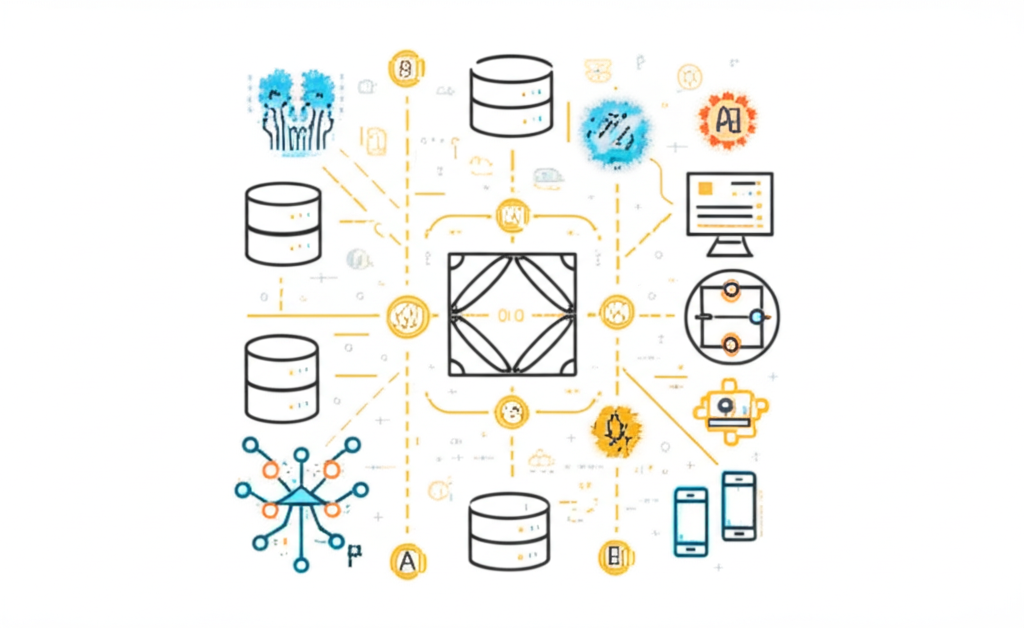
Illumex created what they call a Generative Semantic Fabric (GSF)—software that automatically transforms messy enterprise data into AI-ready business language.
Here's the problem they solved: Most companies have data spread across dozens of systems—CRM, ERP, databases, file shares, collaboration tools. Each system uses different terminology, structures, and formats. When you try to train AI on this data or build AI agents that work across these systems, nothing connects.
Illumex's platform:
- Builds semantic ontologies that map relationships between concepts across different data sources
- Automates the semantic layer creation instead of requiring manual data engineering
- Adds business context so AI systems understand what the data actually means
Think of it as translation infrastructure. It doesn't just move data around—it helps AI systems understand what the data represents in business terms.
Why Nvidia Wants This
Nvidia sells AI compute infrastructure—GPUs, networking, complete AI data center solutions. But they've realized that raw compute power isn't the bottleneck anymore.
The real problem is getting enterprise data into a format where AI can actually use it effectively.
Here's how this acquisition fits Nvidia's strategy:
1. Complete the AI infrastructure stack: Nvidia already provides hardware, CUDA, NIM (Nvidia Inference Microservices), and enterprise AI platforms. Adding semantic data infrastructure fills a critical gap.
2. Enterprise AI deployment advantage: When Nvidia sells AI solutions to large enterprises, data integration is always the hard part. Having semantic layer technology in-house makes deployments faster and more reliable.
3. Competitive positioning against hyperscalers: AWS, Google Cloud, and Azure all have their own data infrastructure tools. Nvidia needs equivalent capabilities to compete in the enterprise AI platform market.
4. AI agent enablement: Modern AI agents need to work across multiple systems. That requires semantic understanding of how different data sources relate to each other.
The Broader Semantic AI Market
Illumex isn't the only company working on this problem. The semantic layer for AI is becoming a hot category:
- Databricks is building semantic modeling into Unity Catalog
- Snowflake has semantic layer capabilities in its data cloud
- ThoughtSpot focuses on semantic search and natural language queries
- Metaphor Systems (different company, similar space) is building semantic search APIs
But most of these are data platform companies adding semantic capabilities. Nvidia is doing the opposite—an AI infrastructure company acquiring semantic data expertise.
What This Means For Your Business
If you're building AI systems or evaluating AI infrastructure, here's what to take away:
-
The semantic layer is now essential: You can't just throw raw data at LLMs and expect good results. You need structured understanding of what your data represents.
-
Data architecture matters more than you think: The companies succeeding with AI aren't the ones with the most data—they're the ones with the cleanest semantic models.
-
Don't wait for perfect infrastructure: You don't need a $60M acquisition to build semantic understanding. Tools like LangChain, LlamaIndex, and open-source knowledge graph frameworks can get you 80% of the way there.
-
Consider semantic-first design: When building new data systems, start with semantic modeling from day one. It's much harder to add later.
Technical Implementation Tips
If you're building AI systems that need to work across multiple data sources:
Start with a knowledge graph: Map the key entities in your business domain and their relationships. This doesn't have to be complex—a simple graph database like Neo4j can work.
Use embedding-based retrieval with metadata: When doing RAG (Retrieval-Augmented Generation), include rich metadata with your embeddings. Don't just store text—store business context.
Build a business glossary: Document what terms mean in your specific business context. Feed this to your AI systems as context.
Test across edge cases: Semantic understanding breaks down at domain boundaries. Make sure your AI agents handle ambiguous queries gracefully.
The Competitive Landscape
Nvidia's acquisition puts pressure on other AI infrastructure players:
- AMD needs equivalent capabilities to compete in the enterprise AI market
- Intel is also building out AI infrastructure but has been slower to move
- Google and Amazon have their own semantic layer tech but it's tightly coupled to their clouds
Expect more acquisitions in this space. Semantic AI infrastructure is too important to be an afterthought.
Looking Ahead
The real validation comes when Nvidia integrates Illumex technology into its enterprise offerings. Watch for:
- NIM upgrades with semantic understanding built-in
- Enterprise AI platform enhancements that make data integration easier
- Partnership announcements with major enterprise software vendors
The companies that figure out semantic AI infrastructure first will have a major advantage in enterprise AI deployments. Nvidia just signaled they understand that.
If your AI strategy doesn't include a plan for semantic data infrastructure, now's the time to add one.
Build AI Systems With Solid Data Foundations
At AI Agents Plus, we help companies architect AI systems that actually work with their existing data infrastructure. Whether you need:
- Custom AI Agents — Systems that understand your specific business context and terminology
- Data Integration for AI — Connect AI to your existing systems with proper semantic understanding
- Voice AI Solutions — Natural conversational interfaces that understand your domain
We've built AI systems for startups and enterprises across Africa and beyond.
Ready to explore AI infrastructure that actually fits your business? Let's talk →
About AI Agents Plus Editorial
AI automation expert and thought leader in business transformation through artificial intelligence.


