Mutable Tactics Raises €1.8M for Autonomous Drone AI — Defense Tech Meets Physical AI
UK startup Mutable Tactics closed €1.8M to build AI software that lets drones, ships, and ground robots operate autonomously in contested environments. This is physical AI for defense—and it's accelerating fast.
Mutable Tactics, a UK defense AI startup, just closed a €1.8 million pre-seed round led by Seraphim Space, with backing from the UK's National Security Strategic Investment Fund.
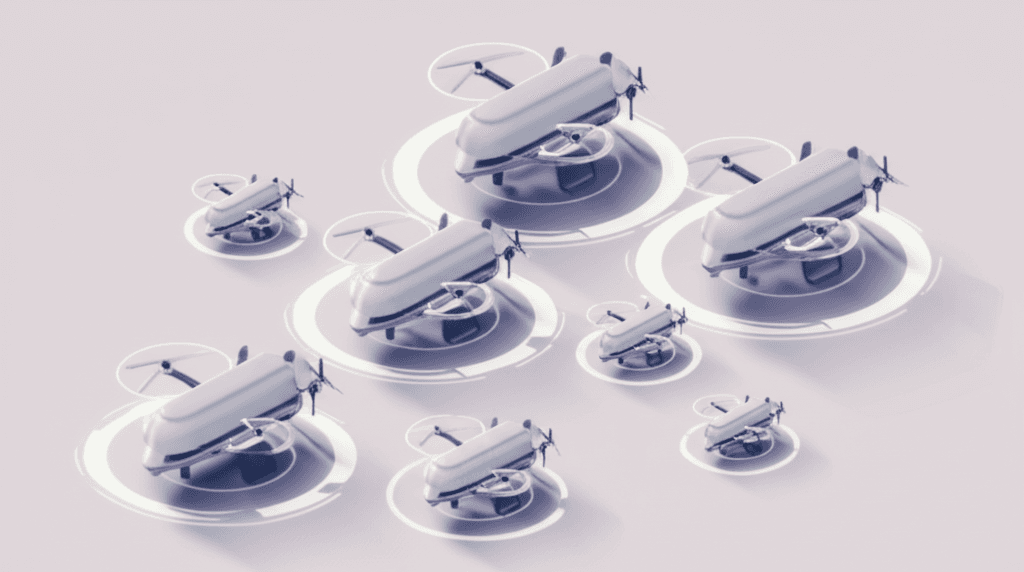
Their mission: Build AI software that enables autonomous military systems—drones, ships, ground robots—to operate in GPS-denied, communications-disrupted, contested environments.
This isn't chatbots or image generation. This is physical AI for defense, and the stakes are existential.
What Mutable Tactics Actually Builds
Mutable Tactics develops decision-making AI for unmanned systems operating in hostile conditions.
Core capabilities:
1. GPS-independent navigation. When GPS is jammed (standard in modern warfare), their AI uses visual odometry, inertial sensors, and terrain mapping to maintain position awareness.
2. Communications-resilient operations. Drones can lose contact with operators for extended periods. Mutable's AI lets them continue missions autonomously, making tactical decisions based on pre-defined rules of engagement.
3. Multi-agent coordination. Swarms of drones coordinating without centralized control. Each unit shares information when possible, but can operate independently when comms are disrupted.
4. Adversarial environment adaptation. The AI adapts to active countermeasures—jamming, spoofing, hostile fire—in real time.
Why this matters: Modern military drones are heavily dependent on GPS and constant communications. Adversaries (China, Russia, Iran) have invested heavily in electronic warfare that disrupts both. Autonomous AI is the countermeasure.

The Market: Defense Autonomy Is Accelerating
The Ukraine conflict proved that cheap autonomous systems can challenge expensive manned platforms.
Key lessons from Ukraine:
- Small FPV drones ($500-2000 each) taking out tanks worth $5-10 million
- Swarm tactics overwhelming traditional air defenses
- Electronic warfare rendering GPS-guided systems ineffective
- Human operators becoming bottlenecks (can only control 1-2 drones simultaneously)
Strategic response: Every major military is now investing in autonomous systems that can operate at scale without constant human control.
Market size projections:
- Global military AI market: $18.3B by 2030 (CAGR 13.4%)
- Autonomous weapons systems: $8.9B by 2028
- Counter-drone systems (which autonomy enables): $12.6B by 2030
Mutable Tactics is positioning as the software layer for this hardware boom.
Why UK/EU Defense AI Is Strategic
Mutable Tactics is based in the UK and backed by the UK National Security Strategic Investment Fund—a government fund designed to ensure sovereign capabilities in critical defense technologies.
Strategic context:
Europe's defense autonomy problem. European militaries rely heavily on US suppliers (Northrop Grumman, Lockheed Martin, General Atomics). If geopolitical priorities diverge, that's a vulnerability.
Export control risks. US export controls (ITAR) restrict what technologies can be sold to non-US allies. A UK-developed system avoids those restrictions.
Ukraine's accelerant effect. European governments are urgently funding domestic defense AI to reduce dependence on US tech and respond to Russia's military modernization.
NATO integration requirements. Systems need to be interoperable with allies. A UK startup building for NATO standards has a built-in market.
Mutable Tactics is part of a broader European defense tech revival:
- Helsing (Germany): €450M for AI defense systems
- Anduril Europe (UK): Palmer Luckey's defense tech expansion
- ARX Robotics (Switzerland): Autonomous ground vehicles
The Technical Challenge: Autonomy in Adversarial Environments
Building self-driving cars is hard. Building autonomous military systems is exponentially harder.
Why?
1. Adversaries actively sabotage your sensors. GPS spoofing makes drones think they're in the wrong location. Jamming blocks communications. Visual camouflage confuses computer vision.
2. Rules of engagement are complex. A self-driving car needs to avoid hitting pedestrians. A military drone needs to distinguish combatants from civilians, understand proportionality, and make split-second decisions in ambiguous situations.
3. No room for "fail-safe" modes. Consumer AI can default to "wait for human input." Military AI operating behind enemy lines can't.
4. Real-time adaptation. The environment changes constantly. Terrain shifts, threats move, communications come and go. The AI must adapt continuously without human intervention.
Mutable Tactics' approach:
- Hybrid autonomy: AI handles low-level navigation and immediate threats; humans set mission objectives and rules of engagement
- Offline learning: Systems pre-trained on diverse scenarios, then adapt in real-time using reinforcement learning
- Layered decision-making: Fast reactive behaviors for immediate threats, slower strategic reasoning for mission planning
Ethical and Regulatory Considerations
Autonomous weapons are controversial. Here's the debate:
Arguments for autonomy:
- Speed. AI reacts in milliseconds; humans need seconds. In drone warfare, milliseconds matter.
- Scalability. One operator can't control 100 drones. AI can coordinate thousands.
- Precision. Well-designed AI can be more precise than humans under stress, reducing collateral damage.
Arguments against:
- Accountability. If an autonomous system makes a wrong decision, who's responsible?
- Escalation risk. Fully autonomous weapons could lower the threshold for conflict.
- Adversarial AI. If both sides deploy autonomous systems, conflicts could escalate faster than humans can react.
Regulatory landscape:
- No international ban (yet). Efforts to ban "lethal autonomous weapons" (LAWs) have stalled at the UN.
- NATO policy: "Meaningful human control" required. AI can assist, but humans must approve lethal decisions.
- US DOD Directive 3000.09: Autonomous weapons allowed, but with human oversight and testing requirements.
- EU AI Act: Military AI mostly exempt, but ethical guidelines under development.
Mutable Tactics operates within this "human-in-the-loop" framework. Their AI handles navigation and coordination, but lethal decisions require human authorization.
Investor Thesis: Why Seraphim Backed This
Seraphim Space is a specialized VC focused on space and defense tech. They led Mutable's round for three reasons:
1. Dual-use potential. Technology developed for military drones applies to commercial logistics, search and rescue, infrastructure inspection. That expands the addressable market.
2. Sovereign capability premium. Governments will pay a premium for domestically developed defense AI. That's pricing power.
3. Hardware-agnostic software. Mutable isn't building drones—they're building the software that runs on any drone platform. That's higher-margin and more scalable than hardware.
The presence of the UK National Security Strategic Investment Fund signals government commitment. In defense, government backing often leads to procurement contracts.
What This Means for Physical AI
Mutable Tactics is part of a larger trend: AI moving from digital to physical domains.
Digital AI (ChatGPT, image generation, code assistants): Operates in software environments with clear rules, undo buttons, and low stakes for failure.
Physical AI (autonomous drones, robots, vehicles): Operates in the real world with ambiguous conditions, irreversible actions, and life-or-death stakes.
Defense is an early adopter of physical AI because:
- Funding: Defense budgets are massive and willing to pay for cutting-edge tech
- Risk tolerance: Military operators accept higher failure rates than civilian markets
- Clear objectives: "Neutralize threat" is simpler than "navigate Manhattan at rush hour"
But the technology developed for defense will eventually spill over into civilian applications:
- Search and rescue: Autonomous drones finding survivors in disaster zones
- Industrial inspection: Drones inspecting pipelines, power lines, offshore platforms in harsh conditions
- Agriculture: Autonomous ground vehicles managing large-scale farms
Mutable Tactics is building the foundation for all of these.
What to Watch
1. Procurement contracts. Pre-seed funding is validation. Actual defense contracts are proof the technology works.
2. NATO trials. Will Mutable's systems be tested in multinational exercises? That's the path to broader adoption.
3. Dual-use commercialization. Do they pivot to civilian markets, or stay defense-focused?
4. Regulatory shifts. If international pressure grows to ban autonomous weapons, Mutable's business model changes.
Looking Ahead
Autonomous military systems are inevitable. The question isn't if, but who builds them and under what rules.
Mutable Tactics represents a European answer to that question: Build sovereign capabilities, prioritize human oversight, and establish ethical frameworks before the technology outpaces governance.
For founders building in physical AI: Watch this space. The lessons learned in defense autonomy—how to build AI that operates reliably in adversarial, unpredictable environments—will define the next generation of real-world AI applications.
Build AI That Works For Your Business
At AI Agents Plus, we help companies move from AI experiments to production systems that deliver real ROI. Whether you need:
- Custom AI Agents — Autonomous systems that handle complex workflows, from customer service to operations
- Rapid AI Prototyping — Go from idea to working demo in days using vibe coding and modern AI frameworks
- Voice AI Solutions — Natural conversational interfaces for your products and services
We've built AI systems for startups and enterprises across Africa and beyond.
Ready to explore what AI can do for your business? Let's talk →
About AI Agents Plus Editorial
AI automation expert and thought leader in business transformation through artificial intelligence.


