
Japan Bets $15B on Physical AI While Everyone Else Builds Chatbots
Japan announces $15 billion AI infrastructure fund focused on robotics, manufacturing automation, and physical AI — not chatbots. A calculated bet on the post-LLM era.
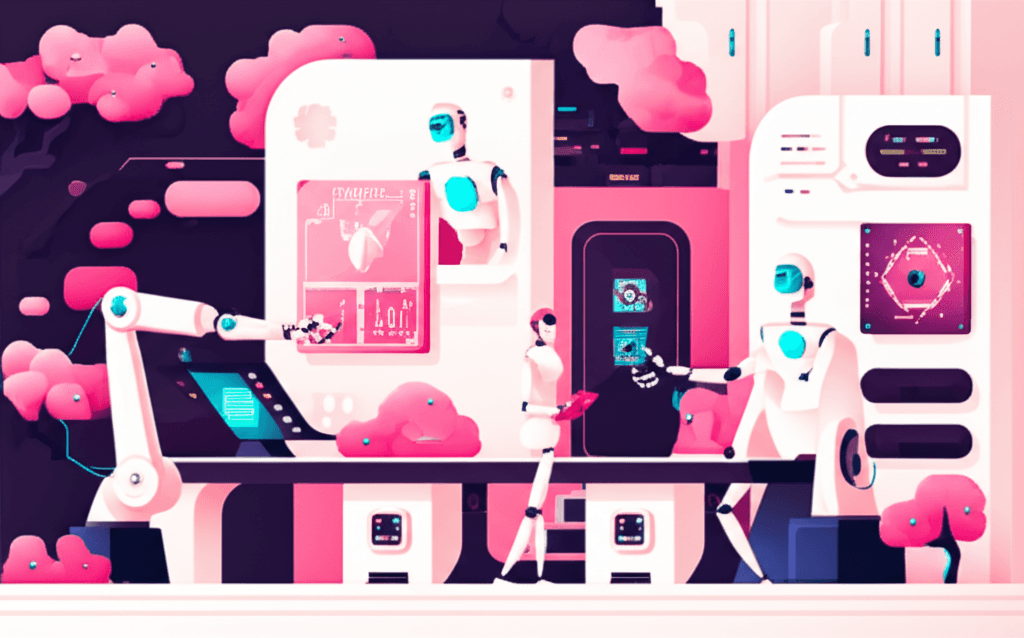
Japan just announced a $15 billion national AI infrastructure fund, and it's not going where you'd expect. While Silicon Valley pours billions into better text generation and reasoning models, Japan's betting on physical AI — robots, manufacturing automation, and AI systems that interact with the real world.
It's a calculated divergence. While the US and China race to build the smartest chatbot, Japan's positioning for the era when AI needs to do more than talk.
What's In The $15B Fund
The Japanese Ministry of Economy, Trade and Industry (METI) unveiled the fund details this week. Here's the breakdown:
$6B for robotics infrastructure: Building next-gen manufacturing facilities with integrated AI systems. Think Tesla's Optimus, but for Japanese automakers and electronics giants like Toyota, Sony, and Panasonic.
$4B for edge AI computing: Distributed compute infrastructure for real-time AI in factories, warehouses, and logistics. Low-latency decisions when moving physical objects matters more than cloud reasoning.
$3B for physical AI R&D: Grants and partnerships for universities and private companies developing sensors, actuators, and control systems for AI-powered machinery.
$2B for AI safety and standards: Developing regulatory frameworks for robots operating in public spaces, factories, and homes.
This isn't just throwing money at AI startups. It's infrastructure — building the pipes for a new kind of AI economy.
Why Physical AI Matters More Than You Think
Most AI discussion focuses on language models and reasoning. But the next $10 trillion in economic value comes from AI that does things, not just says things.
Consider the real bottlenecks in business:
- Manufacturing: Labor shortages, quality control, supply chain disruptions
- Logistics: Warehouse picking, last-mile delivery, inventory management
- Agriculture: Precision farming, harvesting, crop monitoring
- Construction: Skilled labor gaps, site safety, project delays
- Healthcare: Elder care, surgery assistance, patient monitoring
All of these need AI that can see, manipulate, and navigate physical environments. Language models help you plan the work. Physical AI actually does it.
Japan's Demographic Advantage (By Necessity)
Japan isn't choosing physical AI for philosophical reasons — it's existential.
The country faces a brutal demographic crunch:
- Working-age population: Down 20% since 2000, projected to drop another 25% by 2050
- Manufacturing workforce: Average age 48 and rising
- Elder care workers needed: 3.8M by 2040 (current: 2.1M)
You can't ChatGPT your way out of this. You need robots that can weld car parts, pick strawberries, and help elderly citizens get dressed.
Japan's government sees physical AI not as an opportunity, but as infrastructure for national survival.
The Technology Angle: What Makes Physical AI Different
Building AI that interacts with the physical world is fundamentally harder than building language models:
Real-Time Constraints: GPT-4 can take 2 seconds to respond. A robot welding at 1000°C can't. Edge inference needs millisecond latency.
Embodied Learning: You can't train a factory robot by scraping the internet. It needs to learn in the real world, with real consequences for mistakes.
Multi-Modal Integration: Physical AI needs vision, touch, force feedback, proprioception, and language understanding working together seamlessly.
Safety Requirements: A hallucinating chatbot is embarrassing. A hallucinating industrial robot is deadly.
That's why Japan's focusing on infrastructure — compute, sensors, standards — not just throwing venture capital at AI startups.
What The Competition Is Doing
United States: Most investment still flowing into foundation models (OpenAI, Anthropic) and vertical SaaS. Physical AI gets attention via Tesla (Optimus), but government support is scattered.
China: Significant physical AI investment, especially in manufacturing automation and autonomous vehicles. DeepSeek's recent robotics announcements signal serious intent.
Europe: Strong on AI regulation, weaker on physical AI deployment. Germany and France have pockets of excellence in industrial automation.
South Korea: Major investment in humanoid robotics (Hyundai's recent $6.3B AI hub) and semiconductor infrastructure. Closest competitor to Japan's approach.
Japan's bet: the West is over-indexed on chatbots, China's spread too thin, and there's a window to own the physical AI stack.
What This Means For Your Business
Even if you're not in Japan, this fund signals where AI value is heading:
If You're In Manufacturing
Watch Japan's automation playbook closely. The robots and systems developed under this fund will set global standards. Companies that learn to integrate physical AI early will have 5-year advantages.
If You're In Logistics
Japanese logistics giants (Hitachi, Mitsubishi) will deploy AI systems at scale. Expect innovations in warehouse automation and autonomous vehicles to flow from this investment.
If You're Building AI Products
Consider: Is your AI just better automation of knowledge work, or does it interact with the physical world? The latter commands higher margins and deeper moats.
If You're An Investor
Physical AI infrastructure plays are scarce. Companies building sensors, edge compute, robot control systems, or simulation platforms for physical AI training are worth a look.
The Risks In Japan's Bet
Not everyone's convinced this strategy works:
Execution Risk: Japan has a history of ambitious tech initiatives (remember the Fifth Generation Computer project?) that under-delivered. Bureaucracy and risk-aversion can kill innovation.
Talent Gap: Top AI researchers still gravitate to Stanford, MIT, OpenAI. Can Japan attract the talent needed to make this work?
Speed: China and the US move fast. Japan's consensus-driven culture may lag. By the time infrastructure is built, someone else might have won.
Integration Challenges: Physical AI needs tight coordination between hardware makers, software developers, and industry users. That's hard to orchestrate even with $15B.
But Japan's playing a different game. They're not trying to beat OpenAI at reasoning. They're building a different kind of AI economy entirely.
What To Watch Next
Key milestones to track:
-
Partnership announcements (Q2 2026): Which companies get the first grants? Toyota, Sony, SoftBank Robotics are likely early winners.
-
Pilot deployments (Q3-Q4 2026): Expect showcase factories demonstrating integrated physical AI systems.
-
Standards releases (Late 2026): Japan will push for international standards in robot safety and interoperability. Watch ISO and IEC committees.
-
Talent initiatives: University partnerships, visa programs for AI researchers, corporate training programs.
The fund's first deployments won't look like magic — they'll be incremental improvements in factory efficiency and logistics automation. But that's the point. Japan's betting on boring, profitable, physical AI over flashy chatbots.
Build AI That Does Real Work
At AI Agents Plus, we build AI systems that go beyond conversation — agents that automate complex workflows, integrate with your tools, and deliver measurable business results.
Our expertise includes:
- Custom AI Agents — Autonomous systems for operations, customer service, and business processes
- Rapid Prototyping — Fast iteration from concept to working system using modern AI frameworks
- Integration Architecture — Connect AI to your existing systems, databases, and APIs
Based in Nairobi, we help companies across Africa and globally deploy AI that drives real ROI.
Ready to put AI to work in your business? Let's talk →
About AI Agents Plus Editorial
AI automation expert and thought leader in business transformation through artificial intelligence.


