
Get Google Reviews: Pressure Washing Reputation Guide 2025
Generate 30-100+ Google reviews for your pressure washing business with automated campaigns. Build 5-star reputation and attract more customers effortlessly.
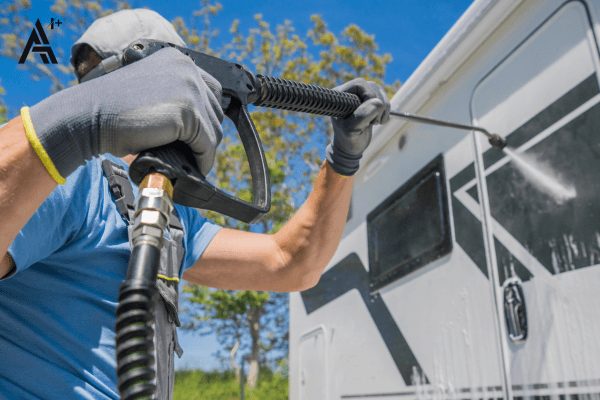
When a homeowner searches "pressure washing near me" on their phone, they're presented with dozens of options in seconds. The deciding factor between you and your competitors often isn't price, experience, or even proximity—it's your Google reviews. A pressure washing company with 120 five-star reviews will capture the majority of leads in their market, while an equally skilled operator with only 8 reviews struggles to get calls, even at lower prices. Your online reputation has become more valuable than years of quality work, because potential customers judge your business by what strangers say about you online before they ever speak with you. This reality frustrates many pressure washing professionals who do exceptional work but lack systematic approaches to capturing Google reviews pressure washing customers are eager to leave. The good news? Building a stellar online reputation isn't left to chance. Strategic online reputation management transforms satisfied customers into vocal advocates, generating a steady stream of authentic reviews that attract new business automatically. In this comprehensive guide, we'll show you exactly how to generate 30-100+ Google reviews that establish your pressure washing business as the obvious choice in your market. Why Google Reviews Dominate Pressure Washing Lead Generation Before diving into tactics, it's essential to understand why Google reviews specifically—not just general online reputation—matter so profoundly for pressure washing businesses: Local Pack Dominance: When someone searches for pressure washing services, Google displays the "Local Pack"—those three businesses with map pins at the top of search results. Review quantity, quality, recency, and velocity (how frequently you get new reviews) are major ranking factors determining which businesses appear in this coveted position. More reviews mean more visibility, which generates more leads, creating a powerful growth flywheel. Trust Signals for Unknown Services: Unlike restaurants or retail stores where customers can visit and evaluate before purchasing, pressure washing is purchased sight unseen based entirely on reputation. Homeowners hire you to come to their property with chemicals and equipment—they need substantial trust before making that commitment. Customer testimonials provide that trust at scale. Visual Impact of Star Ratings: In search results, review stars appear next to your business listing, creating immediate visual differentiation. A listing with 4.9 stars and 150 reviews stands out dramatically from competitors with 3.8 stars and 12 reviews. This visual impact influences click-through rates even before prospects read individual reviews. Mobile Search Behavior: Over 75% of pressure washing searches happen on mobile devices, often while homeowners are literally looking at their dirty driveways or moldy siding. Mobile users expect instant answers and make quick decisions. They'll typically call or click the top-reviewed business they see rather than extensively researching multiple options. Review Content as Marketing Copy: Detailed pressure washing reviews function as authentic marketing messages written by customers rather than you. When satisfied clients describe specific results—"removed 10 years of grime from my driveway," "my house looks brand new," "incredibly thorough and detail-oriented"—they're selling your services more effectively than any ad copy you could write. Competitive Barrier Creation: Once you establish review dominance with 100+ positive reviews, you create a substantial barrier to entry for competitors. New pressure washing businesses struggle to compete when you have overwhelming social proof, and even established competitors find it difficult to catch up because you continue adding reviews while they start from behind. The Psychology Behind Review Generation Understanding why customers do or don't leave reviews is fundamental to building effective review generation campaigns. Human behavior around reviews follows predictable patterns: The 5% Rule: Without prompting, only about 5% of satisfied customers will voluntarily leave reviews. They genuinely intend to, appreciate your service, and want to help—but life gets busy and they forget. The remaining 95% of satisfied customers need a systematic prompt at the right moment to convert intention into action. The Reciprocity Principle: When you deliver exceptional service, customers feel grateful and want to reciprocate. Asking for a review immediately after project completion taps into this reciprocity impulse while emotions are strongest. The longer you wait, the more this impulse fades. The Path of Least Resistance: Every additional step required to leave a review dramatically reduces completion rates. If a customer must search for your business on Google, figure out how to leave a review, and compose something meaningful, most won't complete the process. Making it effortless—literally one click to your review page—increases completion exponentially. Social Proof Begets Social Proof: Customers are more likely to leave reviews when they see others have already done so. A business with 50 reviews signals that "leaving reviews is what customers do here," while a business with 3 reviews suggests review-leaving isn't part of the experience. This creates a challenging chicken-egg problem for new businesses. The Negativity Bias: Dissatisfied customers are naturally more motivated to leave reviews than satisfied ones—they want to warn others and feel heard. This asymmetry means that without systematic positive review generation, your online reputation will skew negatively regardless of your actual service quality. You must proactively encourage satisfied customers to share their experiences to counterbalance this natural bias. The Immediate Gratification Factor: Customers are most motivated to leave reviews immediately after service completion when the positive experience is fresh. Delayed requests—even 24-48 hours later—see significantly lower response rates. The optimal window is within 1-4 hours of project completion. Building Your Review Request System The foundation of consistent review generation is a systematic review request system that operates automatically rather than depending on memory and manual effort. Here's how to build a framework that generates reviews consistently: Timing Optimization: Send review requests immediately after job completion, ideally while you're still on-site or within 30-60 minutes of leaving. For pressure washing, this is particularly effective because the visual transformation is fresh—driveways and siding look dramatically different, maximizing customer satisfaction and enthusiasm. Multi-Channel Approach: Don't rely on a single communication method. The most effective systems deploy requests via multiple channels: in-person verbal request at job completion, immediate text message with direct link, follow-up email 2-4 hours later, and a final reminder 24 hours later if they haven't reviewed. This multi-touch sequence captures customers regardless of their preferred communication channel. Personalized Messaging: Generic review requests feel automated and impersonal. Include specific details about their project: "Thanks for trusting us with your driveway and walkway cleaning today! We loved seeing the transformation at your home on Maple Street." This personalization demonstrates genuine appreciation and increases compliance. Direct Review Links: Never make customers search for your business to leave reviews. Provide a direct link that opens your Google review page with one click. These links are free to generate through your Google Business Profile and dramatically increase completion rates by removing friction. Visual Reinforcement: When requesting reviews via email, include before-and-after photos of their specific project. These images remind them of the dramatic improvement you delivered, reinforcing satisfaction and motivating them to share their positive experience. The Two-Step Filter: For maximum reputation protection, implement a two-step process: first send a satisfaction survey asking them to rate their experience 1-5 stars. If they rate 5 stars, immediately direct them to leave a Google review. If they rate 4 stars or below, route them to private feedback forms where you can address concerns before they become public negative reviews. Incentive Ethics: Never offer direct compensation (discounts, cash, gift cards) in exchange for reviews—this violates Google's terms of service and can result in review removal or profile penalties. However, you can and should make review-leaving easy, appreciated, and part of your standard customer experience without crossing into prohibited territory. Crafting Effective Review Request Messages The language and structure of your review requests significantly impact response rates. Here are proven templates and principles for pressure washing review requests: The In-Person Request: Train your team to ask verbally before leaving each job site: "We really appreciate your business today! We're a small, local company and online reviews help us tremendously. If you're happy with how your [driveway/house/deck] turned out, would you be willing to leave us a quick Google review? I'll send you a text with a direct link in just a moment to make it super easy." This face-to-face request creates personal commitment and social pressure to follow through. Most customers will agree in person, and the subsequent text provides the easy path to fulfill that commitment. The Immediate Text Message: Within minutes of leaving, send: "Hi [Name]! This is [Your Name] from [Company]. Thanks again for the opportunity to clean your [service area] today—it looks amazing! We'd be so grateful if you could share your experience on Google. Just tap this link and it takes 60 seconds: [direct review link]. Thanks for your support!" This message is warm, specific, brief, and actionable. The urgency of "just now" plus the ease of one-click access generates high response rates. The Email Follow-Up: 2-4 hours after completion, send an email with before-and-after photos: "Hi [Name], we wanted to share these before-and-after photos of your [service] today. The transformation turned out fantastic! If you're happy with the results, we'd truly appreciate if you could leave us a Google review. Your feedback helps other homeowners find quality pressure washing services. Click here to review: [link]. Thank you for choosing [Company]!" The visual reminder of dramatic improvement reinforces satisfaction right when you're asking for action. The 24-Hour Reminder: If they haven't left a review within 24 hours, send a gentle final reminder: "Hi [Name], I wanted to follow up one more time about leaving a review for your recent pressure washing service. I know life gets busy, so I wanted to make sure you had the link if you're still willing: [link]. No pressure at all—we just really appreciate customers who take a moment to share their experience. Thanks again!" This respectful persistence captures the people who genuinely intended to review but forgot, without being annoying. The Seasonal Reactivation: Several months after service, reach out with a satisfaction check-in that naturally leads to a review request: "Hi [Name], we hope your [driveway/siding/deck] is still looking great from our cleaning back in [month]! We'd love to hear how everything has held up. If you've been happy with the results, we'd still welcome a Google review anytime. Here's the link: [link]. Thanks!" This late-stage request captures additional reviews from satisfied customers who never got around to it initially. Implementing Reputation Building Automation Manual review requests are better than nothing, but they're inconsistent and time-consuming. Reputation building automation ensures every customer receives timely, professional review requests without requiring manual effort: Trigger-Based Workflows: Configure your system to automatically send review request sequences when specific triggers occur: job marked "complete" in your scheduling system, final payment received, or satisfaction survey submitted with high ratings. These triggers ensure perfect timing without memory dependence. CRM Integration: Your automation platform should integrate with your customer management system, automatically pulling customer names, contact information, service details, and project specifics to personalize messages. This integration eliminates manual data entry and ensures accuracy. Smart Scheduling: Advanced systems can optimize send times based on customer behavior patterns. If analytics show your customers are most responsive to texts at 7 PM and emails at 10 AM, your automation should schedule accordingly for maximum engagement. Response Monitoring: Your system should alert you immediately when customers respond to review requests, whether with questions, concerns, or to indicate they've left a review. Quick acknowledgment of responses maintains positive relationships and addresses any issues before they escalate. Review Tracking: Automated systems monitor when new reviews actually appear on your Google Business Profile, sending you notifications and automatically tagging which customers left reviews in your CRM. This tracking allows you to send personalized thank-you messages to reviewers and prevents repeated requests to people who've already reviewed. A/B Testing Capabilities: The best platforms allow you to test different message variations, timing strategies, and approaches to continuously optimize your review generation. Run A/B tests on subject lines, message length, inclusion of photos, and timing to discover what works best for your specific customer base. Multi-Location Management: If you operate in multiple service areas or under different brand names, your automation should handle separate review campaigns for each location or brand, ensuring customers are directed to the correct Google Business Profile. Responding to Reviews: The Often-Neglected Multiplier Generating reviews is only half the equation. How you respond to reviews—both positive and negative—significantly impacts your reputation and demonstrates professionalism to prospects reading your profile: Respond to Every Positive Review: Thank customers by name, reference specific details they mentioned, and express genuine appreciation. Example: "Thank you so much, Sarah! We're thrilled you're happy with how your driveway and walkway turned out. That built-up grime had been there for years, so the transformation really was dramatic. We appreciate your business and trust!" These responses show prospective customers that you're engaged, appreciative, and detail-oriented—all qualities they want in a service provider. Address Negative Reviews Professionally: Negative reviews aren't disasters—they're opportunities to demonstrate your customer service and integrity. Respond quickly (within 24 hours), acknowledge their concerns without being defensive, apologize for their experience, and offer to make things right offline. Example: "Hi John, I'm sorry to hear we didn't meet your expectations. This isn't the experience we want any customer to have. I'd like to discuss this with you directly and see how we can make this right. Please call me at [number] at your convenience. - [Name], Owner" Prospects reading this response see a business owner who takes accountability and prioritizes customer satisfaction—this actually builds trust despite the negative review. Never Argue Publicly: Even if a negative review is unfair, exaggerated, or factually incorrect, never engage in public arguments. Respond professionally once, take the conversation offline, and move forward. Prospects who see defensive, argumentative responses will assume you're difficult to work with. Showcase Review Responses: Don't let great reviews sit idle. Screenshot exceptional reviews and share them on social media, feature them on your website, and include them in marketing materials. These customer testimonials are authentic marketing messages more powerful than anything you could write yourself. Thank Reviewers Personally: Beyond public responses, consider sending private thank-you messages to customers who leave detailed, helpful reviews. This extra appreciation strengthens relationships and increases the likelihood they'll refer you to others. Learn from Feedback Patterns: Reviews aren't just marketing—they're free customer research. If multiple reviews mention the same positive attribute (thoroughness, communication, punctuality), lean into that strength in your marketing. If several reviews mention the same concern (pricing surprises, scheduling challenges), address those operational issues. Advanced Strategies for Review Generation Excellence Once you've mastered the fundamentals, these advanced tactics accelerate review generation and maximize their impact: The Strategic Review Velocity: Google's algorithm values review recency and velocity (frequency of new reviews). Aim for consistent review generation—2-4 new reviews weekly is better than 20 reviews one week and none for months. This steady flow signals an active, thriving business and maintains ranking benefits. Video Review Requests: Record brief video messages for particularly impressive projects: show the before-and-after transformation, express your gratitude, and make your review request personally on camera. Video feels more personal than text and generates higher response rates. The Completion Ceremony: Create a small ritual at the end of every job where you walk the customer through the completed work, point out details, ensure their complete satisfaction, and naturally transition into the review request. This ceremony makes asking feel like a standard part of your process rather than an awkward addition. Referral Integration: When asking for reviews, also mention referrals: "If you're happy with how everything turned out, we'd love a Google review. And if you have neighbors or friends who could use pressure washing, we really appreciate referrals too!" This dual ask captures both online reputation building and direct referral opportunities. The Neighborhood Campaign: When working in specific neighborhoods, use that social proof in review requests to nearby residents: "We're currently working on several homes in your neighborhood. If you've been considering pressure washing, we're already nearby and would love to earn your business. Check out our recent reviews from your neighbors!" Include links to relevant reviews from their area. Contest and Campaign Promotions: Periodically run review-focused campaigns: "During March, everyone who leaves a review is entered to win a free deck cleaning" (ensure this complies with local regulations and Google's policies—the review itself shouldn't be contingent on entering the contest). These campaigns create temporary urgency that spikes review generation. Employee Incentive Programs: If you have a team, create internal incentives for review generation: bonuses for crew members whose customers leave 5-star reviews, recognition for highest review counts, or team competitions. This gamification motivates everyone to prioritize customer satisfaction and review requests. Overcoming Common Review Generation Obstacles Even with solid systems, certain challenges commonly derail review generation efforts. Here's how to address the most frequent obstacles: "I'm Too Busy to Ask": This is why automation is essential. Build review requests into your standard post-job workflow so they happen automatically without additional effort. If you're too busy to ask, you're too busy not to automate. "It Feels Awkward": Most contractors hesitate to ask for reviews because it feels self-serving or pushy. Reframe it: you're not begging for favors, you're offering satisfied customers an easy way to help other homeowners find quality service. When you do great work, asking for reviews is actually a service to your future customers who need a trustworthy pressure washing company. "Customers Don't Follow Through": If you're asking but not getting reviews, examine your process. Are you making it easy enough (direct links)? Are you asking at the right time (immediately after completion)? Are you following up (multi-touch sequences)? Low follow-through usually indicates process problems, not unmotivated customers. "I Got a Negative Review": One negative review among dozens of positive ones won't hurt you—it actually adds authenticity. Respond professionally, address concerns, and continue generating positive reviews to dilute the negative one. The ratio matters far more than the existence of occasional criticism. "I'm Not Tech-Savvy": Review generation technology has become remarkably simple. Most platforms require no technical expertise—just connect your Google Business Profile and follow step-by-step setup wizards. If technology truly intimidates you, hire help for initial setup, then the system runs automatically. "I Can't Compete with Established Companies' Review Counts": Don't focus on catching up to market leaders overnight. Focus on consistent generation. If you add 3-4 reviews weekly while competitors add one monthly, you'll close the gap steadily. Additionally, recent reviews matter more than old ones, so an active review-generation business can outperform one resting on old reputation. Measuring Success and Optimizing Performance Like all business initiatives, your review generation campaign effectiveness must be tracked and continuously improved: Core Metrics to Monitor:
Review request sent (per completed job) Review request response rate (percentage who actually leave reviews) Average time from service to review submission Average star rating of new reviews Review velocity (new reviews per week/month) Conversion rate of website visitors who view your reviews Lead volume changes correlated with review growth
Benchmark Targets: Industry leaders in pressure washing typically achieve 15-25% review rates (15-25% of served customers leave reviews), average 4.8+ star ratings, and generate 2-4 new reviews weekly per service truck. Use these benchmarks to evaluate your performance. A/B Testing Variables: Continuously test elements of your review generation system:
Message timing (immediate vs. 2-hour delay vs. next-day) Message length (brief vs. detailed) Request method (text vs. email vs. both) Personalization level (generic vs. highly specific) Visual inclusion (with before-after photos vs. text only)
ROI Calculation: Track lead generation increases as your review count grows. If going from 20 reviews to 80 reviews correlates with 40% more inbound leads, and you can attribute specific revenue to those additional leads, you can calculate the precise ROI of your review generation efforts. Competitive Analysis: Monitor your competitors' review counts, ratings, and velocity. If they're growing faster, analyze what they might be doing differently. If you're outpacing them, maintain your advantage and widen the gap. Real-World Results: What Strategic Review Generation Delivers The impact of implementing systematic review generation extends far beyond just having more stars on Google. Pressure washing companies who commit to reputation building automation consistently report transformative business results: Lead Volume Explosion: A Florida pressure washing company increased their Google Business Profile from 18 reviews to 127 reviews over 14 months through automated review generation. During that period, their inbound lead volume increased 280%, with Google My Business becoming their #1 lead source, surpassing paid advertising. Higher Conversion Rates: A Texas pressure washing operator found that prospects who mentioned reading their reviews before calling had a 62% close rate compared to 31% for those who didn't. Reviews pre-sold services, making the sales process easier and more efficient. Premium Pricing Power: With 150+ five-star reviews, one pressure washing business began charging 15-20% more than competitors and actually saw lead volume increase rather than decrease. Their dominant reputation allowed premium positioning that customers willingly paid for. Reduced Marketing Costs: A North Carolina company calculated that after establishing review dominance (100+ reviews vs competitors' 20-40), their cost per lead from Google organic search dropped 67%. They received more free organic leads, reducing dependence on expensive paid advertising. Competitive Displacement: One pressure washing contractor specifically targeted neighborhoods where established competitors were working. Their 140+ reviews vs. competitors' 30-60 reviews allowed them to win business despite being less established locally. Review dominance overcame other competitive disadvantages. Business Valuation Impact: When selling his pressure washing business, one owner discovered that his 200+ review reputation added substantial value to the sale price. Buyers recognized that the established online reputation represented an asset that would immediately drive leads to the new owner. Building Your Review Generation Machine Your online reputation isn't built overnight, but every day without a systematic review generation system is a day you're leaving money on the table and conceding ground to better-reviewed competitors. The pressure washing companies dominating their markets in 2025 aren't necessarily the most skilled operators—they're the ones who've built reputations that reflect their quality through hundreds of authentic customer testimonials. The beautiful reality is that if you're doing quality work, you already have dozens or hundreds of satisfied customers who would happily leave positive reviews—they simply need to be asked at the right time in the right way. The gap between your actual reputation and your online reputation is entirely bridgeable with the right systems. Start today. Every completed job represents an opportunity to add social proof. Every satisfied customer is a potential advocate waiting to be activated. Every review you generate makes the next one easier and more valuable. The compound effect of consistent review generation creates an insurmountable competitive advantage that fuels growth for years. Ready to build a five-star reputation that attracts customers automatically? AI Agents Plus specializes in implementing comprehensive review generation systems specifically designed for pressure washing businesses. Our automated platforms ensure every satisfied customer receives perfectly timed, personalized review requests across multiple channels—text, email, and in-app notifications. We handle the complete setup: Google Business Profile optimization, automated messaging sequences, response monitoring, reputation management, and continuous optimization. Our systems consistently help pressure washing companies generate 30-100+ new reviews while maintaining 4.8+ star averages. We transform your customer satisfaction into visible online reputation that drives organic leads and reduces marketing costs. Contact AI Agents Plus today to discover how strategic review generation can establish your pressure washing business as the obvious choice in your market. The five-star reputation you deserve is just a system away.
Pressure Washing: Practical Implementation
Use Pressure Washing to remove repetitive tasks, improve response speed, and keep a clear handoff to your team for exceptions.
Related AI Services
If you need hands-on implementation, these services can help:
About Admin
AI automation expert and thought leader in business transformation through artificial intelligence.