
AI Agents for Research: How Autonomous Systems Are Accelerating Discovery
Research teams are deploying AI agents to automate literature reviews, analyze datasets, generate hypotheses, and even run experiments. Here's how AI research agents work and where they're having the biggest impact.
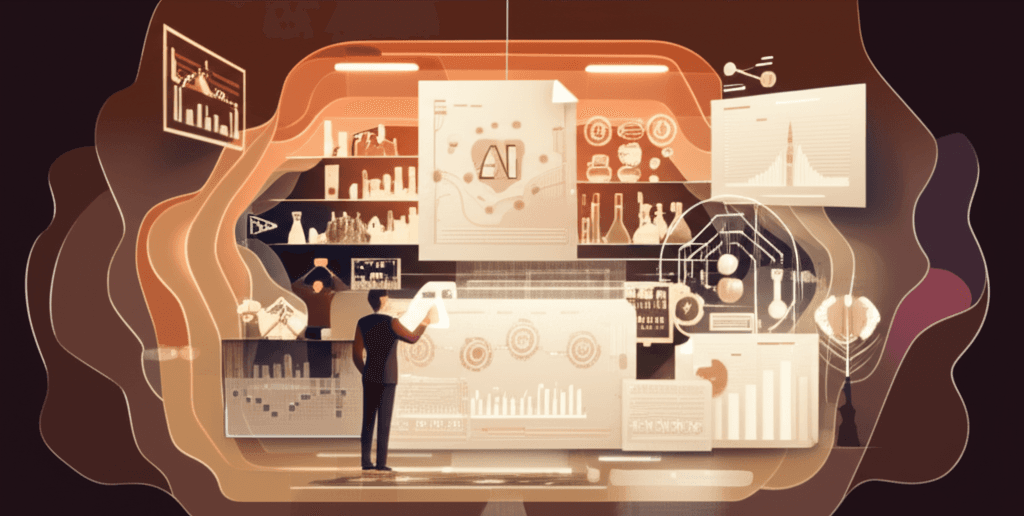
Research has always been bottlenecked by human bandwidth. There are only so many papers one person can read, so many experiments one team can run, so many hypotheses one mind can explore.
AI agents are changing that equation. They're not replacing researchers—they're giving research teams superpowers.
Here's how AI agents are transforming research workflows in 2026.
What Research AI Agents Actually Do
Unlike simple AI assistants that answer questions, research agents work autonomously on complex tasks. They plan, execute, iterate, and deliver results.
Key capabilities:
- Search and synthesize across thousands of sources
- Identify patterns in large datasets
- Generate and test hypotheses
- Write drafts of papers and reports
- Manage citations and references automatically
- Interface with lab equipment and databases

Use Cases Transforming Research
1. Automated Literature Review
The most mature application. AI agents can review thousands of papers in hours, not months.
How it works:
- Define your research question and scope
- Agent searches academic databases (PubMed, arXiv, Semantic Scholar, etc.)
- Filters and ranks papers by relevance
- Extracts key findings, methods, and gaps
- Synthesizes into structured review with citations
Real impact: What took a PhD student 3 months now takes 3 days. More importantly, agents find papers humans miss.
2. Data Analysis and Pattern Recognition
AI agents analyze datasets too large or complex for manual exploration.
Capabilities:
- Exploratory data analysis with natural language queries
- Statistical testing with automatic method selection
- Pattern identification across multivariate data
- Anomaly detection and flagging
- Visualization generation
Applications: Genomics, climate science, social science surveys, financial research—anywhere data volume overwhelms traditional methods.
3. Hypothesis Generation
AI agents identify promising research directions by connecting dots humans miss.
How it works:
- Analyzes existing literature and data
- Identifies unexplored intersections between fields
- Proposes testable hypotheses with supporting evidence
- Ranks by novelty, feasibility, and potential impact
Example: Drug discovery agents that identify novel compound combinations by synthesizing data from chemistry, biology, and clinical literature.
4. Research Writing and Documentation
AI agents draft papers, grants, and reports with proper academic structure.
What they do:
- Generate first drafts from outlines and notes
- Maintain consistent citation formatting
- Adapt writing style to journal requirements
- Handle revisions based on reviewer feedback
- Create supplementary materials and appendices
Reality check: AI writes the first draft; researchers refine and validate. It's a collaboration, not replacement.
5. Lab Automation and Experiment Design
The frontier application: AI agents that interface with physical experiments.
Emerging capabilities:
- Design experimental protocols based on research questions
- Control lab robotics for high-throughput experiments
- Analyze results and adjust parameters in real-time
- Document procedures automatically
Where it's happening: Drug discovery, materials science, and synthetic biology labs are leading adoption.
Research Agent Platforms in 2026
Academic-Focused Tools
Elicit
- Specialty: Literature review and research synthesis
- Strength: Academic paper analysis, claim extraction
- Cost: Free tier + paid plans
Semantic Scholar AI
- Specialty: Paper search and recommendation
- Strength: Citation graph analysis
- Cost: Free
Consensus
- Specialty: Evidence synthesis across papers
- Strength: Claims extraction with source verification
- Cost: Freemium model
General-Purpose Agents for Research
Claude with Computer Use
- Specialty: Multi-step research workflows
- Strength: Integrates browsing, analysis, and writing
- Cost: API pricing
GPT-4 with Custom GPTs
- Specialty: Customizable research assistants
- Strength: Easy to build domain-specific agents
- Cost: ChatGPT Plus + API
Open-source agent frameworks (AutoGPT, LangGraph, CrewAI)
- Specialty: Fully customizable research workflows
- Strength: Control and privacy
- Cost: Compute only
Enterprise Research Platforms
Benchling (biotech) Dotmatics (drug discovery) Palantir AIP (data-intensive research)
Building vs. Buying Research Agents
Buy off-the-shelf if:
- Your needs align with existing tools (literature review, data analysis)
- You lack engineering resources
- Speed to deployment matters most
Build custom if:
- You need integration with proprietary data/systems
- Your workflow is unique to your research domain
- You require maximum control over agent behavior
- Data privacy is paramount
What This Means For Research Teams
-
Academic labs: Start with literature review agents. They have the clearest ROI and lowest adoption friction.
-
R&D departments: Focus on data analysis agents that work with your existing datasets and tools.
-
Pharma/biotech: Invest in hypothesis generation and lab automation—this is where competitive advantage lives.
-
Research consultancies: Build custom agents as service offerings. Clients will pay for accelerated insights.
The Researcher's Role Evolves
AI agents don't eliminate researchers—they change what researchers do.
Less time on:
- Manual literature searches
- Basic data cleaning and analysis
- First-draft writing
- Citation management
More time on:
- Research design and strategy
- Critical evaluation of AI outputs
- Creative hypothesis development
- Communication and collaboration
- Ethical oversight
Challenges and Limitations
Hallucination risk: Research agents can cite papers that don't exist or misrepresent findings. Verification remains essential.
Domain expertise gaps: Agents may miss nuance that specialists catch. They're tools for experts, not replacements.
Reproducibility concerns: When AI contributes to research, documenting its role becomes critical for reproducibility.
Data access: Many valuable datasets are paywalled or restricted. Agents hit the same barriers as human researchers.
Build Research Agents That Accelerate Discovery
At AI Agents Plus, we help research teams deploy AI that actually works:
- Custom research assistants trained on your domain and integrated with your tools
- Literature review pipelines that synthesize thousands of sources
- Data analysis agents connected to your databases and workflows
We've built research agents for biotech companies, academic institutions, and R&D consultancies.
Ready to accelerate your research? Let's talk →
About AI Agents Plus Editorial
AI automation expert and thought leader in business transformation through artificial intelligence.