AI Agent vs Chatbot: Understanding the Key Differences in 2026
AI agents and chatbots serve different purposes. Learn the key differences in capabilities, cost, complexity, and when to use each for your business needs.
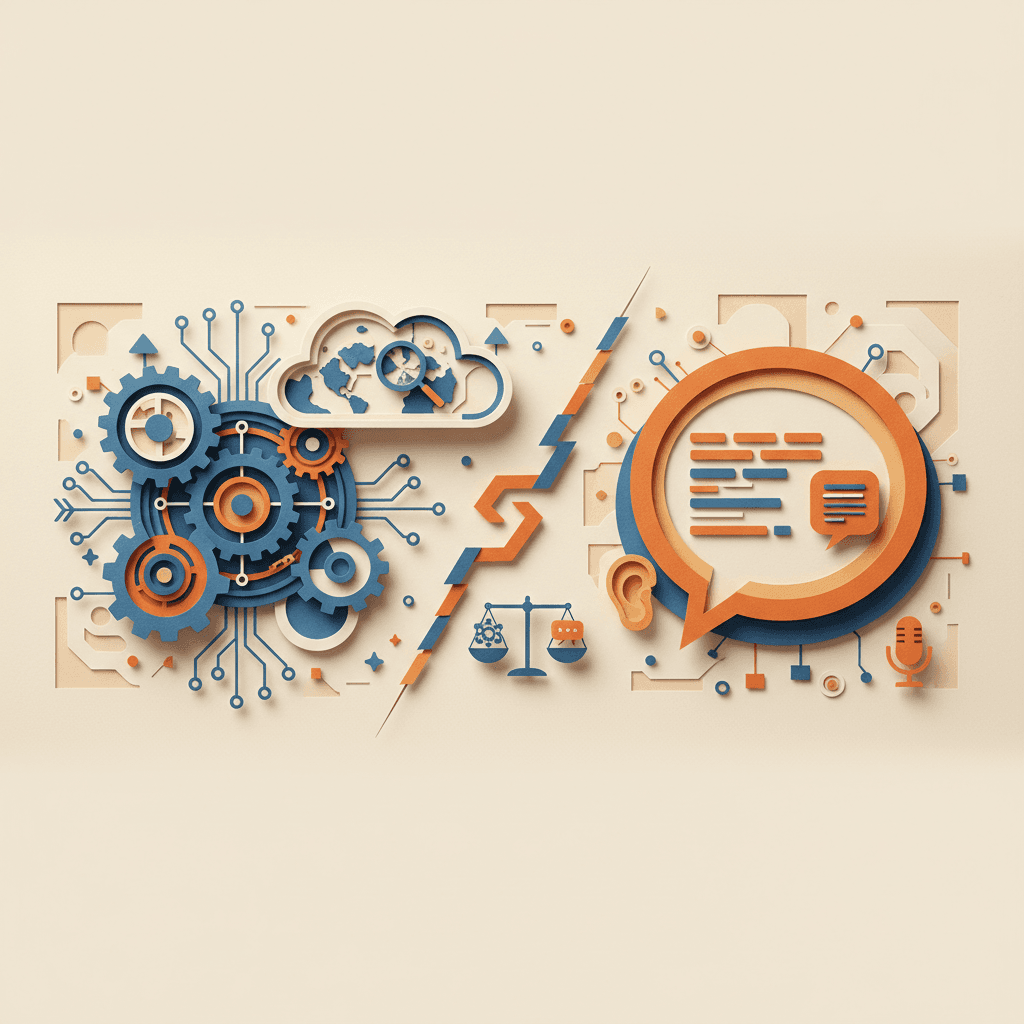
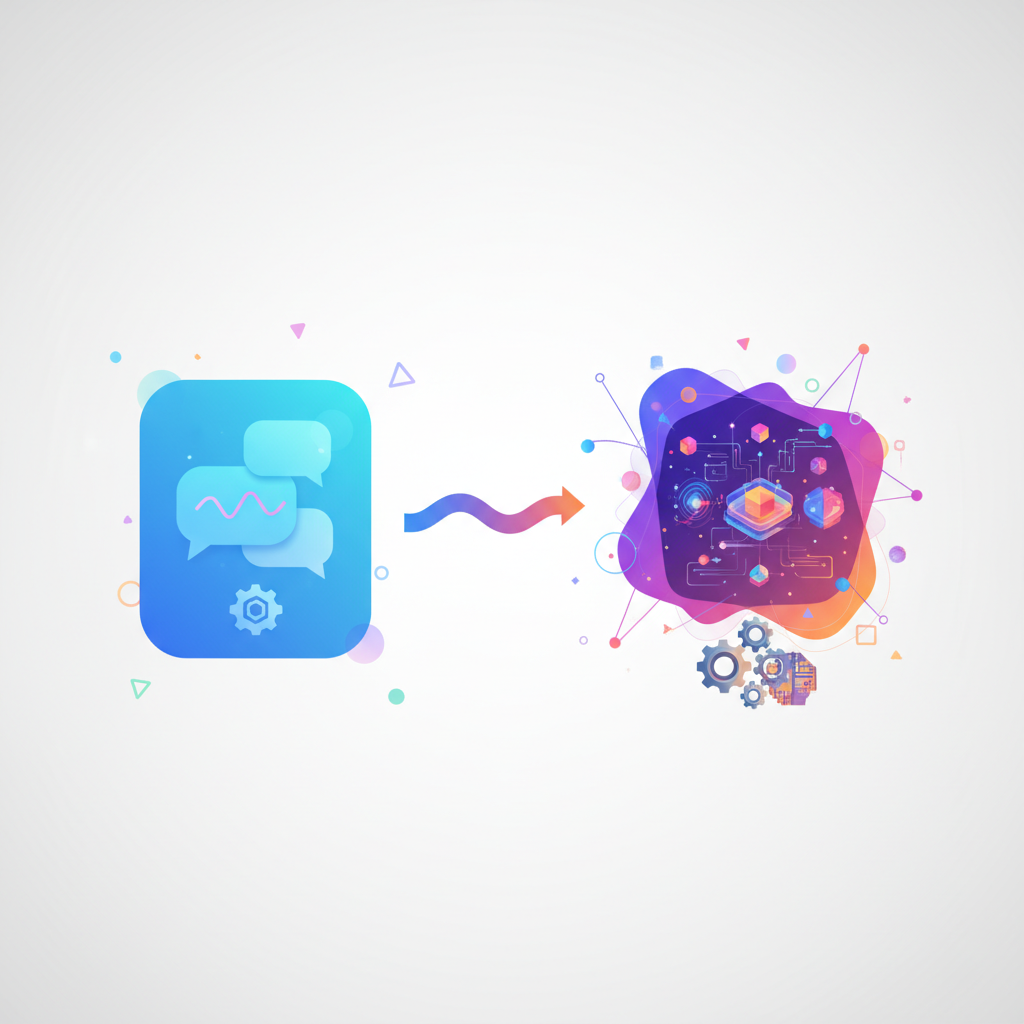
The terms "AI agent" and "chatbot" are often used interchangeably, but they represent fundamentally different technologies with distinct capabilities. Understanding the AI agent vs chatbot distinction is crucial for businesses evaluating which solution fits their needs — and the choice has significant implications for what you can accomplish, how much it costs, and how well it serves your users.
In 2026, the gap between AI agents and traditional chatbots has widened dramatically. Modern AI agents leverage large language models, autonomous decision-making, and tool integration to solve complex problems, while chatbots remain focused on scripted conversations and predefined workflows.
What Is a Chatbot?
A chatbot is a conversational interface that responds to user input based on rules, keywords, or predefined scripts. Traditional chatbots:
- Follow decision trees or rule-based logic
- Match user input to predefined intents or keywords
- Provide scripted responses from a knowledge base
- Require explicit programming for each conversation path
- Operate within narrow, well-defined domains
Example: A customer service chatbot that answers "What are your hours?" with a scripted response: "We're open Monday-Friday, 9 AM to 5 PM."
Types of Chatbots
1. Rule-Based Chatbots
- Operate on if-then logic
- Limited to predefined conversation flows
- Can't handle unexpected questions
- Cheap and easy to build
- Predictable but inflexible
2. AI-Powered Chatbots
- Use machine learning for intent recognition
- Understand natural language variations
- Can handle some conversational nuance
- More flexible than rule-based bots
- Still limited to trained intents and scripted responses
What Is an AI Agent?
An AI agent is an autonomous system that perceives its environment, makes decisions, and takes actions to achieve specific goals. Modern AI agents:
- Understand context and multi-step instructions
- Make decisions without explicit programming for every scenario
- Use tools and integrate with external systems
- Learn from interactions and adapt behavior
- Handle open-ended tasks and complex workflows
- Operate across multiple domains
Example: An AI agent that receives "Find flights to London next week under $500 and add the best option to my calendar" and autonomously searches flights, evaluates options based on your preferences, books the ticket, and updates your calendar — all without further input.
Characteristics of Modern AI Agents
Autonomy: Makes decisions and takes actions independently
Goal-oriented: Works toward objectives, not just answering questions
Proactive: Can initiate actions based on events or conditions
Tool use: Integrates with APIs, databases, and business systems
Reasoning: Breaks down complex problems into steps
Learning: Improves performance based on feedback and experience
AI Agent vs Chatbot: Key Differences
1. Conversation Depth
Chatbot: Handles single-turn or simple multi-turn conversations. Each exchange is relatively independent.
AI Agent: Maintains deep contextual understanding across long conversations, remembering previous exchanges and building on them.
2. Task Complexity
Chatbot: Best for simple, well-defined tasks like FAQs, form filling, or information lookup.
AI Agent: Handles complex, multi-step workflows that require decision-making, external data gathering, and coordination across systems.
3. Flexibility and Adaptability
Chatbot: Limited to pre-programmed responses. Unexpected input causes failures.
AI Agent: Adapts to unexpected scenarios using reasoning and general knowledge. Can handle novel situations without specific training.
4. Integration Capabilities
Chatbot: Typically connects to one or two systems. Integrations are explicitly programmed.
AI Agent: Dynamically uses multiple tools and APIs as needed. Can chain together actions across different systems.
5. Learning and Improvement
Chatbot: Requires manual updates to add new responses or handle new scenarios.
AI Agent: Learns from interactions, user feedback, and outcomes. Can improve decision-making over time.
6. Cost and Complexity
Chatbot: Generally cheaper and faster to deploy. Lower ongoing costs but limited capabilities.
AI Agent: Higher initial investment and operational costs. Delivers significantly more value for complex use cases.
When to Use a Chatbot vs an AI Agent
Choose a Chatbot When:
✅ Your use case is narrow and well-defined (FAQs, simple lead capture)
✅ Conversations follow predictable patterns
✅ Budget is limited and ROI timeline is short
✅ You need quick deployment (weeks, not months)
✅ Accuracy and control are more important than flexibility
Choose an AI Agent When:
✅ Tasks require multi-step reasoning and decision-making
✅ You need integration with multiple business systems
✅ Conversations are open-ended and context-dependent
✅ Handling edge cases gracefully is important
✅ You want to automate complex workflows, not just answer questions
The Hybrid Approach
Many organizations deploy both:
- Chatbots for high-volume, simple interactions (90% of customer service inquiries)
- AI agents for complex cases requiring judgment and action
This hybrid approach maximizes cost-efficiency while providing excellent user experiences.
The Future: AI Agents Are Becoming the Standard
In 2026, the line between chatbots and AI agents is blurring as:
- Chatbot platforms add agent capabilities
- AI agents become more accessible
- Costs decrease with improved models and infrastructure
- Expectations rise — users expect agent-level intelligence
Prediction: By 2028, the term "chatbot" will largely disappear, replaced by "AI agent" as the default for conversational AI.
Conclusion
The AI agent vs chatbot decision comes down to complexity and capability. Chatbots excel at simple, scripted interactions with predictable flows. AI agents shine when tasks require reasoning, multi-system coordination, and adaptation to unexpected scenarios.
As AI technology advances and costs decline, the strategic direction is clear: AI agents will increasingly replace chatbots for all but the simplest use cases.
At AI Agents Plus, we help companies build the right AI solution for their needs. Whether you need a simple chatbot or a sophisticated AI agent, let's talk about your requirements.
Related reading
About AI Agents Plus Editorial
AI automation expert and thought leader in business transformation through artificial intelligence.