
AI Agent Platforms Pricing Models 2026: Complete Cost Comparison Guide
Navigate the complex landscape of AI agent platform pricing in 2026. From token-based consumption to enterprise licenses, discover which pricing model delivers the best value for your business.

AI Agent Platforms Pricing Models 2026: Complete Cost Comparison Guide
Choosing the right AI agent platform involves more than just evaluating features—understanding pricing models is critical for budgeting and ROI calculation. In 2026, AI agent platforms have evolved diverse pricing structures, from consumption-based models to enterprise licenses. This comprehensive guide breaks down the pricing models dominating the market and helps you choose the right approach for your business.
Understanding AI Agent Platform Pricing in 2026
The AI agent platform market has matured significantly, and with it, pricing models have become more sophisticated. Unlike the early days when platforms charged simple per-user fees, today's pricing reflects the complex nature of AI operations: token consumption, computational resources, storage, and ongoing optimization.
Modern AI agent platforms typically employ one or more of these pricing models:
- Consumption-based pricing — Pay for tokens, API calls, or compute hours
- Subscription tiers — Monthly or annual plans with usage limits
- Enterprise licensing — Custom agreements for large deployments
- Hybrid models — Base subscription plus usage overages
- Pay-per-outcome — Pricing tied to business results
Major AI Agent Platform Pricing Models
1. Token-Based Consumption Pricing
The most common model in 2026, token-based pricing charges based on the volume of language model interactions. This applies to platforms built on OpenAI, Anthropic, Google, and other foundation models.
How it works:
- Input tokens (prompts you send) and output tokens (responses generated) are counted separately
- Different models have different per-token costs
- Additional fees may apply for advanced features (function calling, vision, etc.)
Typical pricing ranges:
- GPT-4 class models: $0.03-0.06 per 1K input tokens, $0.06-0.12 per 1K output tokens
- Claude Opus: $0.015 per 1K input tokens, $0.075 per 1K output tokens
- GPT-3.5 / Claude Sonnet: $0.0005-0.003 per 1K input tokens, $0.0015-0.015 per 1K output tokens
Best for:
- Variable workloads with unpredictable volume
- Applications with seasonal usage patterns
- Development and testing environments
- Businesses wanting cost predictability per interaction
Watch out for:
- Runaway costs from poorly optimized prompts
- Token consumption varying significantly between models
- Hidden costs in system prompts and function definitions
- Separate charges for embeddings and fine-tuning
Understanding AI agent development costs helps contextualize these platform fees within your total AI budget.
2. Subscription Tier Models
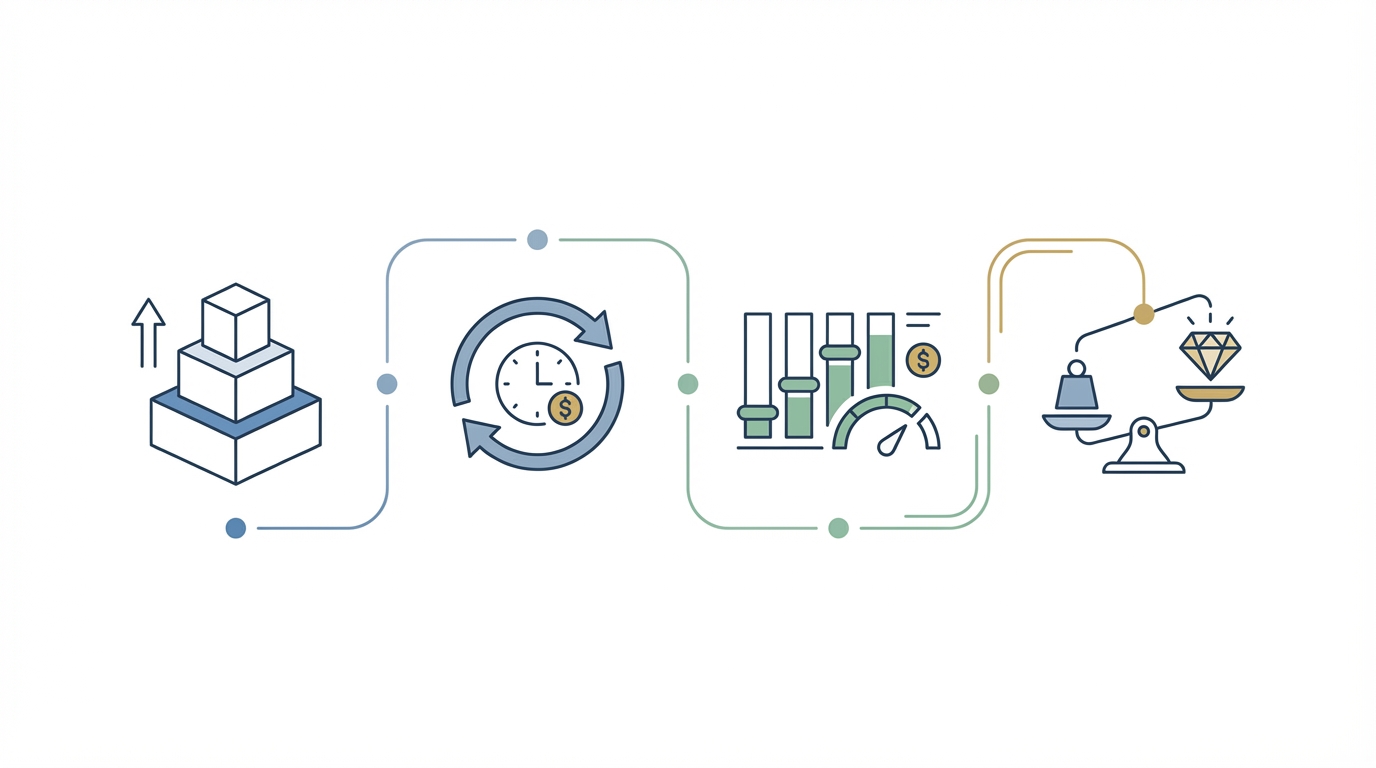
Many AI agent platforms offer tiered subscriptions with included usage limits and feature access based on plan level.
Common tier structure:
Starter/Free tiers ($0-99/month):
- Limited API calls or token allowances
- Basic models only
- Community support
- Suitable for prototyping and small projects
Professional tiers ($200-2,000/month):
- Higher usage limits
- Access to premium models
- Email support
- Basic analytics and monitoring
- Multi-user access
Business/Team tiers ($2,000-10,000/month):
- Substantial included usage
- All available models
- Priority support
- Advanced analytics
- Team collaboration features
- Custom integrations
Enterprise tiers (Custom pricing):
- Unlimited or very high usage caps
- Dedicated support and SLAs
- Custom deployment options (private cloud, on-prem)
- Enhanced security and compliance
- Volume discounts
Best for:
- Predictable workloads with steady volume
- Teams needing multiple user seats
- Organizations requiring specific support levels
- Businesses preferring fixed monthly costs
Watch out for:
- Overage charges that can exceed base subscription costs
- Features locked to higher tiers you may not need
- Annual commitment requirements for best pricing
- Usage limits that don't align with your actual patterns
3. Compute-Based Pricing
Some platforms, especially those focused on custom model deployment and fine-tuning, charge based on computational resources consumed.
Pricing components:
- GPU/TPU hours for training and inference
- Memory allocation for model serving
- Storage for datasets and model weights
- Network egress for API responses
Typical costs:
- GPU inference (A100): $1.50-3.00 per hour
- Fine-tuning: $0.008-0.12 per 1K tokens
- Storage: $0.10-0.23 per GB/month
- Data transfer: $0.08-0.12 per GB
Best for:
- Custom model deployments
- Organizations with in-house ML teams
- Applications requiring fine-tuned models
- Businesses with strict data governance requirements
Watch out for:
- Complexity in estimating costs
- Idle resource charges if not properly managed
- Data transfer costs that can surprise
- Need for technical expertise to optimize spending
4. Outcome-Based Pricing
An emerging model where pricing ties directly to business outcomes—successful interactions, qualified leads, resolved tickets, etc.
How it works:
- Platform charges per successful outcome (e.g., $0.50 per qualified lead)
- Success criteria defined upfront
- Volume discounts typically available
- May include base platform fee plus per-outcome charges
Examples:
- Customer service platforms charging per resolved ticket
- Sales AI charging per qualified conversation
- Scheduling assistants charging per booked appointment
Best for:
- Companies wanting alignment between AI costs and value delivered
- Use cases with clear, measurable outcomes
- Organizations comfortable with variable pricing
- Businesses prioritizing ROI over cost predictability
Watch out for:
- Defining "success" can be complex and contentious
- Higher per-outcome costs if your AI performs poorly
- Limited availability—few platforms offer this yet
- Potential for disputes over outcome measurement
5. Hybrid Models
Many platforms combine multiple pricing approaches, typically a base subscription plus usage-based charges.
Common combinations:
- Monthly platform fee + token consumption charges
- Subscription with included credits + overage pricing
- Seat-based licensing + compute usage fees
Example structure:
- $500/month base subscription
- Includes 1M tokens
- Additional tokens at $0.04 per 1K
- Priority support and analytics included
Best for:
- Organizations wanting cost predictability with flexibility
- Teams with baseline usage plus occasional spikes
- Businesses scaling AI gradually
Watch out for:
- Complexity in forecasting total costs
- Base fees you pay regardless of usage
- Overage rates that may be higher than pure consumption pricing
- Multiple billing components to track
For businesses considering AI enterprise solutions, hybrid models often provide the best balance of predictability and flexibility.
Cost Optimization Strategies
1. Right-Size Your Model Selection
Using GPT-4 for every interaction is like hiring a surgeon to put on a bandage. Match model capability to task complexity.
2. Optimize Prompt Engineering
Verbose prompts waste tokens. Every word in your system prompt is repeated with every API call.
3. Implement Caching Strategies
Avoid re-processing identical or similar requests through semantic caching and response storage.
4. Monitor and Alert on Usage
Prevent surprise bills with proactive monitoring and budget alerts.
Choosing the Right Pricing Model for Your Business
For Startups
Consumption-based pricing offers flexibility without commitment.
For Growing Businesses
Subscription tiers provide predictable costs as you scale.
For Enterprises
Custom agreements deliver volume discounts and dedicated support.
Conclusion
AI agent platform pricing in 2026 offers more flexibility and sophistication than ever before. Whether you choose consumption-based models for cost control, subscription tiers for predictability, or custom enterprise agreements for scale, understanding the options empowers better decisions.
The right pricing model depends on your usage patterns, budget constraints, and growth trajectory. Start with consumption-based pricing to learn your patterns, then optimize toward the model that best fits your actual needs.
Build AI That Works For Your Business
At AI Agents Plus, we help companies move from AI experiments to production systems that deliver real ROI. Whether you need:
- Custom AI Agents — Autonomous systems that handle complex workflows, from customer service to operations
- Rapid AI Prototyping — Go from idea to working demo in days using vibe coding and modern AI frameworks
- Voice AI Solutions — Natural conversational interfaces for your products and services
We've built AI systems for startups and enterprises across Africa and beyond.
Ready to explore what AI can do for your business? Let's talk →
Related reading
About AI Agents Plus Editorial
AI automation expert and thought leader in business transformation through artificial intelligence.