
Aalyria Raises $100M to Bring AI to Space — Why Satellite Communications Is the Next AI Frontier
Aalyria just secured $100M in Series B funding to build AI software that configures satellite communications networks autonomously. While everyone focuses on AI in data centers, the next battle is moving to space infrastructure.
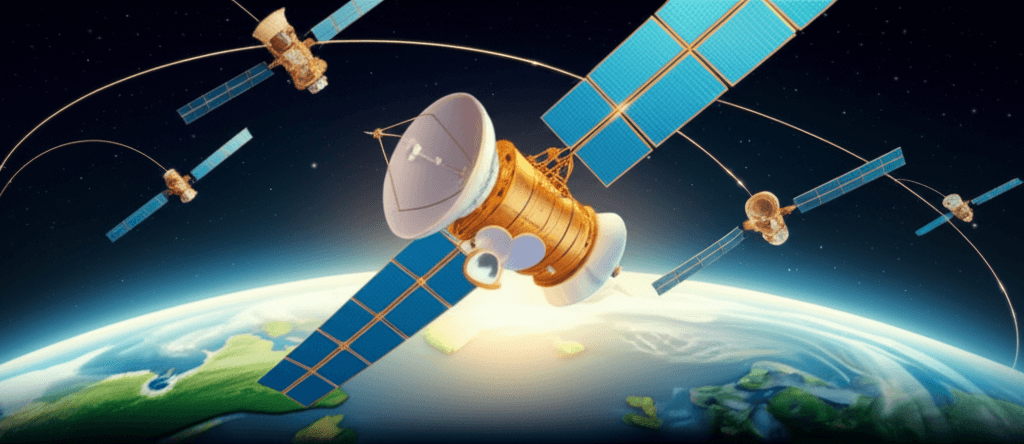
Aalyria, a satellite communications software startup, just closed a $100M Series B round led by Battery Ventures and J2 Ventures. The company builds AI systems that autonomously configure and optimize communications satellites in real-time — routing signals, managing bandwidth, and adapting to failures without human intervention.
This isn't just another AI funding story. It's a signal that AI is moving beyond data centers and into critical infrastructure in space. And that shift has massive implications for everything from internet connectivity to national security.
What Aalyria Actually Does
Aalyria's core product is Spacetime — an AI-powered orchestration platform for satellite networks. It solves a fundamental problem: satellite constellations are getting massive (Starlink has 5,000+ satellites, Amazon's Kuiper is planning 3,200+), and managing them manually doesn't scale.
Here's what Spacetime does:
- Dynamic routing — Redirects traffic through the optimal satellite path based on real-time conditions (weather, congestion, failures)
- Spectrum management — Allocates bandwidth across thousands of satellites to maximize throughput
- Fault recovery — Detects satellite failures and reroutes traffic automatically
- Predictive optimization — Uses ML to anticipate demand and pre-position network capacity
Essentially, it's AI-driven network orchestration for space. Think of it as AWS's EC2 autoscaling, but for satellite constellations.
Why This Matters Now
Satellite communications is exploding. Low Earth Orbit (LEO) constellations like Starlink, OneWeb, and Kuiper are launching thousands of satellites to provide global internet coverage. But the hard part isn't launching satellites — it's managing them.
Traditional satellite networks are manually configured by ground control teams. That worked when you had 10-20 satellites in geostationary orbit. But with 5,000+ satellites in LEO, manual configuration is impossible.
You need AI.
Aalysis's pitch is simple: autonomous satellite networks are inevitable, and we're building the brain.

The Space Infrastructure Layer
Aalysis is part of a broader trend: AI is becoming infrastructure-critical in space.
Here's what's happening:
- SpaceX Starlink uses ML for beam-forming and interference mitigation
- Amazon Kuiper is building AI-powered ground station networks
- Planet Labs uses computer vision AI to analyze satellite imagery
- Capella Space uses AI for synthetic aperture radar (SAR) image processing
But Aalyria is different. They're not building satellites or sensors — they're building the control layer that other satellite operators can use.
That's strategic. If Aalyria becomes the de facto orchestration platform for LEO constellations, they become critical infrastructure for global communications.
Who's Funding This and Why
Battery Ventures and J2 Ventures aren't typical space investors. They're software investors who see satellite orchestration as a massive software TAM (total addressable market).
Here's the math:
- Global satellite services market is projected to hit $500B+ by 2030
- LEO constellations represent 60-70% of that growth
- Orchestration software captures 5-10% of network infrastructure spend
That's a $25-50B TAM for satellite orchestration platforms. And Aalyria has a head start.
Plus, there's a national security angle. The US Department of Defense is investing heavily in satellite communications for military operations. Autonomous satellite networks are critical for contested environments where ground control might be jammed or disrupted.
Aalysis has existing DoD contracts. That $100M isn't just venture capital — it's a bet that satellite AI becomes defense-critical infrastructure.
The Technical Challenge
Building AI for satellite networks is hard for reasons that don't apply to cloud infrastructure:
- Latency constraints — Satellites move at 17,000+ mph. Routing decisions need to happen in milliseconds.
- Limited compute — Satellites have constrained power and processing. You can't run giant models onboard.
- Intermittent connectivity — Satellites pass in and out of ground station range. The system needs to work autonomously.
- Radiation — Space radiation corrupts memory and logic. Fault tolerance is critical.
Aalysis's edge is that they've been working on this problem since 2022 (the company spun out of X, Alphabet's moonshot lab). They've had time to build systems that actually work in production.
What This Means For Your Business
If you're building products or services that depend on satellite connectivity, here's what the Aalyria round signals:
- Satellite internet is about to get cheaper and faster — AI-optimized networks mean better performance and lower operational costs
- Global connectivity is becoming ubiquitous — LEO constellations + AI orchestration = internet everywhere, even in remote regions
- Edge computing in space is coming — As satellites get smarter, expect more processing to happen in orbit (latency-sensitive applications, real-time analytics)
For AI builders: satellite data is the next frontier. Real-time Earth observation, maritime tracking, agricultural monitoring — all of this depends on satellites that can intelligently route data.
The Geopolitical Angle
Space infrastructure is now geopolitically contested. China, Russia, the US, and Europe are all racing to build satellite constellations and control the orbital layer.
Aalysis's AI orchestration technology has dual-use implications:
- Commercial — Optimize internet and IoT networks
- Military — Autonomous communications for denied or contested environments
The US government understands this. That's why Aalysis has DoD contracts and why this funding round matters beyond the venture capital aspect.
If Aalysis becomes the orchestration layer for US and allied satellite networks, that's strategic infrastructure. It's not just software — it's AI-powered space dominance.
What To Watch Next
- Customer announcements — Does Aalysis sign Starlink, Kuiper, or OneWeb as customers? That validates the platform.
- International expansion — Will they work with European or Asian satellite operators, or stay US-focused?
- Edge AI on satellites — Watch for announcements about running ML models onboard satellites (processing data in orbit vs. downlinking everything)
- DoD contracts — More defense contracts signal that this is becoming critical national security infrastructure
Aalysis is betting that the future of satellite communications is autonomous, AI-driven, and software-defined. And with $100M in the bank and backing from top-tier VCs, they've got runway to prove it.
The AI race isn't just happening on Earth anymore. It's moving to orbit.
Build AI That Works For Your Business
At AI Agents Plus, we help companies move from AI experiments to production systems that deliver real ROI. Whether you need:
- Custom AI Agents — Autonomous systems that handle complex workflows, from customer service to operations
- Rapid AI Prototyping — Go from idea to working demo in days using vibe coding and modern AI frameworks
- Voice AI Solutions — Natural conversational interfaces for your products and services
We've built AI systems for startups and enterprises across Africa and beyond.
Ready to explore what AI can do for your business? Let's talk →
About AI Agents Plus Editorial
AI automation expert and thought leader in business transformation through artificial intelligence.


