
Huawei's Atlas 350 AI Card Claims to Crush Nvidia — Here's Why You Should Be Skeptical
Huawei just launched the Atlas 350 AI accelerator, claiming 2.8x better performance than Nvidia's H20. Before you rethink your AI infrastructure, read this reality check on China's AI hardware ambitions.
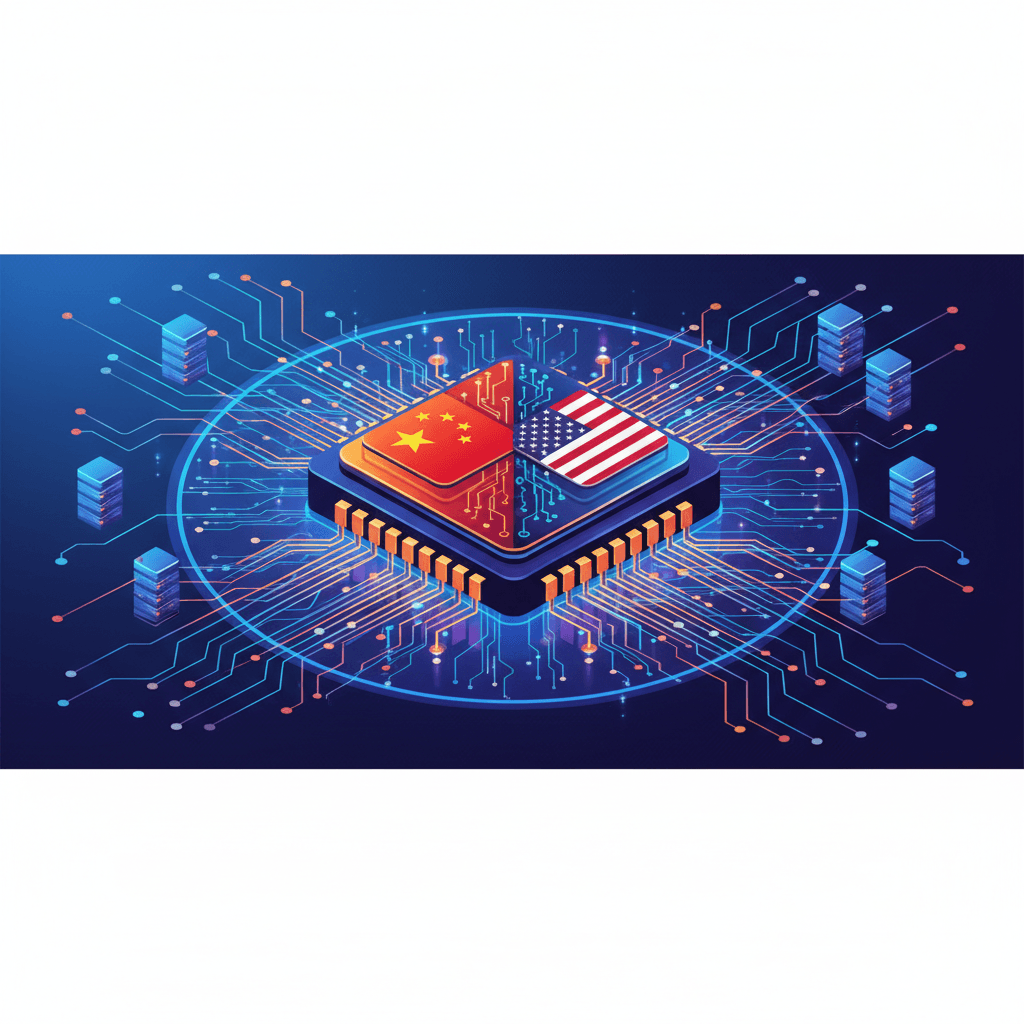
Huawei dropped a bombshell this morning: the Atlas 350 AI card is here, and it's supposedly smoking Nvidia's H20 chip by a factor of 2.8x. If you believe the press release, China just leapfrogged the US in the AI hardware race.
But let's pump the brakes.
What Huawei Is Claiming
The Atlas 350 is designed for AI inference in data centers. Huawei says it delivers 1.56 petaflops of FP4 computing power. For context, that's a lot of throughput for running AI models at scale — think serving millions of ChatGPT-style queries simultaneously.
The headline number: 2.8x better performance than Nvidia's H20 chip when running inference workloads.
On paper, this sounds like a game-changer. In reality? It's complicated.
The Performance Asterisk
First, let's talk about that 2.8x claim. Performance benchmarks in AI hardware are notoriously slippery. What workload? What precision? What batch size? Huawei hasn't released independent benchmarks yet.
FP4 precision (4-bit floating point) is great for inference efficiency, but it's a narrow use case. You can't train models in FP4. You can't run every inference workload in FP4 without accuracy degradation. It's a specific optimization for specific scenarios.

Nvidia's H20, meanwhile, is a compromised chip — deliberately nerfed for the Chinese market to comply with US export controls. Comparing the Atlas 350 to the H20 is like racing a sports car against a minivan and claiming victory. Where's the comparison to the H100 or the newer Blackwell chips? Conspicuously absent.
The Ecosystem Problem
Even if Huawei's hardware matches or beats Nvidia on raw specs, there's a bigger issue: software.
Nvidia doesn't dominate AI because their chips are faster. They dominate because CUDA is everywhere. Every major AI framework — PyTorch, TensorFlow, JAX — is optimized for CUDA first. The tooling, the libraries, the community support — it's all built around Nvidia's ecosystem.
Huawei has CANN (Compute Architecture for Neural Networks), their answer to CUDA. But adoption is almost entirely confined to China. If you're a Western AI startup or enterprise, switching to Huawei hardware means rewriting your stack, retraining your engineers, and hoping that the open-source community eventually catches up.
That's not a technical problem — it's a business risk.
What This Means For Your Business
So should you care about the Atlas 350? It depends where you are and what you're building.
-
If you're in China: Yes, absolutely. With US export restrictions tightening, domestic AI chips like the Atlas 350 are your best path to scaling inference workloads. Huawei's ecosystem is mature in the Chinese market, and cost advantages could be significant.
-
If you're outside China: Probably not yet. The switching costs are too high, and you don't have access to the same level of ecosystem support. Stick with Nvidia, AMD, or wait for more competitive options from established players.
-
If you're buying AI services (not chips): This matters indirectly. Chinese cloud providers running Atlas hardware could offer dramatically cheaper AI inference. If your workload can tolerate cross-border latency and regulatory constraints, there might be arbitrage opportunities.
The Real Story Here
This isn't really about one chip. It's about China's determination to build an independent AI hardware stack in the face of US restrictions. And they're making progress — faster than most Western analysts expected.
Alibaba announced last week that they've produced 470,000 AI chips in-house, even while admitting they're not as good as Nvidia's. Huawei's Atlas 350 is part of the same strategic push: build domestic alternatives, accept short-term performance gaps, and bet on rapid iteration.
The question isn't whether China can match Nvidia tomorrow. It's whether they can get close enough that the cost and supply chain advantages tip the scales for Chinese companies — and eventually, for global buyers willing to take the risk.
Looking Ahead
Expect to see more of these announcements. Huawei, Alibaba, Baidu, and ByteDance are all racing to build AI chips. Some will succeed. Many will overpromise.
For now, treat Huawei's 2.8x claim with healthy skepticism. Independent benchmarks will tell the real story. And even if the hardware delivers, the ecosystem gap remains the bigger challenge.
But if you're betting on AI infrastructure over the next 5-10 years, you'd be foolish to ignore what's happening in China. The AI hardware race just got a lot more interesting.
Build AI That Works For Your Business
At AI Agents Plus, we help companies move from AI experiments to production systems that deliver real ROI. Whether you need:
- Custom AI Agents — Autonomous systems that handle complex workflows, from customer service to operations
- Rapid AI Prototyping — Go from idea to working demo in days using vibe coding and modern AI frameworks
- Voice AI Solutions — Natural conversational interfaces for your products and services
We've built AI systems for startups and enterprises across Africa and beyond. Explore our AI agent development services to see how we can help you leverage the latest AI technologies — regardless of which hardware wins the chip war.
Ready to explore what AI can do for your business? Let's talk →
About AI Agents Plus Editorial
AI automation expert and thought leader in business transformation through artificial intelligence.