
DeepSeek Triggers Global AI Price War: What It Means for Enterprise Buyers
Chinese AI startup DeepSeek has ignited a brutal price war across the AI industry. Alibaba, Baidu, and ByteDance are slashing prices — some offering free API tiers. The era of premium AI pricing is over.
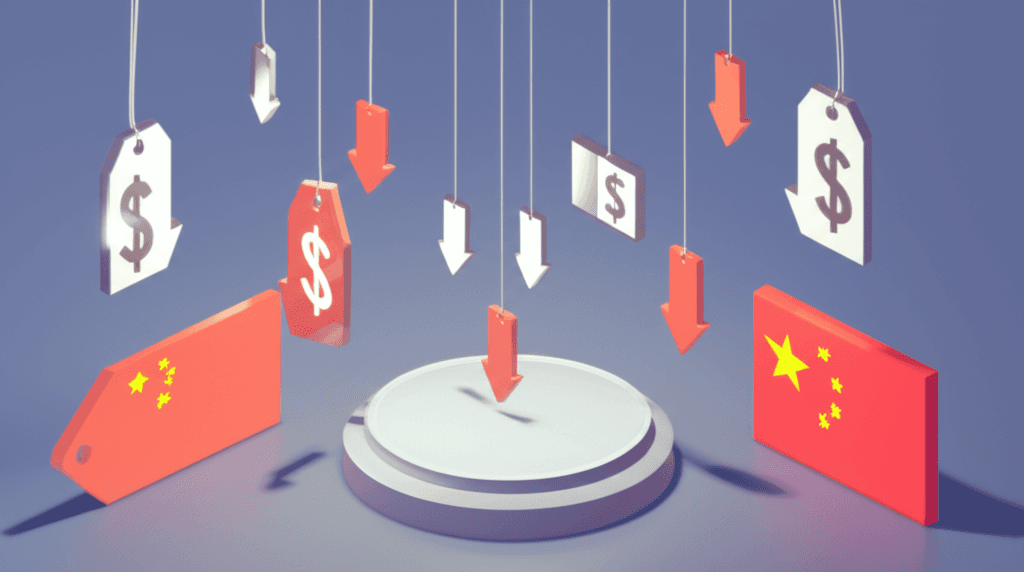
DeepSeek, a Chinese AI startup, just destroyed the global AI pricing model. They're offering frontier-class model capabilities at a fraction of Western prices. The response was immediate: Alibaba's Qwen team slashed prices. Baidu dropped Ernie pricing. ByteDance's Doubao went free for lighter usage.
We're witnessing the commoditization of AI in real time. And if you're buying AI services for your business, everything just changed.
What DeepSeek Actually Did
DeepSeek released highly capable models — competitive with GPT-4 and Claude 3 — at prices so low they broke the existing market structure. We're talking 10-20x cheaper than comparable OpenAI or Anthropic offerings for many use cases.
The technical achievement matters, but the pricing strategy matters more. DeepSeek proved you can deliver production-quality AI without the $10 billion training runs and the premium markup.
Now every AI provider has to choose: match the new pricing floor or explain why their models justify 10x the cost.
The Immediate Market Response
Alibaba's Qwen team announced major price cuts across their model lineup. Their flagship Qwen model now supports AI agent tasks, understands text/photo/video, and can analyze videos up to two hours long — at pricing that undercuts Western competitors.
Baidu's Ernie models followed with aggressive reductions. They're betting on volume over margin.
ByteDance's Doubao went nuclear: free API tiers for lighter usage. They're not trying to make money on inference — they're trying to own distribution.
This isn't a temporary promotion. This is the new baseline.
Why This Is Happening Now
Three factors converged:
1. Chinese AI companies operate in a different cost structure. Lower infrastructure costs, government support for compute resources, and a massive domestic market create room for aggressive pricing that Western companies can't easily match.
2. Open-source models proved the pricing was inflated. Meta's Llama, Mistral, and other open models demonstrated that you could deliver strong performance without the premium markup. DeepSeek took that insight and commercialized it.
3. The race for distribution trumps the race for margin. In platform markets, whoever captures distribution first can monetize later through adjacent services. The Chinese players learned this from the consumer internet — apply it to AI.
What This Means for Enterprise Buyers
If you're evaluating AI vendors for your business, this price war creates both opportunities and risks:
The good news:
- Prices will drop across the board. Even if you stick with Western providers, you'll benefit from competitive pressure on pricing.
- Free tiers expand. Expect higher free usage limits, making it cheaper to experiment and prototype.
- Cost of AI deployment drops significantly. Projects that were marginal at old pricing become obviously worthwhile.
The risks:
- Vendor viability questions. Some AI startups built business models around premium pricing. If those margins collapse, do they survive?
- Service quality compression. When providers compete on price, they might cut corners on support, uptime guarantees, or security.
- Geopolitical complexity. Using Chinese AI providers may create compliance, data residency, or export control issues depending on your industry and jurisdiction.
The Strategic Implications
For OpenAI, Anthropic, Google: They can't compete directly on price against Chinese providers operating at different cost structures. Their response will be:
- Enterprise features (security, compliance, dedicated infrastructure)
- Superior performance on specific benchmarks
- Ecosystem lock-in (integration with cloud platforms, developer tools)
- Regulatory arbitrage ("our models are compliant with Western regulations")
For open-source projects: This validates the open-source strategy. As commercial AI becomes commoditized, the advantages of truly open models (customization, on-prem deployment, no vendor lock-in) become more compelling.
For enterprises: You now have real pricing negotiation leverage. The days of accepting whatever OpenAI charges are over. Every procurement conversation should reference the new market reality.
The Technical Reality Behind the Pricing
Here's what most coverage misses: DeepSeek and other Chinese providers are using more efficient training methods and inference optimization. They're not just undercutting on price — they're actually operating more efficiently.
Key innovations:
- More aggressive quantization without quality loss
- Better batch processing and request routing
- Sharing infrastructure across multiple model versions
- Training on more carefully curated, smaller datasets
Western providers will adopt these techniques. The efficiency gap will close. But the pricing expectations have already reset.
What To Do Right Now
If you're currently paying for AI API access:
1. Renegotiate your contracts. If you're on annual agreements with volume commitments, the market just moved against you. Most vendors will prefer to reprice rather than lose you to competitors.
2. Test the alternatives. Spin up proof-of-concepts on DeepSeek, Qwen, or other aggressive-pricing providers. You might be surprised at the quality.
3. Build for portability. Don't lock yourself into a single provider's API format. Use abstraction layers that let you swap models easily. When pricing is this volatile, vendor flexibility is strategic.
4. Reevaluate ROI on AI projects. Projects that were marginal at old pricing might now be slam dunks. Update your business cases.
Looking Ahead
This price war will accelerate three trends:
1. Consolidation among AI providers. Startups that can't match the new pricing or differentiate on value will get acquired or shut down.
2. Shift to specialized models. Since general-purpose models are commoditizing, providers will push vertical-specific or task-optimized models where they can maintain pricing power.
3. Enterprise features become the differentiator. Security certifications, compliance guarantees, dedicated support, and SLAs become more important than raw model quality.
The AI industry just entered its next phase. The "build cool models and charge premium prices" era is over. We're now in the "operate efficiently and compete on distribution" era.
Western AI companies built business models assuming premium pricing would persist. That assumption just died. What replaces it will determine who survives.
Build AI That Works For Your Business
At AI Agents Plus, we help companies move from AI experiments to production systems that deliver real ROI. Whether you need:
- Custom AI Agents — Autonomous systems that handle complex workflows, from customer service to operations
- Rapid AI Prototyping — Go from idea to working demo in days using vibe coding and modern AI frameworks
- Voice AI Solutions — Natural conversational interfaces for your products and services
We've built AI systems for startups and enterprises across Africa and beyond.
Ready to explore what AI can do for your business? Let's talk →
About AI Agents Plus Editorial
AI automation expert and thought leader in business transformation through artificial intelligence.