Custom AI Agents vs Chatbots: Why the Difference Matters in 2026
AI agents and chatbots aren't the same thing. Learn the critical differences, when to use each, and why custom AI agents are reshaping enterprise automation.
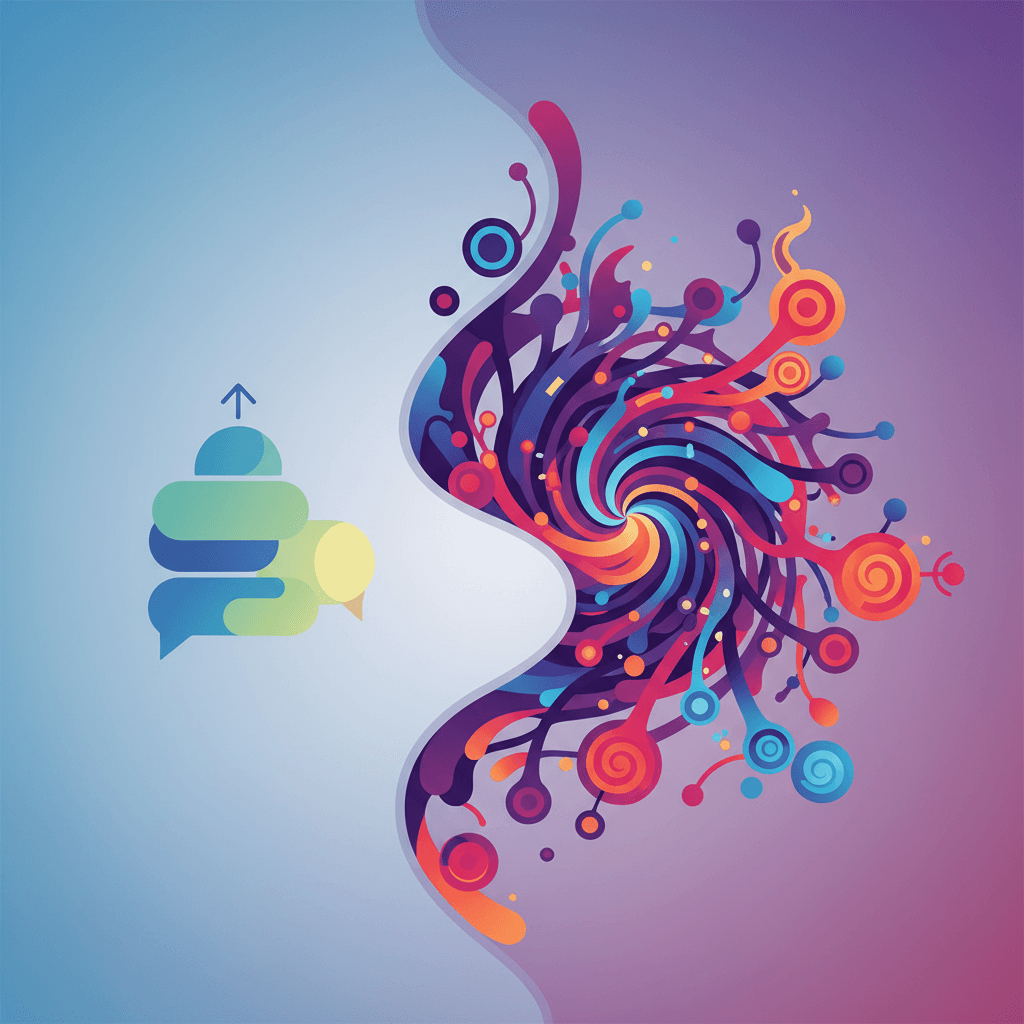
If you're evaluating custom AI agents vs chatbots for your business, you're asking a more nuanced question than most people realize. The terms get used interchangeably, but the architectural differences between them determine whether you're building a glorified FAQ system or an autonomous business process engine.
The confusion is understandable—both use natural language processing, both interact with users, and both claim to "automate workflows." But treating them as equivalent technologies is like treating a calculator and a computer as the same thing because they both do math.
What is a Chatbot?
A chatbot is a conversational interface—usually text-based, sometimes voice—that responds to user inputs with predefined or dynamically generated responses. Modern chatbots use large language models to understand intent and generate natural-sounding replies, but fundamentally they're reactive systems.
Chatbot characteristics:
- Waits for user input before taking action
- Operates within a single conversation thread
- Limited to the context provided in the conversation
- Executes simple tasks (look up information, trigger workflows)
- Human-initiated and human-guided
Common chatbot use cases:
- Customer support FAQs
- Lead qualification forms
- Appointment scheduling
- Simple data retrieval (order status, account balance)
- Guided troubleshooting
Chatbots excel when the interaction is linear, bounded, and user-driven. They're great for answering "What is my order status?" but struggle with "Optimize our inventory based on sales trends and proactively reorder before stockouts."
What is a Custom AI Agent?
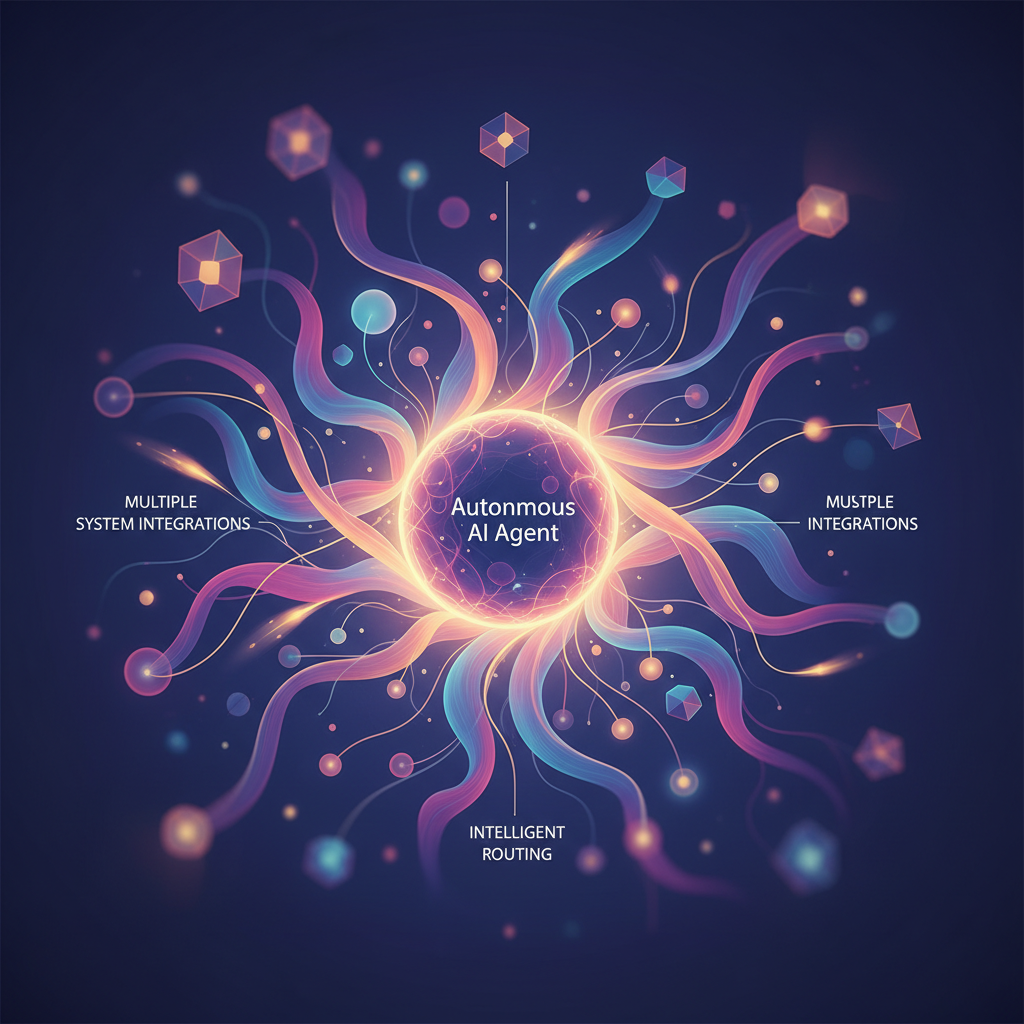
An AI agent is an autonomous system that pursues goals, makes decisions, and takes actions across multiple systems without constant human input. Think of it as software that can reason, plan, and execute rather than just respond.
AI Agent characteristics:
- Goal-oriented — given objectives, not just commands
- Proactive — initiates actions based on conditions and triggers
- Multi-step reasoning — plans sequences of actions to achieve outcomes
- System integration — reads and writes across databases, APIs, and tools
- Memory and state — maintains context across sessions and workflows
- Adaptive — learns from outcomes and adjusts behavior
Common AI agent use cases:
- Autonomous customer service with CRM updates and ticket creation
- Sales pipeline management (lead scoring, follow-up automation, deal tracking)
- IT operations (monitoring, diagnosis, automated remediation)
- Content production (research, writing, publishing, optimization)
- Financial analysis (data gathering, report generation, anomaly detection)
Enterprise AI agent deployment is accelerating because agents can handle entire workflows, not just individual interactions. When NVIDIA launched their Agent Toolkit with 17 enterprise adopters, they weren't talking about chatbots—they were talking about systems that can manage complex, multi-step business processes autonomously.
Custom AI Agents vs Chatbots: The Key Differences
1. Scope of Operation
Chatbots: Operate within a conversation AI Agents: Operate across systems and workflows
A chatbot can tell you your account balance. An AI agent can notice unusual spending patterns, flag potential fraud, freeze transactions, notify you via multiple channels, and create a case for review—all without human initiation.
2. Decision-Making Authority
Chatbots: Execute predefined logic ("if user asks X, respond with Y") AI Agents: Make contextual decisions using reasoning and external data
When a chatbot encounters an edge case it wasn't programmed for, it fails gracefully (or not). An AI agent evaluates the situation, considers available options, and attempts a solution based on its understanding of goals and constraints.
3. Time Horizon
Chatbots: Exist for the duration of a conversation AI Agents: Operate continuously over days, weeks, or indefinitely
A chatbot helps schedule a meeting, then ends. An AI agent manages your entire calendar—monitoring conflicts, suggesting optimizations, automatically rescheduling when priorities shift, and learning your preferences over time.
4. Integration Complexity
Chatbots: Typically call 1-3 APIs to complete tasks AI Agents: Orchestrate complex chains of operations across dozens of systems
Chatbot: "Let me check our knowledge base... here's an article that might help."
AI Agent: "I've checked the knowledge base, searched recent support tickets for similar issues, cross-referenced your account history, identified a likely cause, applied a fix to your account, verified it resolved the issue, and documented the solution for future cases."
5. Value Proposition
Chatbots: Improve efficiency of existing human-driven processes AI Agents: Enable entirely new capabilities that weren't economically feasible before
Chatbots make your support team faster. AI agents let you offer 24/7 personalized service at a scale that would require thousands of human agents.
When to Use Chatbots vs AI Agents
Choose a Chatbot When:
- The interaction is primarily informational (FAQs, status checks)
- Workflows are simple and well-defined
- User control and transparency are paramount
- Budget is limited and ROI is measured in support deflection
- Compliance requires human-in-the-loop for decisions
Choose an AI Agent When:
- You need to automate complex, multi-step workflows
- Decisions require analyzing data from multiple sources
- Proactive action based on conditions is valuable
- You're replacing repetitive human work, not just answering questions
- The cost of human labor for the task is high relative to automation
For many businesses, the answer isn't either/or—it's both. Use chatbots for customer-facing interactions where transparency and control matter. Use AI agents for backend automation where autonomy and intelligence create value.
This mirrors the multi-model approach Microsoft is taking with Copilot, where different AI capabilities serve different use cases within the same product ecosystem.
Building Custom AI Agents: What's Different
Creating an AI agent is fundamentally different from deploying a chatbot:
1. Architecture is event-driven, not conversation-driven Agents need trigger systems (webhooks, scheduled jobs, condition monitoring) beyond chat interfaces.
2. State management is critical Agents maintain context across long-running workflows. You need databases, caching, and session management beyond conversation history.
3. Error handling requires sophistication When an agent fails mid-workflow, it needs recovery strategies, rollback logic, and alerting—not just "Sorry, I didn't understand that."
4. Tool integration is extensive Agents need reliable APIs for every system they touch, with proper authentication, rate limiting, and fallback handling.
5. Observability is non-negotiable You need logging, monitoring, and audit trails to understand what agents are doing and why they made specific decisions.
The Economics of Custom AI Agents vs Chatbots
Chatbot economics:
- Development: $10,000-$50,000 for basic implementation
- Ongoing: $500-$2,000/month for hosting and API costs
- ROI: Measured in support ticket deflection and efficiency gains
AI Agent economics:
- Development: $50,000-$250,000+ for sophisticated systems
- Ongoing: $2,000-$10,000/month depending on usage and integrations
- ROI: Measured in labor replacement and new capability creation
The higher upfront cost of AI agents reflects their complexity, but the ROI can be transformative for the right use cases. Replacing 3-5 full-time employees with an AI agent that works 24/7 pays back development costs in months.
Common Misconceptions
"ChatGPT is an AI agent" No, it's a chatbot with advanced language capabilities. It responds to prompts but doesn't autonomously pursue goals or take actions in external systems.
"We can upgrade our chatbot to an agent by adding more integrations" Integrations alone don't make something an agent. The fundamental architecture—reactive vs. proactive, stateless vs. stateful—needs to change.
"AI agents will replace all chatbots" Unlikely. Chatbots are simpler, cheaper, and perfectly suited for many use cases. Over-engineering with an agent when a chatbot suffices wastes resources.
"You need custom LLM training for AI agents" Rarely. Foundation models like GPT-4, Claude, and others work well for most agent applications. Custom training is only needed for highly specialized domains.
Custom AI Agents vs Chatbots: Making the Right Choice
The decision framework is straightforward:
Start with these questions:
- Does the task require autonomous decision-making, or just responding to user input?
- Does it involve multiple systems and data sources, or primarily information retrieval?
- Does it need to operate continuously, or just during active conversations?
- What's the cost of human labor for this work, and what's the volume?
If your answers point to autonomy, complexity, continuity, and high labor costs, you're looking at an AI agent use case. If not, start with a chatbot and evolve as needs grow.
Conclusion
Custom AI agents vs chatbots isn't about which is "better"—it's about which architecture matches your use case. Chatbots are conversational interfaces. AI agents are autonomous business process engines. Both leverage AI, but they solve fundamentally different problems.
The companies gaining advantage from AI in 2026 understand this distinction. They're deploying chatbots where user control and simplicity matter, and building AI agents where autonomy and intelligence create compounding value.
The question isn't whether to use AI—it's which type of AI to deploy for which problems.
Build AI That Works For Your Business
At AI Agents Plus, we help companies move from AI experiments to production systems that deliver real ROI. Whether you need:
- Custom AI Agents — Autonomous systems that handle complex workflows, from customer service to operations
- Rapid AI Prototyping — Go from idea to working demo in days using vibe coding and modern AI frameworks
- Voice AI Solutions — Natural conversational interfaces for your products and services
We've built AI systems for startups and enterprises across Africa and beyond.
Ready to explore what AI can do for your business? Let's talk →
Related reading
About AI Agents Plus Editorial
AI automation expert and thought leader in business transformation through artificial intelligence.