
Machine Learning Operations (MLOps): The Complete Guide to Production ML
Learn how to operationalize machine learning with MLOps. Covers deployment pipelines, model monitoring, retraining automation, and production best practices.
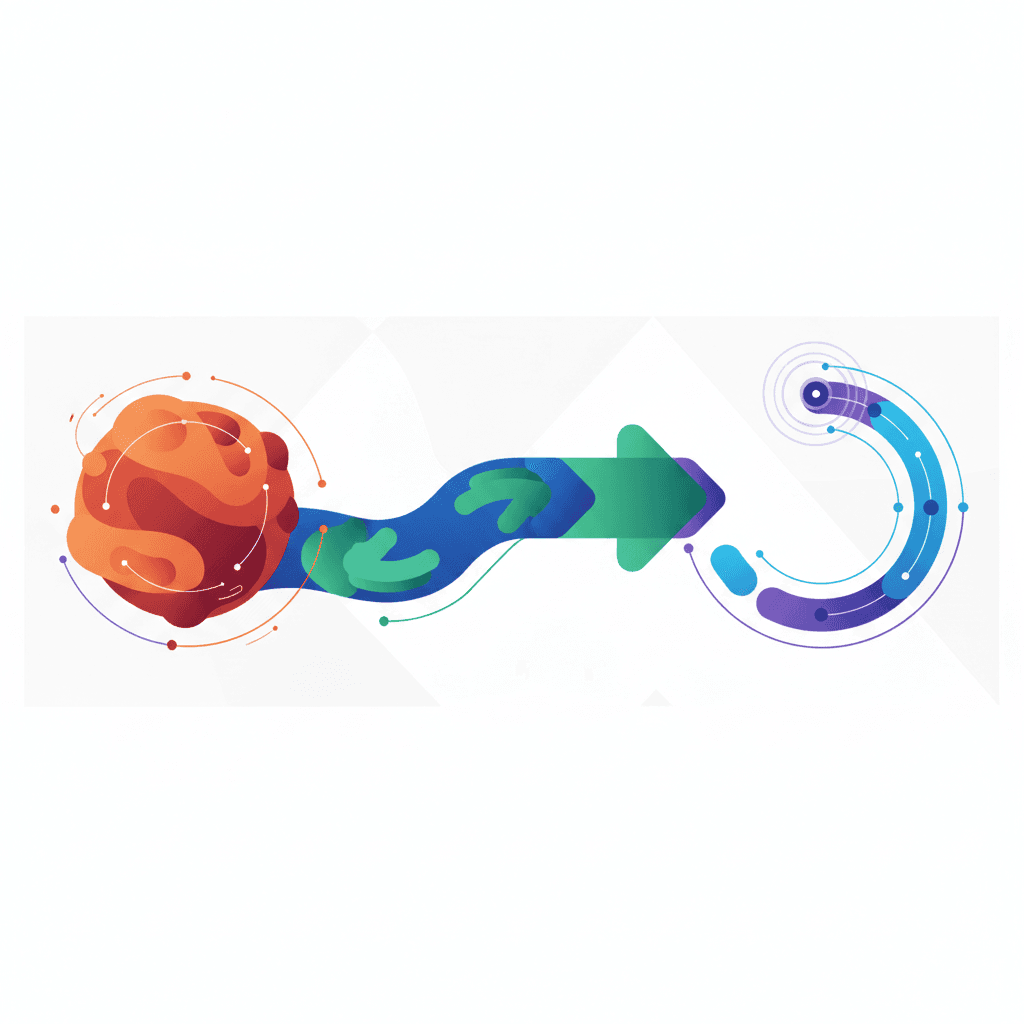
Deploying a machine learning model is just the beginning. The real challenge is keeping it running reliably in production, monitoring its performance, and updating it as data evolves. This is where machine learning operations (MLOps) comes in—the discipline of building, deploying, and maintaining ML systems at scale.
In this comprehensive guide, we'll explore the principles, practices, and tools that make production ML successful.
What is Machine Learning Operations (MLOps)?
MLOps is the set of practices that combines machine learning, DevOps, and data engineering to deploy and maintain ML models in production reliably and efficiently. It addresses the unique challenges of ML systems:
- Data dependency: Models depend on training data that changes over time
- Model drift: Performance degrades as real-world data diverges from training data
- Experimentation: Continuous experimentation requires versioning models and experiments
- Reproducibility: ML experiments must be reproducible for validation and debugging
- Monitoring: Model performance and data quality need specialized monitoring
MLOps enables data science teams to move from notebooks to production systems that deliver consistent business value.
Why MLOps Matters
Without MLOps, organizations struggle to realize value from ML investments:
- 87% of ML projects never make it to production (Gartner)
- Average time from model development to deployment: 6-12 months
- Model performance degrades 10-30% annually without retraining
- Manual deployment and monitoring costs 3-10x more than automated pipelines
Companies that implement strong MLOps practices deploy models 5-10x faster, reduce operational costs by 40-60%, and maintain model performance consistently.
Core MLOps Components
1. Version Control
Code versioning is standard practice, but MLOps extends this to:
- Model versioning: Track every trained model with its hyperparameters and performance metrics
- Data versioning: Snapshot training data for reproducibility
- Pipeline versioning: Version entire training pipelines, not just final models
Tools: DVC (Data Version Control), MLflow, Weights & Biases, Neptune.ai
Best practices:
- Tag models with Git commit hashes for full reproducibility
- Version datasets used for training and validation
- Store model lineage (which code/data/config produced each model)
- Use semantic versioning for production models (v1.2.3)
2. Experiment Tracking
Data scientists run hundreds of experiments. Track:
- Hyperparameters tested
- Training metrics (loss, accuracy, F1, etc.)
- Validation performance
- Training time and resource usage
- Model artifacts and checkpoints
Tools: MLflow, Weights & Biases, TensorBoard, Comet.ml
Best practices:
- Log every experiment automatically
- Tag experiments with business context ("Q4 churn model", "new feature test")
- Compare experiments side-by-side
- Share experiment results with stakeholders
3. CI/CD for ML
Continuous Integration and Deployment for ML includes:
Continuous Integration:
- Automated testing of data quality
- Model performance validation
- Code quality and security scans
- Integration tests with downstream systems
Continuous Deployment:
- Automated model deployment to staging
- Canary releases (gradual rollout to production)
- Automated rollback if performance degrades
- Blue-green deployments for zero-downtime updates
Tools: GitHub Actions, GitLab CI/CD, Jenkins, CircleCI, Azure DevOps
Best practices:
- Test models on holdout data before deploying
- Require minimum performance thresholds
- Deploy via immutable infrastructure (containers)
- Maintain deployment history and audit logs
For more on integrating AI into existing systems, see our enterprise AI implementation guide.
4. Model Deployment
Multiple deployment patterns for different use cases:
Batch inference:
- Process data in scheduled batches (hourly, daily)
- Lower cost, higher latency
- Good for recommendations, risk scoring
Real-time inference (REST API):
- Serve predictions on-demand via API
- Higher cost, low latency (50-500ms)
- Good for user-facing features
Streaming inference:
- Process continuous data streams
- Real-time decisions on events
- Good for fraud detection, anomaly detection
Edge deployment:
- Run models on devices (mobile, IoT)
- Ultra-low latency, privacy benefits
- Requires model optimization (quantization, pruning)
Tools: TensorFlow Serving, TorchServe, Seldon Core, KServe, AWS SageMaker, Azure ML, Google Vertex AI
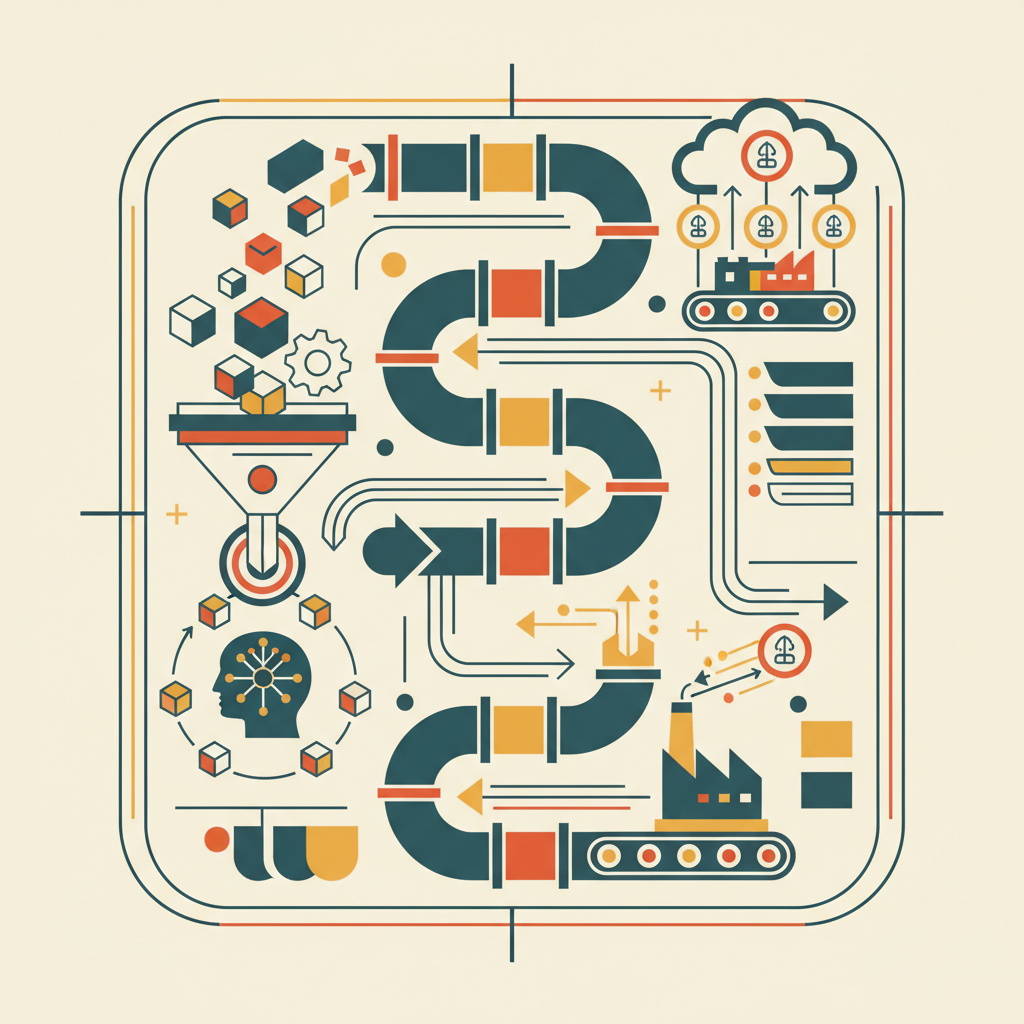
5. Model Monitoring
Production models require continuous monitoring:
Performance monitoring:
- Prediction accuracy, precision, recall
- Business KPIs (conversion rate, revenue impact)
- Latency and throughput
- Resource usage (CPU, memory, GPU)
Data quality monitoring:
- Input feature distributions
- Missing or invalid values
- Data drift detection (statistical tests)
- Schema changes
Model drift detection:
- Concept drift: Relationship between features and target changes
- Data drift: Input distribution changes
- Prediction drift: Output distribution shifts
Alerting thresholds:
- Performance drop >5% from baseline
- Latency exceeds SLA (e.g., >200ms p95)
- Error rate >1%
- Data drift exceeds statistical threshold
Tools: Evidently AI, WhyLabs, Arize AI, Fiddler AI, custom dashboards (Grafana)
6. Model Retraining
Models degrade over time. Implement automated retraining:
Trigger-based retraining:
- Performance drops below threshold
- Data drift detected
- Significant schema changes
- Manual trigger for urgent updates
Scheduled retraining:
- Weekly/monthly for high-value models
- Quarterly for stable models
- Continuous for fast-changing domains
Retraining pipeline:
- Fetch latest training data
- Validate data quality
- Train new model version
- Evaluate on validation set
- Compare with current production model
- Deploy if improvement >threshold
- Monitor performance post-deployment
Best practices:
- Always compare new models to current production baseline
- Require statistically significant improvement before deployment
- Keep multiple model versions for quick rollback
- Test retraining pipeline regularly (monthly)
Learn about automating workflows in our AI automation workflow examples guide.
MLOps Architecture Patterns
Pattern 1: Centralized ML Platform
Structure:
- Single platform team owns ML infrastructure
- Data scientists submit models for deployment
- Standardized pipelines and tools
Pros:
- Consistency across teams
- Economies of scale
- Specialized expertise
Cons:
- Can become bottleneck
- Less flexibility for specialized use cases
- Dependency on platform team
Best for: Large enterprises, regulated industries, multiple data science teams
Pattern 2: Self-Service MLOps
Structure:
- Data scientists deploy and manage their own models
- Platform provides tools and guardrails
- Automated pipelines and templates
Pros:
- Fast iteration
- Team autonomy
- Scales with data science team growth
Cons:
- Requires training and documentation
- Potential inconsistency
- Higher cognitive load on data scientists
Best for: Tech companies, startups, agile teams
Pattern 3: Hybrid Model
Structure:
- Platform team provides infrastructure and core services
- Data scientists handle experimentation and development
- Shared responsibility for production deployment
Pros:
- Balances speed and governance
- Clear separation of concerns
- Flexibility where needed
Cons:
- Requires clear interfaces and contracts
- Coordination overhead
- Need strong communication
Best for: Medium to large companies, growing ML maturity
MLOps Maturity Levels
Level 0: Manual Process
- Models trained in notebooks
- Manual deployment via scripts
- No monitoring or retraining
- Deployment takes weeks
Challenges: Not reproducible, doesn't scale, high error rate
Level 1: ML Pipeline Automation
- Automated training pipelines
- Version control for code and models
- Manual deployment with validation
- Basic monitoring
Improvement: Reproducible training, faster iteration
Level 2: CI/CD for ML
- Automated testing and deployment
- Continuous training on new data
- Performance monitoring and alerting
- Manual retraining decisions
Improvement: Faster deployment, early detection of issues
Level 3: Full MLOps
- Automated retraining based on triggers
- Advanced monitoring (drift, data quality)
- Automated rollback and recovery
- Feature stores and data lineage
- Model governance and compliance
Outcome: Production ML at scale, minimal manual intervention
Most organizations are at Level 1. Moving to Level 2-3 requires investment but delivers significant ROI.
Essential MLOps Tools and Technologies
End-to-End Platforms
AWS SageMaker
- Fully managed ML service
- Strong for AWS-native environments
- Good developer experience
Azure Machine Learning
- Enterprise-focused features
- Excellent compliance and governance
- Tight integration with Microsoft stack
Google Vertex AI
- Strong AutoML capabilities
- Good for TensorFlow workflows
- Competitive pricing
Databricks
- Built on Apache Spark
- Excellent for large-scale data processing
- Unified analytics and ML
Best-of-Breed Tools
Experiment tracking: MLflow (open source), Weights & Biases, Comet.ml Model serving: Seldon Core, KServe, BentoML Feature stores: Feast (open source), Tecton, Hopsworks Monitoring: Evidently AI, WhyLabs, Arize AI Orchestration: Airflow, Prefect, Kubeflow Pipelines Data versioning: DVC, LakeFS, Pachyderm
Infrastructure
Containers: Docker, Kubernetes for orchestration Model registries: MLflow, DVC, cloud-native options CI/CD: GitHub Actions, GitLab CI/CD, Jenkins Monitoring: Prometheus, Grafana, ELK stack
MLOps Best Practices
1. Start Simple, Scale Gradually
Don't build the perfect MLOps platform on day one:
- Week 1-2: Version control for code and models
- Month 1: Automated training pipeline
- Month 2-3: Basic deployment automation
- Month 4-6: Monitoring and alerting
- Month 6-12: Automated retraining and advanced monitoring
2. Standardize Where Possible
- Use consistent project structure
- Standard naming conventions for models and experiments
- Shared libraries for common ML tasks
- Templates for new projects
3. Prioritize Observability
You can't fix what you can't see:
- Log all predictions (or sample intelligently)
- Track input distributions over time
- Monitor business metrics, not just ML metrics
- Set up alerts before problems become crises
4. Treat Models as Code
- Review model code like production software
- Require tests before deployment
- Use linters and formatters
- Document model assumptions and limitations
5. Plan for Failure
- Build rollback mechanisms
- Test disaster recovery procedures
- Have fallback strategies (simple rules, cached predictions)
- Document incident response procedures
For more on building robust AI systems, see our conversational AI development guide.
Common MLOps Challenges and Solutions
Challenge 1: Data Quality Issues
Problem: Garbage in, garbage out—poor data quality breaks models.
Solutions:
- Automated data validation in pipelines
- Schema enforcement and testing
- Data quality monitoring dashboards
- Clear data ownership and SLAs
Challenge 2: Model Drift
Problem: Models degrade over time as data distributions change.
Solutions:
- Monitor input and output distributions
- Set up drift detection alerts
- Implement automated retraining pipelines
- Maintain model performance benchmarks
Challenge 3: Reproducibility
Problem: "It worked on my machine" doesn't cut it in production.
Solutions:
- Version everything (code, data, dependencies, configs)
- Use containers for consistent environments
- Document random seeds and initialization
- Store complete model lineage
Challenge 4: Organizational Silos
Problem: Data scientists, engineers, and ops teams work in isolation.
Solutions:
- Foster collaboration through shared tools and processes
- Create cross-functional MLOps teams
- Use common platforms and standards
- Regular sync meetings and demos
Challenge 5: Compliance and Governance
Problem: Regulated industries need audit trails, explainability, and approvals.
Solutions:
- Model registry with approval workflows
- Detailed logging and lineage tracking
- Explainability tools integrated into pipelines
- Regular compliance audits
The Future of MLOps
Emerging trends:
AutoML and AutoMLOps: Automated hyperparameter tuning, architecture search, and pipeline optimization
Feature stores as standard: Centralized, versioned feature management becoming table stakes
Real-time ML: More workloads moving to streaming and event-driven architectures
MLOps for LLMs: Specialized tools for fine-tuning, prompt engineering, and monitoring large language models
Federated learning: Training models across distributed data sources without centralizing data
Edge MLOps: Managing models deployed to thousands of edge devices
Conclusion
Machine learning operations bridges the gap between experimental models and production systems that deliver business value. By implementing MLOps practices—version control, automated pipelines, monitoring, and retraining—organizations can deploy models faster, maintain them more reliably, and realize the full potential of their ML investments.
Start with the basics: version your models, automate training, and monitor performance. Build incrementally toward full MLOps maturity as your ML practice matures.
The companies winning with AI aren't necessarily those with the best algorithms—they're the ones who can deploy, monitor, and iterate on models efficiently.
Build AI That Works For Your Business
At AI Agents Plus, we help companies move from AI experiments to production systems that deliver real ROI. Whether you need:
- Custom AI Agents — Autonomous systems that handle complex workflows, from customer service to operations
- Rapid AI Prototyping — Go from idea to working demo in days using vibe coding and modern AI frameworks
- Voice AI Solutions — Natural conversational interfaces for your products and services
We've built AI systems for startups and enterprises across Africa and beyond.
Ready to explore what AI can do for your business? Let's talk →
About AI Agents Plus Editorial
AI automation expert and thought leader in business transformation through artificial intelligence.


