Spotify's Top Developers Stopped Writing Code—They Only Supervise AI Now
Spotify CEO reveals the company's best engineers haven't written a single line of code since December 2025—they only supervise AI-generated code. This is the canary in the coal mine for software development's future.
Spotify's Top Developers Stopped Writing Code—They Only Supervise AI Now
Spotify CEO Gustav Söderström just dropped a bombshell that should send shockwaves through every tech company: the streaming giant's best engineers haven't written a single line of code since December 2025. Instead, they're supervising AI-generated code. This isn't a future prediction—it's already happening at one of the world's most sophisticated tech platforms.
During Spotify's Q4 2025 earnings call, Söderström revealed what he called a complete embrace of "vibe coding"—developers describing what they want in natural language and letting AI generate the actual code. "When I speak to my most senior engineers—the best developers we have—they actually say that they haven't written a single line of code since December," the CEO told investors. "They actually only generate code and supervise it."
This is the canary in the coal mine for software development. If Spotify's top talent is already supervising rather than coding, what does this mean for junior developers, bootcamp graduates, and the entire $500 billion software engineering industry?
The "Vibe Coding" Revolution
"Vibe coding" emerged in 2024 as slang for using AI coding assistants like GitHub Copilot, Cursor, and Claude to generate code from natural language descriptions. What started as a productivity boost has evolved into a fundamental shift in how software gets built.
At Spotify, this isn't about using AI to autocomplete a few lines here and there. It's about senior engineers acting as architects and quality control while AI does the actual implementation. The workflow looks like this:
- Describe the feature or fix in natural language
- AI generates the code implementation
- Engineer reviews, tests, and approves
- Iterate if needed—but still no manual coding
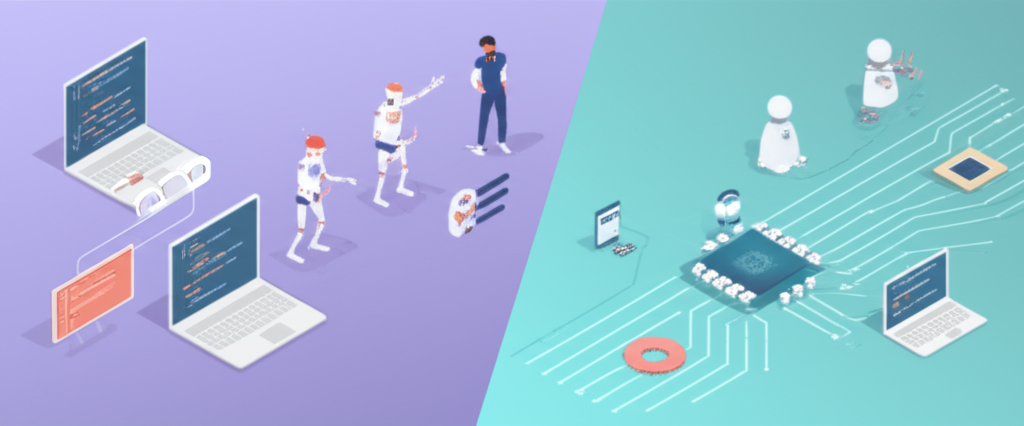
Söderström's message to investors was clear: this isn't slowing Spotify down—it's accelerating them. The company sees AI code generation as a competitive advantage, not a risk.
What This Means for the Developer Job Market
Let's be blunt: if Spotify's best developers aren't writing code anymore, what value does a junior developer bring when AI can generate cleaner, faster code than they can?
The uncomfortable truth is that the traditional software engineering career ladder is breaking. Here's what's changing:
Entry-Level Roles Are in Danger
Bootcamp graduates and CS majors who learned to code in 2024 entered a job market that no longer exists. Companies hiring in 2026 aren't looking for people who can write React components—AI already does that better and faster. They're looking for people who can:
- Architect complex systems — understanding trade-offs, scalability, security
- Debug and test rigorously — AI-generated code still needs validation
- Understand business context — translating product needs into technical requirements
- Supervise AI outputs — knowing when AI got it wrong and why
These are skills that typically took 5-10 years to develop. Now they're becoming table stakes for entry-level positions.
Mid-Career Developers Need to Adapt Fast
The message from Spotify is clear: if you're still manually writing boilerplate code in 2026, you're falling behind. The developers who thrive in this new world are the ones who:
- Embrace AI tools instead of resisting them
- Focus on system design and architecture
- Build domain expertise in their industry vertical
- Develop product sense to bridge business and technical needs
Senior Developers Are Becoming "Code Supervisors"
This is actually good news for experienced engineers. The tedious part of software development—translating requirements into syntax—is being automated. Senior developers can now focus on what they're uniquely good at:
- System architecture and design patterns
- Performance optimization and scalability
- Security and reliability engineering
- Mentoring AI (instead of junior devs)
The Code Quality Question
The elephant in the room: is AI-generated code any good?
Spotify's willingness to bet their entire development workflow on AI supervision suggests they've answered "yes"—with caveats. Here's what we know:
AI code generation is excellent at:
- Implementing well-defined patterns and frameworks
- Generating boilerplate and repetitive code
- Translating business logic into working functions
- Following established coding standards
AI code generation struggles with:
- Novel algorithms or creative problem-solving
- Deep performance optimization
- Understanding subtle business context
- Maintaining consistency across large codebases
The key insight: Spotify's approach acknowledges these limitations. They're not letting AI code run wild—they're having their best engineers supervise it. This is the critical detail that separates "AI replacing developers" from "AI amplifying developers."
What This Means For Your Business
If you're building a tech company or managing a development team in 2026, the Spotify model has immediate implications:
If You're Hiring Developers
Stop optimizing for "years of experience writing code." Start optimizing for:
- System design skills — can they architect solutions, not just implement them?
- AI supervision ability — can they critically evaluate AI-generated code?
- Business acumen — can they translate product needs into technical requirements?
The old interview question "implement a binary search tree on a whiteboard" is dead. The new question is "review this AI-generated module and tell me what's wrong with it."
If You're Managing Engineering Teams
Your developers should be spending most of their time on:
- Architecture and design (30-40% of time)
- Code review and AI supervision (30-40% of time)
- Testing and validation (20-30% of time)
- Manual coding (5-10% of time, only when necessary)
If your senior engineers are still spending 80% of their time writing code, you're leaving massive productivity gains on the table.
If You're a Startup Founder
The barrier to building software has never been lower—but the barrier to building good software is higher than ever. You need fewer developers, but they need to be better. Consider:
- Smaller teams, higher quality — Hire one great architect over three junior developers
- AI-first workflows — Tools like Cursor, Replit AI, and Claude for code generation
- Rapid prototyping — Go from idea to working prototype in days, not weeks
We've seen this at AI Agents Plus: a two-person team with AI coding tools can now build what used to take a six-person team six months.
The Uncomfortable Questions
Spotify's revelation raises questions the tech industry hasn't fully reckoned with:
What happens to the millions of junior developers who were counting on learning-on-the-job? If entry-level coding jobs disappear, how does the next generation gain the experience to become senior architects?
Are we building technical debt we don't understand? When AI generates millions of lines of code that no human fully comprehends, what happens when something breaks?
Is this sustainable? Or is Spotify going to hit a wall when they need to optimize, debug, or maintain this AI-generated codebase at scale?
We don't have answers yet. What we do have is a major tech company publicly committing to a radically different development model—and betting their product roadmap on it.
Looking Ahead
Spotify won't be alone for long. Other tech giants are watching this experiment closely. Google, Meta, Amazon, and Microsoft are all investing billions in AI coding tools. Unity just announced AI-driven game development tools that let developers "prompt full casual games into existence."
The trend is clear: software development is becoming a supervisory role. The question isn't whether AI will replace coding—it's already happening. The question is what skills will matter when coding itself becomes commoditized.
For developers: learn to architect, not just implement. Learn to supervise AI, not compete with it. And most importantly, develop expertise in domains where business context and human judgment still matter—because that's the moat AI can't cross yet.
For companies: the Spotify model isn't just about efficiency. It's about staying competitive in a world where your competitors are building 10x faster with AI-assisted development. The question isn't whether to adopt these tools—it's how quickly you can adapt your hiring, training, and workflows to this new reality.
Build AI That Works For Your Business
At AI Agents Plus, we help companies navigate the AI transformation—from strategy to implementation. Whether you need:
- Custom AI Agents — Autonomous systems that handle complex workflows
- Rapid AI Prototyping — Go from concept to working demo using modern AI frameworks
- AI Integration Strategy — Figure out where AI adds value and where human expertise still matters
We've built AI systems for startups and enterprises across Africa and beyond, and we understand both the potential and the pitfalls of AI-first development.
Ready to explore what AI can do for your business? Let's talk →
About AI Agents Plus Editorial
AI automation expert and thought leader in business transformation through artificial intelligence.