AI Chatbot vs AI Agent Differences: Understanding the Key Distinctions
Understanding the AI chatbot vs AI agent differences is crucial for choosing the right solution. While both leverage AI, they differ significantly in autonomy, capability, and use cases.
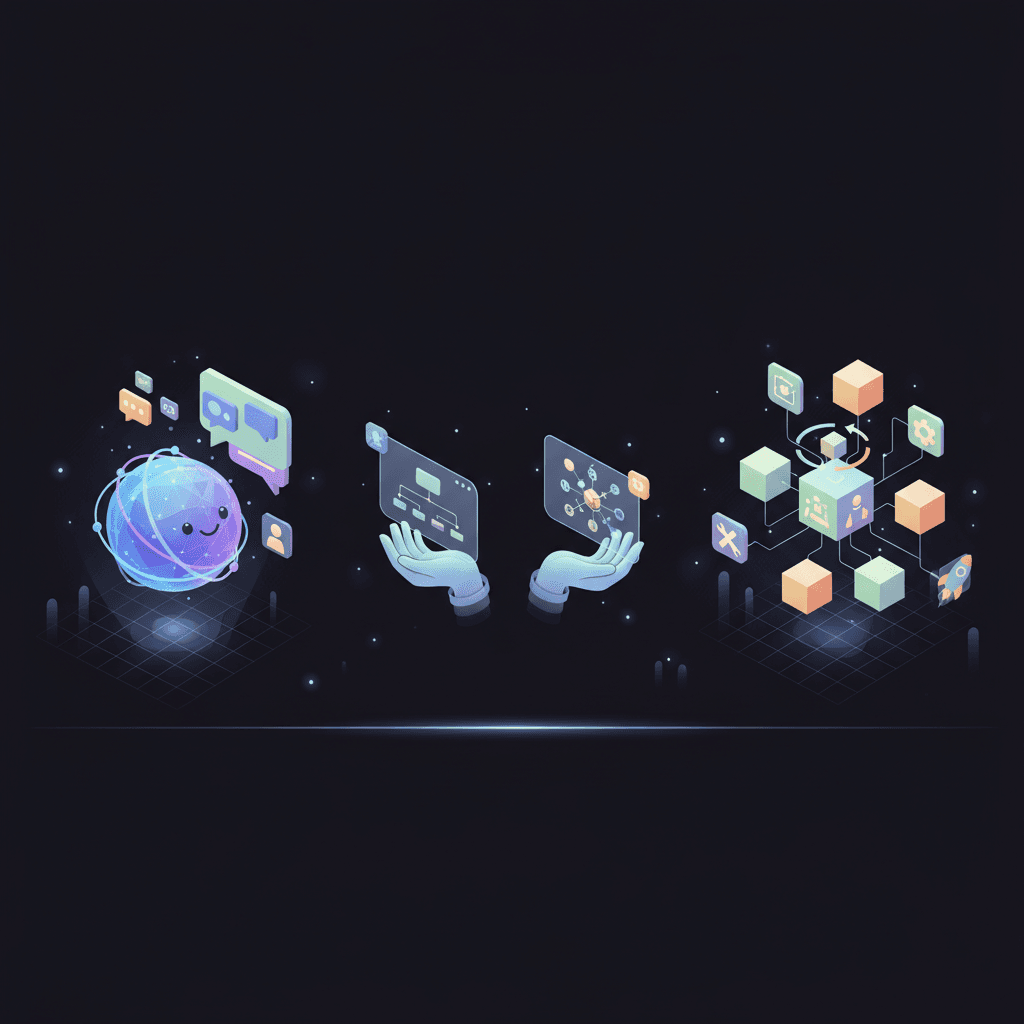
If you're exploring AI solutions for your business, you've likely encountered two terms that seem similar but represent fundamentally different technologies: AI chatbots and AI agents. Understanding the AI chatbot vs AI agent differences is crucial for choosing the right solution for your needs.
While both leverage artificial intelligence to interact with users and automate tasks, they differ significantly in autonomy, capability, and use cases. This guide breaks down the key distinctions to help you make informed decisions.
What is an AI Chatbot?
An AI chatbot is a conversational interface designed to respond to user inputs through text or voice. Chatbots follow predefined scripts or use natural language processing (NLP) to understand and respond to queries within a specific domain.
Most chatbots excel at:
- Answering frequently asked questions
- Guiding users through structured workflows
- Providing customer support for common issues
- Collecting information through conversational forms
Key characteristic: Chatbots are reactive. They wait for user input and respond based on their training and rules.
What is an AI Agent?
An AI agent is an autonomous system that can perceive its environment, make decisions, and take actions to achieve specific goals without constant human intervention. AI agents go beyond conversation — they can interact with multiple systems, execute complex workflows, and adapt to changing circumstances.

AI agents are built for:
- Multi-step task automation across different platforms
- Proactive monitoring and decision-making
- Complex problem-solving requiring multiple tools
- Continuous learning and adaptation from outcomes
Key characteristic: AI agents are proactive. They can initiate actions, orchestrate workflows, and operate independently to accomplish objectives.
AI Chatbot vs AI Agent Differences: The Core Distinctions
1. Autonomy Level
Chatbots: Limited autonomy. They respond to user inputs but don't initiate actions independently.
AI Agents: High autonomy. They can identify needs, make decisions, and execute actions without waiting for instructions.
2. Scope of Capability
Chatbots: Primarily conversational. Their capabilities are limited to dialogue and information exchange.
AI Agents: Multi-functional. They can communicate, but also integrate with APIs, databases, and external systems to perform actions.
3. Decision-Making
Chatbots: Rule-based or pattern-matching. They select responses from predefined options or templates.
AI Agents: Goal-oriented reasoning. They evaluate multiple paths, assess outcomes, and choose optimal actions dynamically.
4. Learning and Adaptation
Chatbots: Static or limited learning. Most require manual updates to improve or expand capabilities.
AI Agents: Continuous learning. They adapt based on feedback, outcomes, and environmental changes, becoming more effective over time.
5. Integration Complexity
Chatbots: Simple integration. Usually deployed as standalone widgets or platforms with minimal system connections.
AI Agents: Complex integration. Require connections to multiple data sources, tools, and systems to function effectively.
When to Use a Chatbot
Choose an AI chatbot when you need:
- Customer support for common inquiries
- Lead qualification through structured conversations
- FAQ automation to reduce support volume
- Simple data collection via conversational forms
- Budget-friendly solutions with fast deployment
Chatbots work best when interactions follow predictable patterns and don't require actions beyond conversation.
When to Use an AI Agent
Deploy an AI agent when you need:
- Complex workflow automation spanning multiple systems
- Proactive monitoring and autonomous response to events
- Multi-step problem-solving requiring various tools and data sources
- Adaptive systems that improve through experience
- Business process automation beyond customer-facing conversations
AI agents shine in scenarios requiring autonomy, integration, and intelligent decision-making. Learn more about how to build custom AI agents for business.
Real-World Examples
Chatbot Example: E-commerce Customer Support
A chatbot on an online store handles common questions:
- "Where is my order?"
- "What's your return policy?"
- "Do you ship internationally?"
It retrieves information from a knowledge base and provides answers instantly, reducing support ticket volume.
AI Agent Example: Intelligent Inventory Management
An AI agent monitors inventory levels across multiple warehouses, predicts demand based on seasonal trends and sales data, automatically generates purchase orders when stock runs low, negotiates with suppliers through API integrations, and adjusts reorder points based on fulfillment performance.
The agent operates continuously without human supervision, only alerting managers when exceptional circumstances require decisions.
For more examples of what AI agents can accomplish, check out our guide on AI automation workflow examples.
The Convergence: Conversational AI Agents
The line between chatbots and AI agents is blurring with the emergence of conversational AI agents — systems that combine natural dialogue with autonomous action capabilities.
These hybrid solutions can:
- Engage in natural conversations like chatbots
- Execute complex actions like AI agents
- Switch seamlessly between reactive and proactive modes
For businesses, this convergence means you don't always have to choose one or the other. Modern AI platforms can deliver both conversational interfaces and autonomous capabilities in integrated solutions.
AI Chatbot vs AI Agent: Cost Considerations
Chatbot costs:
- Lower initial investment
- Subscription-based pricing (often per conversation)
- Minimal infrastructure requirements
- Faster ROI for simple use cases
AI agent costs:
- Higher initial development investment
- Infrastructure for system integrations
- Ongoing maintenance and optimization
- Greater ROI for complex, high-value processes
The choice often depends on the problem's complexity and the value of automation. Chatbots offer quick wins for customer-facing scenarios, while AI agents deliver transformational value for operational workflows.
Common Mistakes to Avoid
1. Using a Chatbot When You Need an Agent
If your workflow requires actions beyond conversation (like updating records, triggering workflows, or integrating systems), a simple chatbot will frustrate users with its limitations.
2. Overengineering with an Agent
Conversely, deploying a complex AI agent for straightforward FAQ automation adds unnecessary cost and complexity. Start simple and scale up as needs grow.
3. Ignoring Integration Requirements
AI agents are only as good as their access to systems and data. Plan integrations carefully before deployment.
4. Expecting Immediate Autonomy
AI agents require training periods and iterative refinement. Don't expect perfect autonomous operation from day one.
The Future: From Chatbots to Agent Ecosystems
The AI landscape is evolving rapidly. While chatbots dominated the first wave of enterprise AI adoption, we're now entering the era of AI agent ecosystems — networks of specialized agents that collaborate to handle entire business domains.
Imagine:
- Sales agents that qualify leads, schedule meetings, and prepare briefing materials
- Operations agents that monitor systems, predict failures, and coordinate repairs
- Finance agents that process invoices, reconcile accounts, and flag anomalies
This future isn't far off. Organizations are already building these systems using modern AI frameworks and infrastructure.
Conclusion
Understanding the AI chatbot vs AI agent differences helps you select the right tool for each use case. Chatbots excel at structured conversations and simple automation, while AI agents deliver autonomous, multi-system workflows that transform operations.
For most organizations, the answer isn't "either/or" but "both/and" — deploying chatbots for customer engagement and AI agents for operational automation creates a comprehensive AI strategy that delivers value across the business.
Build AI That Works For Your Business
At AI Agents Plus, we help companies move from AI experiments to production systems that deliver real ROI. Whether you need:
- Custom AI Agents — Autonomous systems that handle complex workflows, from customer service to operations
- Rapid AI Prototyping — Go from idea to working demo in days using vibe coding and modern AI frameworks
- Voice AI Solutions — Natural conversational interfaces for your products and services
We've built AI systems for startups and enterprises across Africa and beyond.
Ready to explore what AI can do for your business? Let's talk →
About AI Agents Plus Editorial
AI automation expert and thought leader in business transformation through artificial intelligence.