AI Agents for Operational Synergy: How to Coordinate Your Business Systems
AI agents for operational synergy orchestrate workflows across departments and systems, eliminating silos and automating handoffs for seamless business operations.
AI Agents for Operational Synergy: How to Coordinate Your Business Systems
Operational synergy sounds like corporate jargon, but it represents something powerful: getting different parts of your business to work together seamlessly. In 2026, AI agents for operational synergy are making this vision a reality by orchestrating workflows across departments, systems, and data sources that previously operated in silos.
What are AI Agents for Operational Synergy?
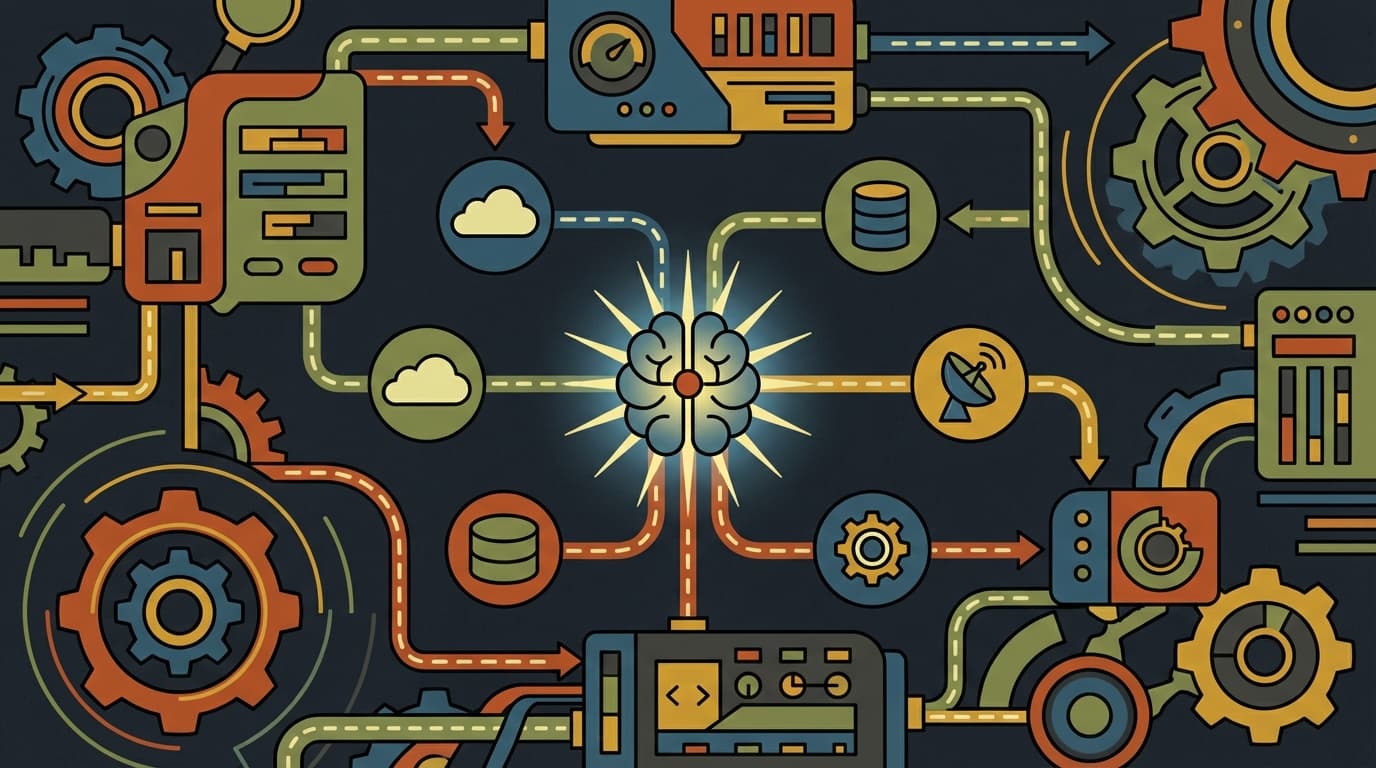
AI agents for operational synergy are autonomous software systems that coordinate activities across multiple business functions. Unlike traditional integration platforms that simply pass data between systems, these AI agents understand context, make decisions, and optimize workflows in real-time.
Think of them as digital orchestrators that:
- Monitor activities across sales, marketing, operations, and support
- Identify inefficiencies and bottlenecks automatically
- Trigger actions across different systems without manual intervention
- Learn from outcomes and continuously improve coordination
- Provide unified visibility into cross-functional processes
Why Operational Synergy Matters in 2026
The modern business operates across dozens of disconnected tools: CRM, ERP, marketing automation, customer support, inventory management, HR systems, and more. Each tool optimizes for its own domain, but value creation happens when these systems work together.
The Cost of Silos
According to recent enterprise software studies, businesses lose an average of 20-30% productivity to manual handoffs between systems. Sales generates leads that marketing never follows up on. Customer success teams lack visibility into billing issues. Inventory doesn't sync with demand forecasts.
The AI Advantage
AI agents for operational synergy eliminate these gaps by:
- Connecting the dots: Correlating data across systems to understand full customer journeys, project lifecycles, and operational flows
- Automating handoffs: Triggering the right action in the right system at the right time
- Predicting needs: Anticipating bottlenecks before they occur
- Optimizing resources: Balancing workloads across teams and systems

Real-World Operational Synergy Use Cases
1. Sales-to-Delivery Coordination
When a deal closes in your CRM, an AI agent can:
- Create project in your PM tool with the right template
- Provision customer in your product/service platform
- Notify relevant team members via Slack or email
- Generate onboarding materials tailored to the customer's industry
- Schedule kickoff meeting based on team availability
- Update financial forecasts in your ERP
All automatically, within minutes of deal closure.
2. Customer Support Intelligence
AI agents monitor support tickets and:
- Identify patterns indicating product issues or bugs
- Automatically escalate to engineering when severity thresholds are crossed
- Update customer success teams when accounts show distress signals
- Trigger proactive outreach before customers churn
- Feed insights back to product and marketing teams
3. Supply Chain Optimization
In manufacturing or retail, AI agents coordinate:
- Demand forecasting based on sales trends, seasonality, and market signals
- Inventory reordering triggered by predictive models, not just reorder points
- Supplier communications when lead times extend
- Production scheduling adjusted for real-time capacity
- Logistics optimization coordinating warehouse, shipping, and delivery
For businesses building AI enterprise solutions, operational synergy is often the highest-value use case.
How AI Agents Achieve Operational Synergy
Multi-System Integration
Modern AI agents use APIs, webhooks, and data pipelines to connect with:
- CRM systems (Salesforce, HubSpot, Pipedrive)
- ERP platforms (SAP, Oracle, NetSuite)
- Project management (Asana, Monday, Jira)
- Communication tools (Slack, Teams, email)
- Data warehouses (Snowflake, BigQuery, Redshift)
- Custom internal systems
Intelligent Workflow Orchestration
Unlike rigid automation that follows predefined rules, AI agents:
- Assess context before taking action (e.g., "Is this customer high-value? Is this the right time to reach out?")
- Handle exceptions gracefully (e.g., "Normal supplier unavailable—find alternative")
- Adapt workflows based on outcomes (e.g., "This approval process consistently delays projects—suggest optimization")
Natural Language Interfaces
Teams interact with operational AI through:
- Chat interfaces (Slack, Teams)
- Email commands
- Voice assistants
- Natural language queries ("Show me all delayed projects with budget overruns")
This makes sophisticated cross-system actions accessible to non-technical users.
Continuous Learning
AI agents track what works:
- Which lead handoff processes result in fastest conversions
- Optimal times for customer outreach
- Most efficient resource allocation patterns
- Bottlenecks that repeatedly cause delays
They use this data to refine decision-making over time.
Building AI Agents for Operational Synergy
1. Map Your Current State
Before deploying AI, understand your workflows:
- Document how work moves between teams and systems
- Identify manual handoffs, redundant data entry, and communication gaps
- Quantify time and cost of inefficiencies
2. Identify High-Value Connections
Not all integrations deliver equal value. Prioritize:
- High-frequency workflows (daily/weekly activities)
- High-cost manual processes (expensive human time)
- High-risk handoffs (where errors cause major problems)
3. Start with One Process
Resist the urge to automate everything at once. Pick one end-to-end workflow:
- Lead-to-customer conversion
- Order-to-delivery
- Ticket-to-resolution
Build AI that optimizes this single process, prove ROI, then expand.
4. Design for Human Oversight
AI agents should augment, not replace, human judgment. Build in:
- Approval gates for high-stakes decisions
- Transparency into why AI took specific actions
- Easy override mechanisms
- Escalation paths when AI confidence is low
5. Measure Synergy Metrics
Track improvements in:
- Cycle time: How long end-to-end processes take
- Handoff efficiency: Time between one team completing work and another starting
- Data accuracy: Reduction in duplicate or conflicting information
- Resource utilization: Better workload balance across teams
For organizations exploring AI database reactivation or other specialized use cases, operational synergy principles apply across the board.
Common Pitfalls to Avoid
Over-Automation Too Soon
Don't automate a broken process. Fix the workflow first, then automate it. AI will efficiently execute a bad process just as readily as a good one.
Ignoring Change Management
Even the best AI agent fails if teams don't adopt it. Invest in:
- Training on how to interact with AI systems
- Clear documentation of what AI handles vs. what requires human input
- Feedback loops so teams can report issues and suggest improvements
Lack of Data Governance
Operational synergy requires data flowing between systems. Ensure:
- Consistent data definitions across platforms
- Clear ownership of data quality
- Security and privacy controls when sensitive data crosses system boundaries
Underestimating Integration Complexity
Legacy systems may lack modern APIs. Budget for:
- Middleware or integration platforms
- Custom connectors
- Data transformation layers
- Ongoing maintenance as systems evolve
The Future of Operational Synergy
AI agents are evolving from reactive automation to proactive optimization:
Predictive Coordination
Future AI agents won't just respond to events—they'll anticipate them. "Sales velocity suggests we'll hit capacity in 3 weeks. Should we hire contractors or delay new customer onboarding?"
Cross-Company Synergy
AI agents will coordinate not just within your organization but with partners, suppliers, and customers. Shared AI agents managing supply chains, joint ventures, and ecosystem collaborations.
Self-Optimizing Systems
AI that continuously experiments with workflow variations, measures outcomes, and implements the best-performing approaches—creating organizations that evolve faster than competitors.
For broader context on where AI is heading, see our analysis of AI governance and regulation in 2026.
Conclusion
Operational synergy isn't about connecting every system to every other system. It's about identifying the workflows that matter most to your business and using AI agents to make them faster, more reliable, and more intelligent.
The businesses thriving in 2026 aren't necessarily using more AI tools—they're using AI to make their existing systems work together in ways that compound value across the organization.
Build AI That Works For Your Business
At AI Agents Plus, we help companies move from AI experiments to production systems that deliver real ROI. Whether you need:
- Custom AI Agents — Autonomous systems that handle complex workflows, from customer service to operations
- Rapid AI Prototyping — Go from idea to working demo in days using vibe coding and modern AI frameworks
- Voice AI Solutions — Natural conversational interfaces for your products and services
We've built AI systems for startups and enterprises across Africa and beyond.
Ready to explore what AI can do for your business? Let's talk →
About AI Agents Plus Editorial
AI automation expert and thought leader in business transformation through artificial intelligence.